Iraq Declares State Control of Weapons 'Irreversible'
Security Media Cell chief Saad Maan says Iraq's weapons policy is rooted in law as Baghdad seeks to regulate firearms and prevent Iraqi territory from being used in regional attacks.
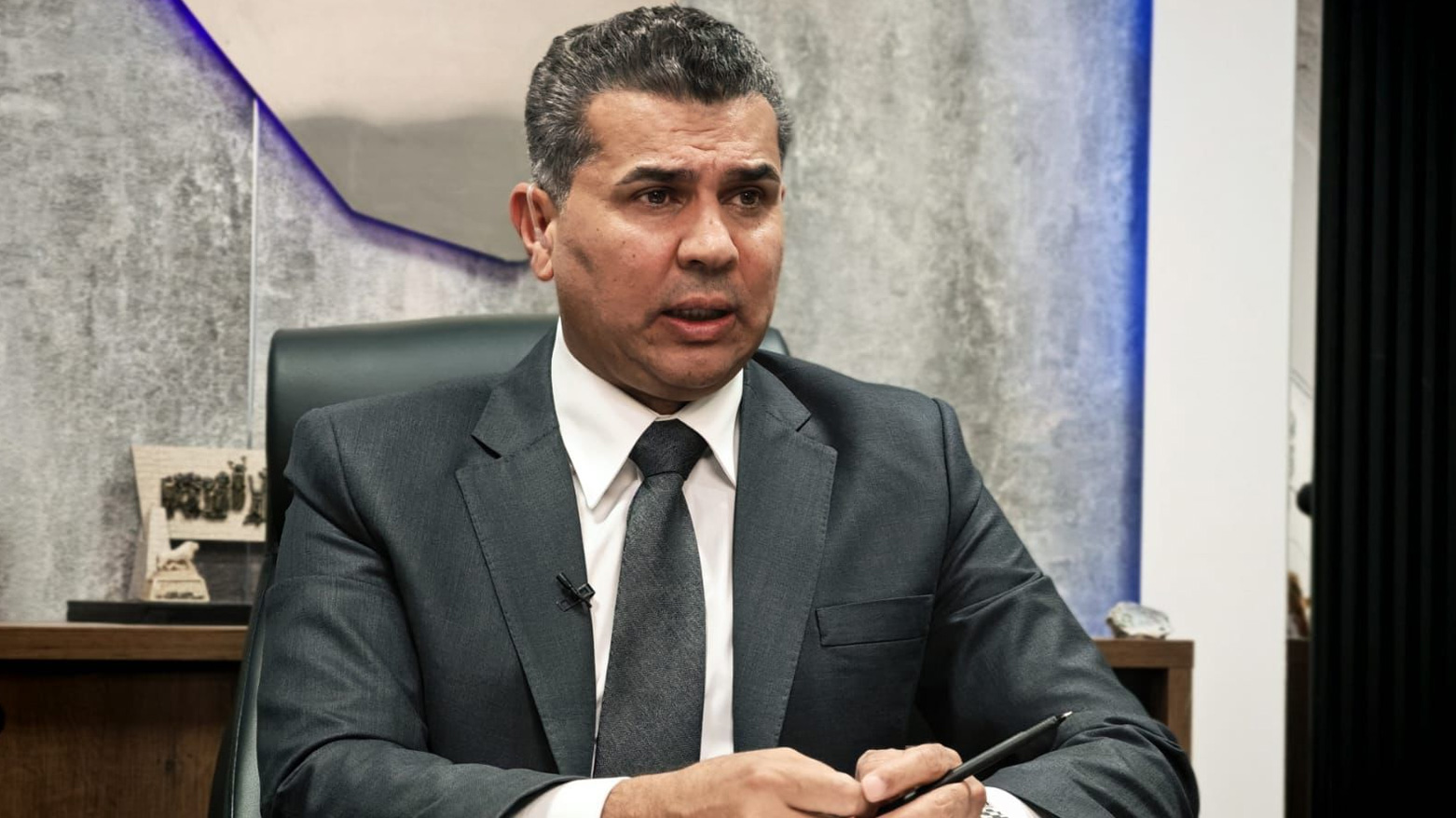
ERBIL (Kurdistan24) - Iraq's government has reaffirmed that bringing weapons under state control is a permanent policy, with Security Media Cell chief Lt. Gen. Saad Maan describing the effort as "irreversible" as Baghdad strengthens firearm regulation and seeks to reinforce the authority of official security institutions.
Maan's remarks, reported by the Iraqi News Agency (INA), frame the policy as a long-term state-building measure rather than a temporary security campaign.
He said its objective is to ensure that weapons are possessed and used by official military and security institutions while addressing unauthorized firearms, illegal arms trafficking and weapons-related crimes.
The position comes as Iraq is also seeking to prevent its territory from becoming a launchpad for regional attacks, giving renewed significance to the government's insistence that decisions over security and armed activity remain within state institutions.
Weapons Under State Control
According to INA, Maan said the policy is based on National Security Council Decision No. 21 of 2018.
He argued that restricting weapons to state institutions is intended to strengthen public security and confidence in government institutions while creating a more stable environment for economic activity and investment.
The Interior Ministry's specialized committee on arms regulation is establishing offices to register and regulate firearms, while authorities are also working to collect unauthorized weapons and combat illegal arms trafficking.
The government has separately reiterated the policy in recent months. In July, Prime Minister Ali al-Zaidi said the government was pursuing its commitment to ensure that "no weapons remain outside state control."
Legal Basis for the Policy
Maan pointed to several provisions underpinning the government's approach.
He cited Article 9, Section 1 of the Iraqi Constitution, which places the armed forces and security institutions under civilian authority and prohibits the creation of military entities outside the official armed forces.
He also referred to Weapons Law No. 51 of 2017, which regulates the possession and carrying of firearms, and Penal Code No. 111 of 1969, which provides penalties for crimes involving weapons.
The consequences can become more serious when firearms are used in offenses including murder, intimidation, terrorism or violations of public order, according to Maan's account to INA.
The policy therefore extends beyond confiscating illegal weapons. It seeks to establish a legal framework in which possession, licensing and use of firearms are subject to state regulation.
A Broader Security Push
Maan also pointed to what he described as a sharp decline in Dakka Ashairiya, or tribal warning gunfire, after the judiciary began treating such armed intimidation as terrorism offenses under Iraq's Anti-Terrorism Law.
According to Maan, such incidents have nearly disappeared in several provinces, illustrating how the application of criminal law can affect the use of firearms in disputes beyond conventional armed conflict.
The government's broader position has also received support from the Coordination Framework, which recently described state control of weapons as a fundamental pillar of protecting Iraq and preserving its achievements.
Iraq Seeks to Avoid Regional Escalation
The weapons policy is being reiterated while Baghdad faces heightened regional security pressures.
Iraqi military spokesperson Sabah al-Numan has said Iraq will not be drawn into regional conflicts and will not permit its territory to be used to launch attacks against neighboring states. He has also stressed that decisions concerning war and peace belong to the Commander-in-Chief.
That position was reinforced by the National Security Council, which has emphasized both Iraqi sovereignty and the need to keep weapons under state authority while rejecting the use of Iraqi territory or airspace to attack neighboring countries.
The government has simultaneously raised security readiness amid intelligence concerns about possible retaliatory attacks against Saudi and U.S. interests.
Amiri Calls for Restraint
Against that immediate security climate, Badr Organization Secretary-General Hadi al-Amiri has urged factions within what he called the "Islamic Resistance in Iraq" to refrain from immediate retaliation for recent American-Saudi strikes.
Al-Amiri called for patience and urged the factions to "defer any response," saying the rights of those killed and wounded should instead be pursued through diplomatic channels.
Read More: PMF Leader Urges Iraqi 'Islamic Resistance' to Hold Back on Retaliation
His appeal provides a separate but related indication of the pressure facing Baghdad: the government is seeking to prevent Iraqi territory from being drawn into regional confrontation while asserting that armed and security decisions must remain under state authority.
For the government, Maan's description of the weapons policy as "irreversible" signals that the issue is being treated as a continuing institutional priority, with constitutional authority, firearms regulation and national security increasingly tied to the same principle: weapons and decisions over their use should ultimately remain within the Iraqi state.