Christian Alliance Hails President Barzani, Kurdistan as Safe Haven for Communities
The Alliance's statement marking the 93rd anniversary of the Simele massacre links the commemoration to ethnic and religious components' rights, political inclusion and equal citizenship in Iraq.
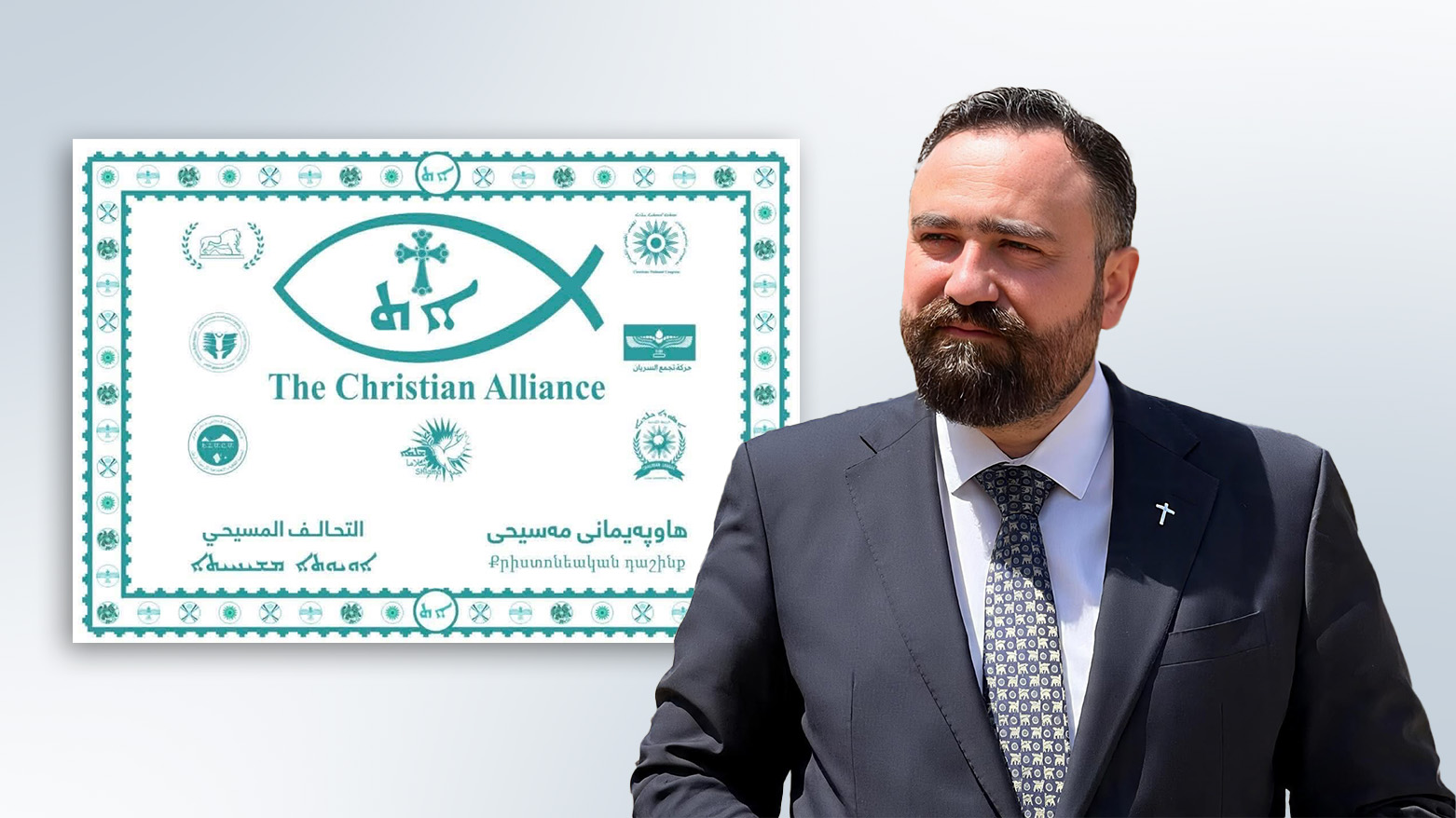
ERBIL (Kurdistan24) - The Christian Alliance on Friday praised President Masoud Barzani and the Kurdistan Region for what it described as their support for Assyrians and other communities during periods of persecution, displacement and insecurity, saying Kurdistan provided refuge when many communities faced few alternatives.
The Alliance, led by General Secretary Ano Jawhar Abdoka, issued the statement on Aug. 7 to mark the 93rd anniversary of Assyrian Martyrs' Day, commemorating the 1933 Simele massacre.
It used the anniversary to connect the memory of the victims with broader questions of Kurdistan's ethnic and religious components' protection, political participation and equal citizenship in Iraq.
The Alliance's characterization of the Kurdistan Region as a safe haven reflects its own political assessment.
It described the region and its leadership as "a light in the darkness and a sanctuary amidst peril and terrorism," while crediting President Barzani and the Kurdistan Regional Government with supporting Assyrians and other national communities during periods of crisis.
The Christian Alliance praises Barzani, Kurdistan
According to the statement, the Alliance views the support extended to displaced and vulnerable communities as particularly significant against the background of Iraq's history of persecution.
It said communities that endured displacement and insecurity found support from political, religious and community figures who, in its view, acted on principles of human dignity rather than ethnic or religious identity.
The Alliance singled out Barzani and the KRG as the most prominent example of that support.
The statement did not present the anniversary solely as a remembrance of past suffering.
Instead, it argued that the experience of Assyrians and other communities demonstrates the continuing importance of protecting diversity and ensuring that ethnic and religious communities have a meaningful place in Iraq's political and social order.
Simele remains a defining wound
The Alliance described the 1933 Simele massacre as a lasting symbol of the dangers posed by discrimination, persecution and the denial of ethnic and religious communities rights.
The anniversary remains significant for Assyrian communities because it commemorates the killing of Assyrians in and around Simele and serves, in the Alliance's framing, as a reminder of the consequences when differences between communities are treated as grounds for exclusion.
The statement argued that the lessons of Simele extend beyond the Assyrian community, linking the tragedy to a broader history of violence affecting Iraq's ethnic and religious groups.
It named Kurds, Turkmen, Yazidis, Christians, Kaka'is, Sabean-Mandaeans and Arabs among communities that, according to the Alliance, have suffered from successive forms of persecution and marginalization.
ISIS revived fears of persecution
The Alliance connected the legacy of Simele to the 2014 ISIS offensive in Nineveh, when Christians, Yazidis, Kaka'is and other communities were displaced from their homes.
The statement described the displacement and persecution of Christians and other groups in Nineveh as evidence, in its view, that intolerance and attempts to erase communal rights have continued in different forms.
Rather than treating the two episodes as identical, the Alliance used the anniversary to argue that the underlying issue remains the protection of communities that form part of Iraq's diverse social fabric.
Call for equal citizenship
The Alliance said commemoration must be accompanied by measures that address the conditions that allow discrimination and marginalization to persist.
It called for equal treatment before the law, respect for ethnic and religious diversity, meaningful political participation and recognition of what it described as the legitimate rights of indigenous communities.
The statement also called for communities to be able to manage their local affairs within constitutional and legal frameworks and for historical injustices to be addressed through political and legal mechanisms.
For the Alliance, these principles are central to building lasting stability.
It summarized its broader appeal around "justice, genuine partnership, and respect for diversity," arguing that peace remains vulnerable when communities do not feel equally protected or represented.
The statement ended by urging younger generations to preserve the memory of the Simele victims while turning that history into a commitment to knowledge, civic participation, unity and cooperation.
For the Christian Alliance, the anniversary is therefore both an act of remembrance and a call for an Iraq in which citizenship, rather than ethnicity or religion, determines equal rights and protection under the law.