'These Clothes Are My Stage': Kurdish Artist's Silent Tribute to His Nation
Kurdish artist Subhan Fathi, known as the Golden Man, shares his journey from theater in Sine to silent performances celebrating Kurdish clothing and identity.
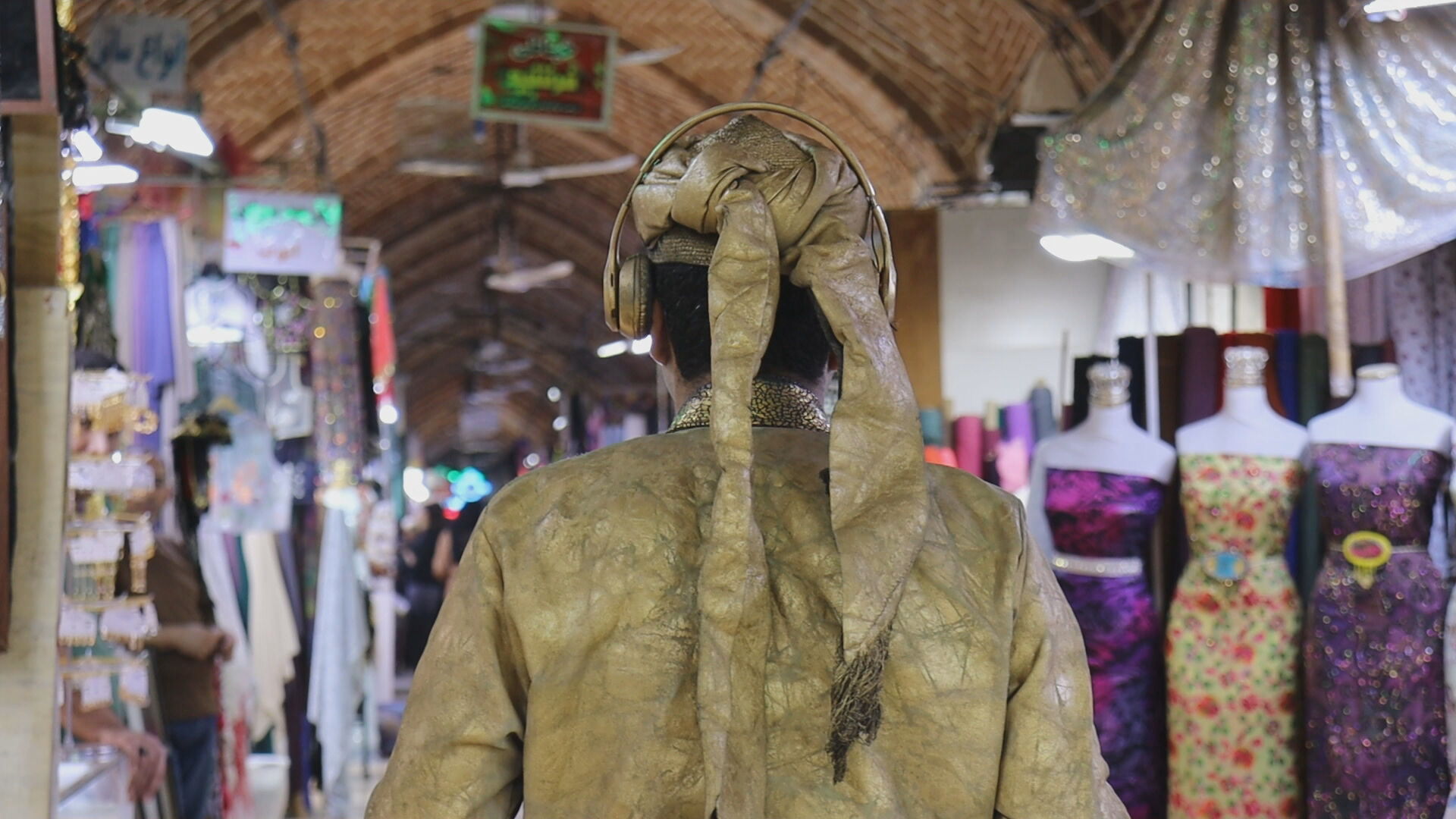
ERBIL (Kurdistan24) - In the old bazaar of Sine, a man dressed in traditional Kurdish clothing and covered in gold paint stands almost motionless. He has no spoken lines, yet the performance artist behind the figure, Subhan Fathi, believes he has a great deal to say.
"My silence is my dialogue," Fathi told Kurdistan24, describing a form of street theater he has developed through years of acting, training and experimentation.
Fathi, who comes from Kamyaran in Eastern Kurdistan, was born in 1988. His journey began in 2009, when he joined the Hiwa Theater Group in Sine, the Kurdish name for Sanandaj, capital of Iran's Kurdistan Province. His first role offered an early introduction to the physical demands that would later define his work.
In The Dream of Awakening, a production concerned with war and a photographer's experiences, he played a statue standing on a pedestal. Covered in plaster, he remained in position for 45 minutes.
For an aspiring actor, it was an unusual beginning: instead of delivering lines or moving across the stage, he had to communicate through the discipline of remaining still. Years later, he would make that very restraint the centerpiece of his artistic identity.

Learning to Perform Without a Stage
Seeking to develop his skills, Fathi moved from Kamyaran to Tehran, where he enrolled in acting classes and studied movement and voice. He trained with actor Reza Behboudi and later began performing at Milad Tower.
He described those early works as "environmental performances," meaning productions that incorporated the physical surroundings into the performance. A building, a newspaper or another element of the setting could become part of the actors' material, rather than merely a backdrop.
As he experimented with different characters, Fathi discovered the possibilities of the living statue. He began coating himself in gold paint and developing a silent, sculptural performance in Tehran.

The approach demanded concentration as well as the acting skills he had acquired. In a Kurdistan24 feature from the Sulaimani Festival in July, Fathi was described holding poses for up to an hour, interrupting the stillness with carefully measured gestures. That appearance brought his distinctive form of street theater before festival visitors in the Kurdistan Region.
But Fathi's ambition extended beyond the spectacle of a person appearing to be a sculpture. When he returned to Sine, he began connecting the form to the clothing and cultural memory of the Kurdish people.
'The Storyteller of the Clothing of a Nation'
Fathi said he developed his Golden Man character in Sine during a period when the city was being celebrated for Newroz. He introduced traditional Kurdish dress to the gold-painted performance and describes himself as the first Golden Man to present the character in that form.
"I always say that I am not merely a statue. I am the storyteller of the clothing of a nation - Kurdish clothing," he said.
The costume he currently wears draws on the traditional attire of Hawraman, including its distinctive headwear. For Fathi, the clothing is not an accessory added to attract attention. It is the subject of the performance.

"These clothes are my stage," he explained. "Through my movements and gestures, I tell the story of the historic clothing of a nation."
He wants viewers to notice what the garments represent, without relying on speeches or a conventional theatrical script. Movement, posture and the decision to remain silent become ways of presenting a culture to people who might encounter him unexpectedly.
He also uses objects to suggest different ideas. At festivals, he may carry a basket of pomegranates. During his recent performance, he brought a cassette player, which he said symbolizes music's power to bring calm and peace to people's minds.
Those details give the otherwise silent figure a changing vocabulary, shaped by the setting and the meaning Fathi hopes audiences will take from it.

Returning to the Streets of Sine
Over the past month, Fathi has traveled between festivals, public gatherings and events in Southern and Eastern Kurdistan and other cities in Iran. After performing in different locations, he decided to return to the familiar streets of Sine.
This time, he selected the old bazaar instead of a formal venue. He wanted to see how people in his own city would respond to the character he had spent years creating.
"Today, I went into the heart of the bazaar and performed there. People welcomed me," he said.

It was a return to the city where he first entered theater, but with a very different understanding of what a performance could be. The young actor once asked to stand like a statue in a war-themed play had become an artist choosing stillness as his own language.
Fathi's story is one of movement between cities and forms of theater, followed by a deliberate return to his roots. He now brings Kurdish dress into marketplaces and festivals, using a painted body and small gestures to invite attention to a history he wants to preserve.
"What I want is to tell a story without speaking," he said. For the Golden Man of Sine, silence is not the absence of a voice. It is the way he has chosen to use one.
