Kurdistan Region Facilitates Passage of 100,000 Arbaeen Visitors from Five Countries
Under the direction of Prime Minister Masrour Barzani, Kurdistan Region prepares rest stations for 100,000 pilgrims from five countries traveling to Najaf and Karbala for Arbaeen 2026
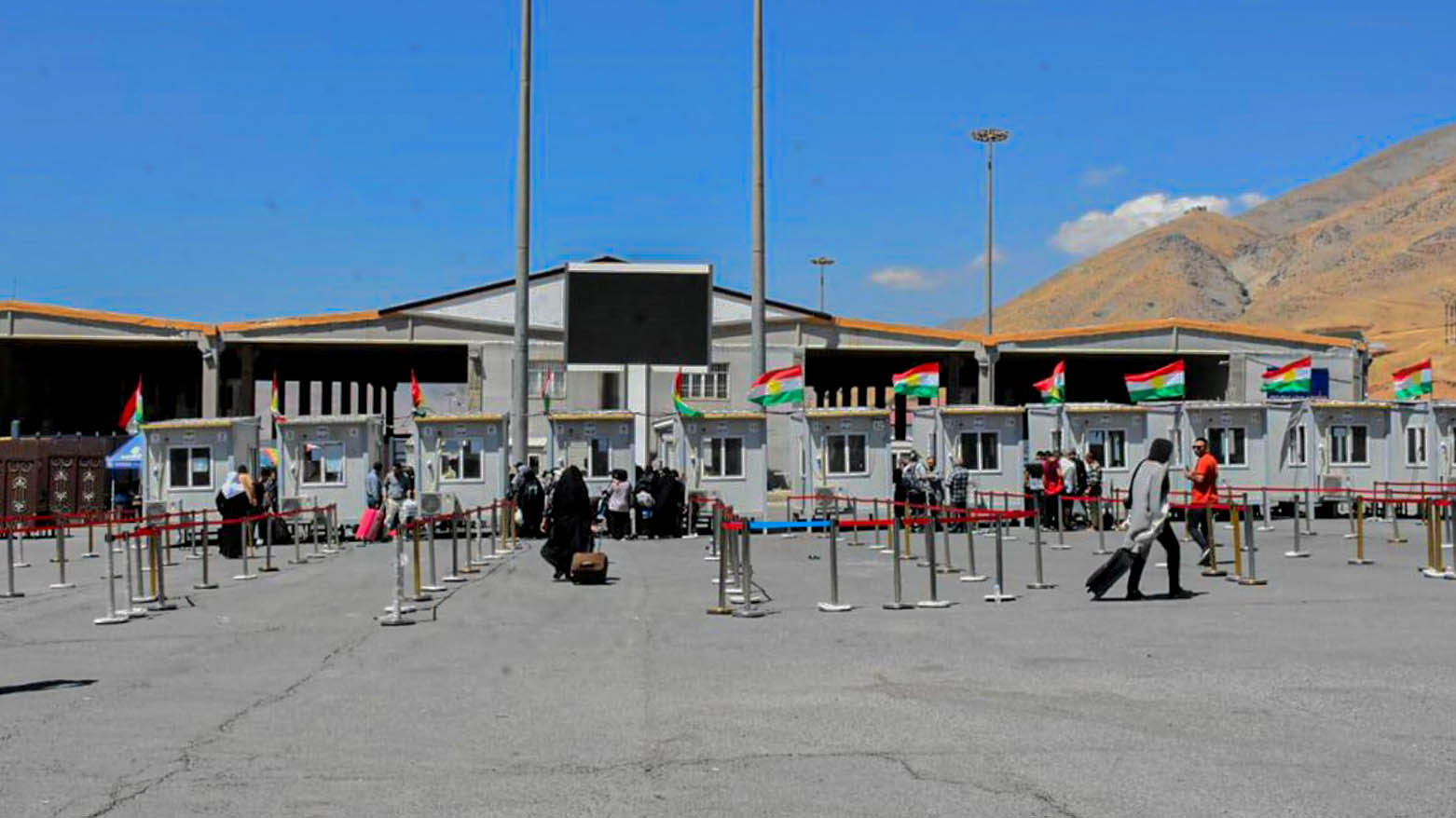
ERBIL (Kurdistan24) - The Kurdistan Region served as a major transit route for Arbaeen visitors in 2026, with around 100,000 pilgrims from five countries crossing through the Haji Omeran International Border Crossing on their way to Najaf and Karbala, according to the Higher Committee for Supervising Arbaeen Visitors.
The committee announced the results of the logistical and security operations carried out during the 2026 Arbaeen ceremonies, saying visitors from Iran, Türkiye, Azerbaijan, Georgia, and Russia chose the Kurdistan Region route to continue their journey to the two Iraqi holy cities.
The process started in accordance with a decision by the Kurdistan Regional Government (KRG) and an administrative order issued by the Erbil Governorate on Jun. 3, 2026. Relevant ministries, institutions, and members of the Higher Committee took part in the operation, with a series of measures introduced to facilitate the visitors' passage.
Four rest and reception stations were established at Haji Omeran, Kani Maran, the Erbil International Fairground, and the Sherawa checkpoint.
The Barzani Charity Foundation (BCF) assumed responsibility for the stations' needs, providing food, water, hot drinks, and meal packages, as well as tents, blankets, and bedding for accommodation.
The stations were also equipped with free internet, cooling systems, hygiene facilities, medical supplies, and ambulance services.
Under the direction of Kurdistan Region Prime Minister Masrour Barzani, the government covered the visitors' transportation costs for both their outbound and return journeys.
In addition to transportation along the Erbil-Haji Omeran route, many visitors were provided with free transportation between Erbil and Najaf and Karbala, as well as return journeys, using 3,500 buses and minibuses.
Throughout the operation, 38 fixed centers and 17 emergency response teams operated along the main roads.
A total of 21 institutions and units, including the Department of Foreign Relations, JCC (Crisis Coordination Center), Asayish, Passport, Customs, Traffic Police, Civil Defense, and health directorates, provided services around the clock.
At the Haji Omeran Border Crossing, 59 computers were deployed to accelerate passport procedures.
Health centers along the route moved to a 24-hour operating schedule, while aerial teams affiliated with the Erbil Traffic Directorate remained on standby to respond when needed.
The operation began on July 15, 2026, and ended on August 6, 2026.
During that period, around 100,000 visitors from Iran, Türkiye, Azerbaijan, Georgia, and Russia passed through the Kurdistan Region route.
Medical teams provided on-site medical intervention and basic health services to 2,525 visitors.
The operation recorded six minor civil defense incidents and one traffic accident, with no fatalities reported in any of the incidents.
The Higher Committee thanked all officials, workers, and security personnel who contributed to the operation.
It also issued a special message of appreciation to the management and staff of the Barzani Charity Foundation, which has undertaken the process as a humanitarian mission for five years and has significantly reduced the burden on the government.