Trump's Top General Seeks 'Off-Ramp' as Iran War Options Narrow: CNN
CNN reports that Gen. Dan Caine has raised concerns over airpower, depleted weapons stocks and the risks of further escalation as the Iran war nears six months.
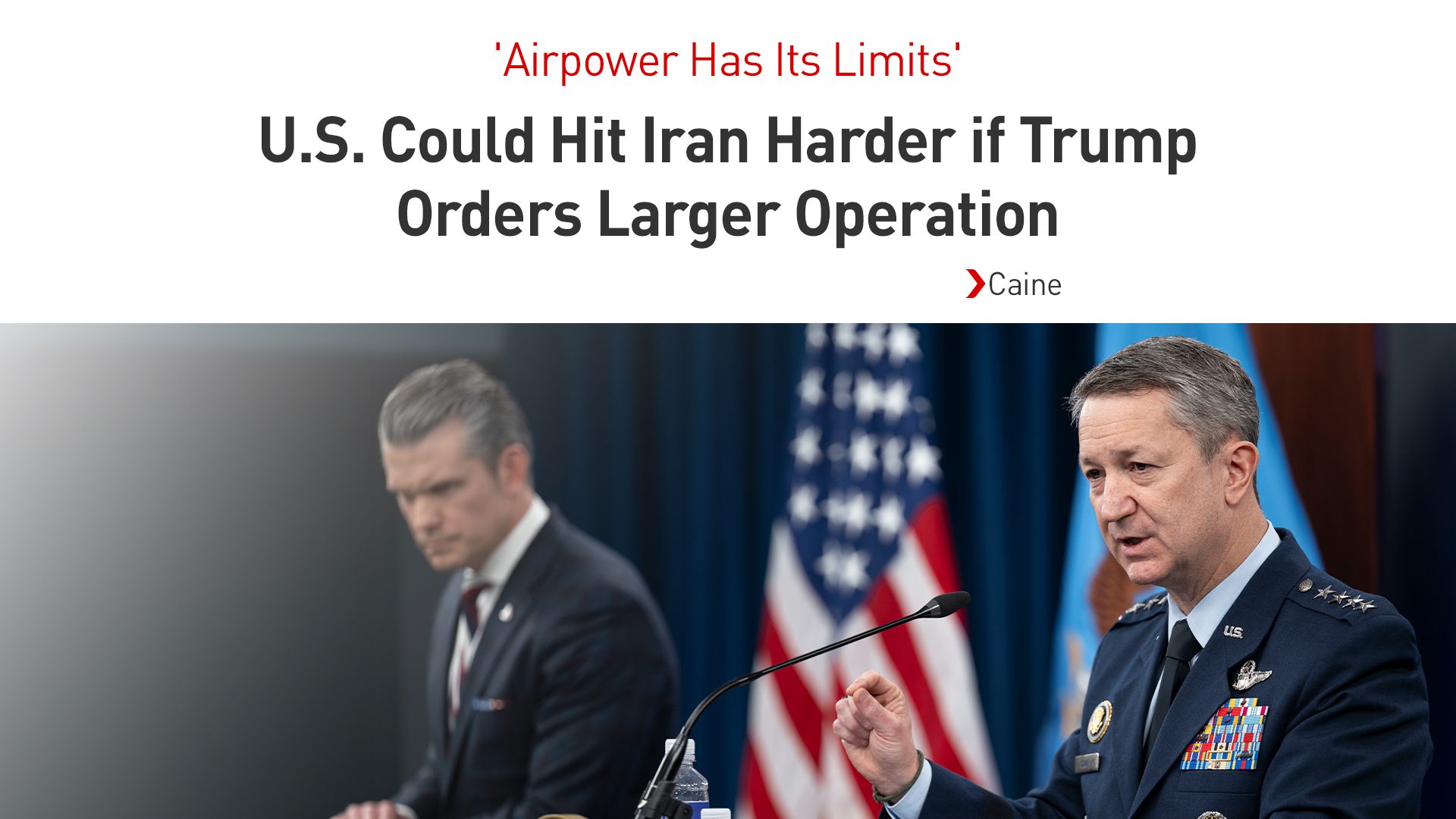
ERBIL (Kurdistan24) - Gen. Dan Caine, chairman of the US Joint Chiefs of Staff, has privately raised concerns with senior Trump administration officials about escalating the war with Iran and has sought what one source described to CNN as an "off ramp" from the conflict, according to three people familiar with the discussions.
The reported concerns center on the limits of further military action, including whether airstrikes alone can achieve President Donald Trump's objectives and whether continued operations could expose the United States and its regional allies to additional risks.
CNN reported that Caine has discussed those concerns with CIA Director John Ratcliffe, Secretary of State Marco Rubio and Vice President JD Vance.
The conversations have not been publicly confirmed, and Caine's spokesperson said the Pentagon does not discuss his confidential discussions with senior officials or anonymous characterizations of them.
Caine warns of limits to escalation
Caine is not reported to be openly opposing Trump or refusing to provide military options. As chairman, he is responsible for developing military options for the president.
But according to CNN's sources, he has increasingly emphasized the potential consequences of expanding the conflict. Caine has also publicly acknowledged that "airpower has its limits," a view that sources said has shaped his private discussions about the war.
At the same time, Caine has reportedly made clear that the US military could inflict significant damage on Iran if Trump ordered a larger operation. The reported approach reflects an effort to advise the president on the military consequences while preserving his ability to make the final decision.
The White House defended Caine's role, saying he provides Trump with information and a range of options while the president ultimately decides what is in US national-security interests.
Airpower, weapons stocks constrain options
CNN reported that concerns about US weapons supplies have become an important part of the administration's calculations. Caine has reportedly raised the issue of dwindling stocks of key munitions during recent discussions about potential escalation.
The concern extends beyond the immediate campaign. Continued high-intensity operations could put pressure on America's ability to sustain other security commitments and provide air-defense support to regional partners.
The administration also faces uncertainty over what additional strikes could accomplish. CNN reported that Trump has considered attacks on Iranian energy infrastructure and other targets, but officials cited by the network believe such measures may not compel Tehran to accept US demands.
They also warn that attacks on energy facilities could provoke Iranian retaliation against energy infrastructure in Gulf states.
Trump weighs escalation and diplomacy
Trump has repeatedly signaled a preference for using airpower rather than deploying US ground forces into Iran.
According to CNN, officials within the administration have not advocated such a ground commitment despite acknowledging that a much larger operation would present different military possibilities.
In late July, Trump reportedly considered a more aggressive round of strikes but ultimately stepped back after discussions with Middle Eastern allies concerned about possible Iranian retaliation.
The episode illustrates the tension between Trump's stated willingness to escalate and the practical constraints confronting US planners, including military stockpiles, regional vulnerability and the difficulty of translating airstrikes into a political settlement.
Searching for a way out
Against that backdrop, CNN reported that officials have been examining ways to reduce the conflict while giving Trump a political outcome he could present as a success.
The focus is reportedly on an "off-ramp" that could allow diplomacy to resume without requiring the administration to appear to have abandoned its objectives. One possibility discussed involves an agreement to reopen the Strait of Hormuz, according to CNN.
For Caine, the reported challenge is therefore twofold: ensuring Trump has credible military options while warning that further escalation may carry costs that airpower alone cannot resolve.
The reported discussions underscore a broader dilemma confronting the administration: how to maintain military pressure on Iran while creating enough space for a diplomatic path that could bring the conflict to an end.