Japan Scrambles Fighter Jets After Suspected Russian Aircraft Violate Airspace
“Russian aircraft violating our airspace is a grave infringement of our sovereignty, a threat to our security, and completely unacceptable,” Japan’s top government spokesman said
ERBIL (Kurdistan24) — Japan scrambled fighter jets and lodged a strong diplomatic protest with Russia on Tuesday after two suspected Russian military aircraft violated its airspace near the southwestern island of Okinoshima, marking a further deterioration in relations between the two countries amid rising military activity across East Asia.
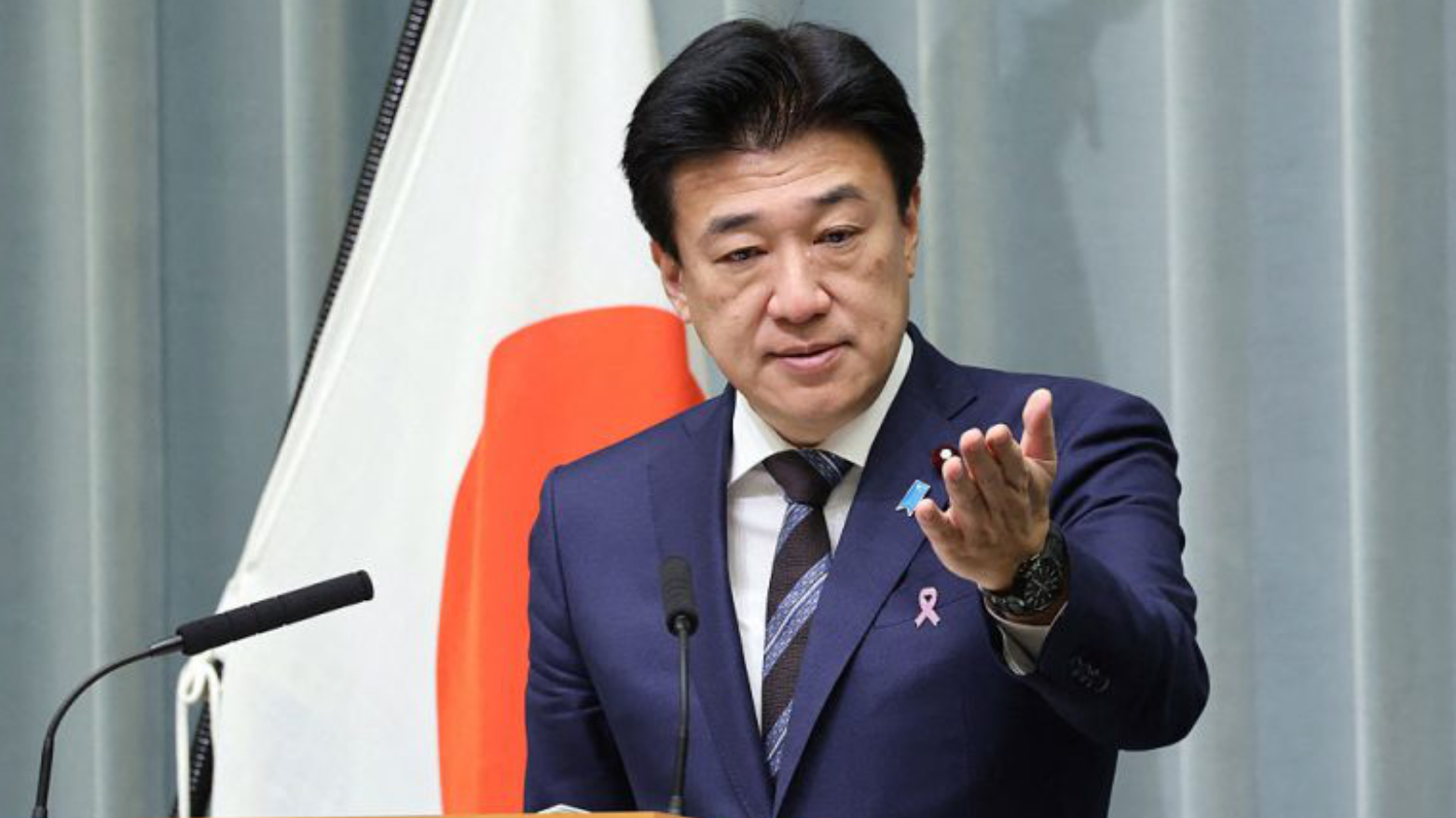
Japan's top government spokesman, Minoru Kihara, said the two aircraft entered Japanese airspace near Okinoshima, off Fukuoka Prefecture, shortly after 4:00 a.m. Tuesday (1900 GMT Monday). The aircraft each remained inside Japanese airspace for approximately three minutes before leaving.
Japanese fighter jets were dispatched to intercept the aircraft and issued warnings, Kihara said.
"The violation of our national airspace by Russian aircraft is not only a grave infringement of our country's sovereignty, but also a threat to our security and is completely unacceptable," Kihara told reporters.
He said Tokyo had lodged a "very stern protest" through diplomatic channels and demanded that Moscow take measures to prevent similar incidents.
According to Kihara, the Russian aircraft travelled through the Tsushima Strait, passed between Yonaguni Island and Taiwan, and continued toward the Pacific Ocean.
The incident came hours after South Korea reported that several Russian military aircraft had entered its Korea Air Defence Identification Zone (KADIZ), prompting Seoul to deploy fighter jets and conduct tactical manoeuvres.
South Korea's Joint Chiefs of Staff said an unspecified number of Russian aircraft entered and subsequently left the air defence zone over the East Sea, also known as the Sea of Japan, early Tuesday. Seoul stressed that the aircraft did not violate South Korean sovereign airspace.
Taiwan also reported detecting two Russian military aircraft near the island early Tuesday, saying its armed forces monitored their movements and responded accordingly.
An air defence identification zone is not sovereign airspace but a designated buffer area where countries seek to identify approaching aircraft for security purposes.
Although military aircraft are generally expected to notify relevant authorities before entering such zones, international law does not make prior notification a legal requirement.
Japan-Russia tensions
The latest incident comes amid increasingly strained relations between Tokyo and Moscow, which have been complicated by a decades-old territorial dispute over a group of Pacific islands seized by the Soviet Union in 1945.
Known in Japan as the Northern Territories and in Russia as the southern Kuril Islands, the disputed territory has remained a major obstacle to a formal peace treaty between the two countries following World War II.
Japan last lodged a "very serious protest" over a Russian aircraft entering its airspace in 2024, when a Russian patrol plane made three incursions. It was the first confirmed violation since 2019.
Tensions have intensified in recent weeks following Russia's arrest of Japanese journalist Yuki Imai, who works for the Hokkaido Shimbun newspaper, in October. Russia's Federal Security Service (FSB) accused him of conducting espionage activities on Russian territory, allegations Japan has denied.
Moscow's Foreign Ministry has also accused Tokyo of systematically using journalists for intelligence-gathering operations inside Russia.
Another source of friction is the seizure of assets belonging to Japan Tobacco in Russia. Earlier this month, Tokyo demanded their immediate release, describing the move as unacceptable. Moscow has defended measures targeting foreign companies as retaliation for international sanctions.
In August, Japan also protested Russian President Vladimir Putin's visit to the disputed Kuril Islands. It was the first visit to the territory by a Russian president since Dmitry Medvedev travelled there in 2010.
Tokyo separately objected to Moscow's announcement that it would conduct missile tests in waters near one of the disputed islands visited by Putin.
Possible Takaichi-Putin meeting
Against this backdrop, Japanese Prime Minister Sanae Takaichi and Putin are both expected to attend an Asia-Pacific summit in the Chinese city of Shenzhen this week.
Several Japanese media outlets have reported that Tokyo has requested a meeting between the two leaders on the sidelines of the gathering. The Kremlin said on Monday that it had not ruled out the possibility of talks.
Any potential meeting would take place amid mounting diplomatic and security tensions, with the territorial dispute, the detention of the Japanese journalist, and Russia's seizure of Japanese corporate assets continuing to strain bilateral relations.