Iraqi Oil Minister Says Talks Underway to Raise Kurdistan Oil Quota
Basim Mohammed Khudair says increasing the Kurdistan Region’s crude allocation is under discussion as Baghdad advances plans for oil exports through Türkiye.
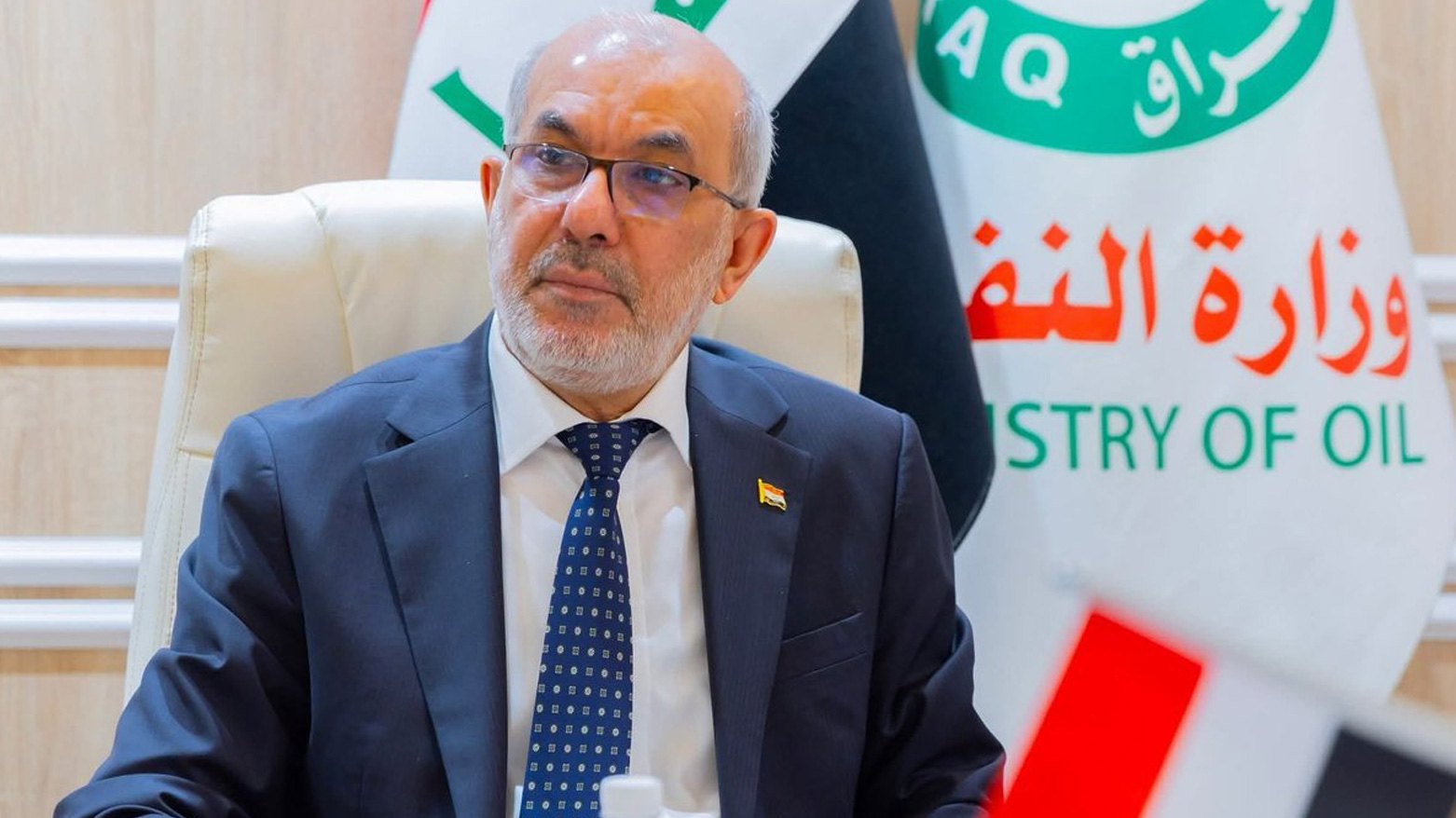
ERBIL (Kurdistan24) - Iraq's Oil Minister Basim Mohammed Khudair said Saturday that discussions are underway to increase the Kurdistan Region's daily crude oil allocation, describing the proposed adjustment as relatively straightforward.
Khudair made the remarks to Kurdistan24 reporter Shivan Jabbari in Baghdad, saying that "increasing the Kurdistan Region's crude oil quota is not a complex issue."
The comments come as Baghdad and the Kurdistan Regional Government (KRG) continue discussions over the unresolved framework governing oil production, allocation and exports from the Region.
Khudair said the federal government does not distinguish between citizens of the Kurdistan Region and those in other Iraqi provinces, while indicating that negotiations on the oil issue remain ongoing.
Baghdad weighs higher Kurdistan oil allocation
Khudair said a tripartite agreement involving the federal government, the KRG and international oil companies is already in place. According to the minister, the agreement could be amended depending on the outcome of the negotiations.
He did not specify a new allocation for the Kurdistan Region or indicate when the discussions would conclude.
The minister's comments point to continued negotiations over how the Region's crude production fits within Iraq's wider oil-export system, rather than signaling that a final settlement has been reached.
Pipeline plans tie Kurdistan to export strategy
Khudair also discussed plans for a Basra-Fishkhabour oil pipeline, saying it would be developed under a Build-Operate-Transfer (BOT) model.
The proposed infrastructure would provide an additional route for Iraqi crude exports through territory administered by the Kurdistan Region toward Türkiye.
Khudair said Iraq is planning to export 700,000 barrels per day through Türkiye. He noted that the Kirkuk fields alone could not provide the entire volume, making coordination with oil fields in the Kurdistan Region necessary.
The pipeline proposal therefore forms part of a broader export strategy in which production from different Iraqi fields could contribute to the planned flow toward Türkiye.
Iraq seeks higher exports and new investment
Khudair said Iraq currently produces about 2.7 million barrels of crude per day, while exports range between 1.5 million and 1.7 million barrels per day.
Beyond crude exports, he said Baghdad is working to reduce and eventually eliminate associated-gas flaring and is seeking international investment in oil fields and related infrastructure.
The minister also pointed to memorandums of understanding signed with US companies during Iraq's recent Washington visit, saying they are intended to support development in the oil and broader economic sectors.
For Baghdad and Erbil, however, the immediate issue remains the allocation of Kurdistan Region crude. Khudair's remarks indicate that negotiations over that allocation are continuing alongside plans to expand Iraq's export infrastructure.