Turkish Justice Minister Denies Demirtaş Exclusion From Peace Bill
Türkiye's Justice Minister Akın Gürlek's denial comes as Parliament advances legislation linked to the PKK disarmament process and a new phase in Türkiye's Kurdish issue.
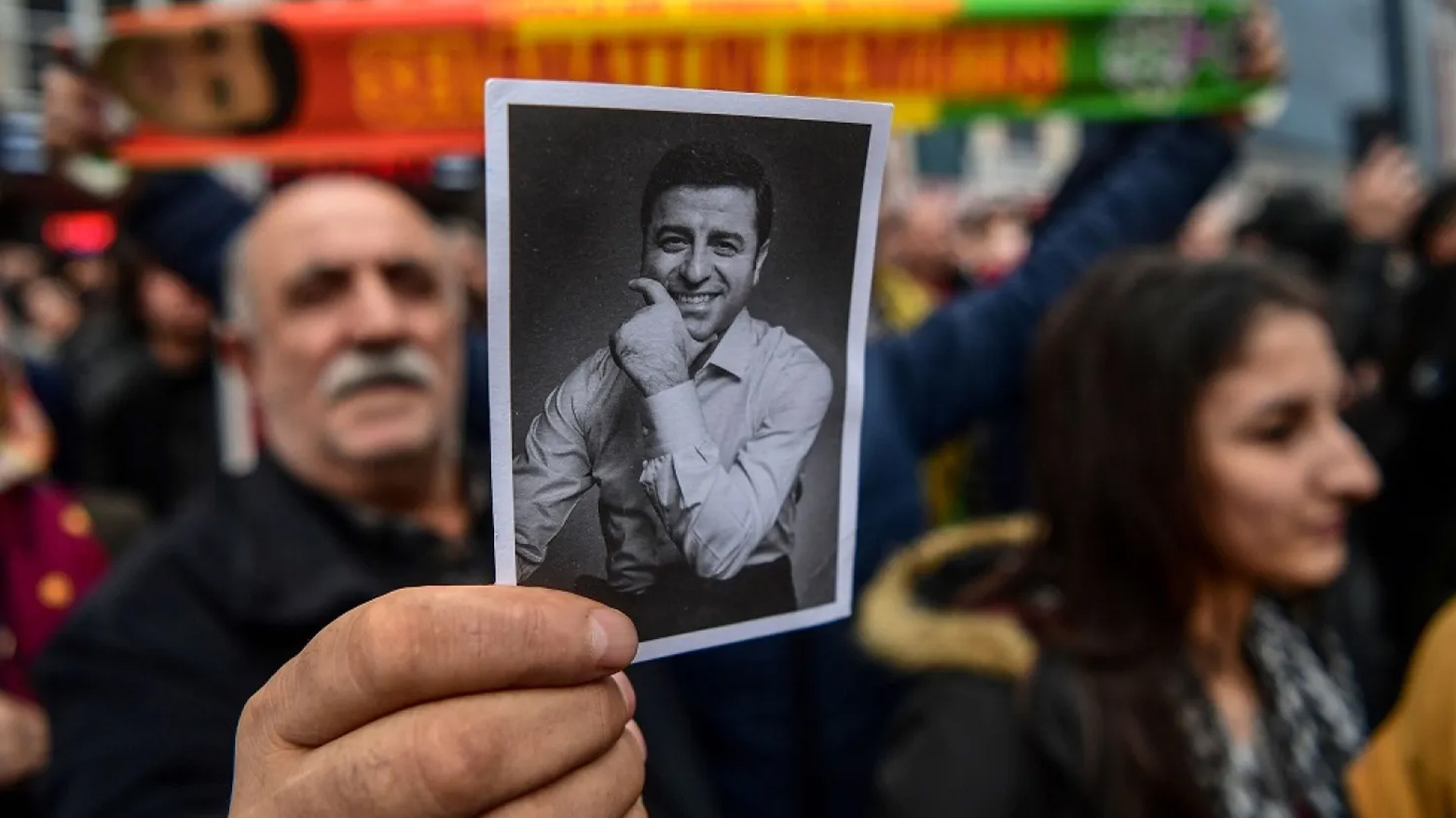
ERBIL (Kurdistan24) - Türkiye's Justice Minister Akın Gürlek has denied reports that imprisoned former HDP co-chair Selahattin Demirtaş would be excluded from a proposed peace-process framework, leaving open the possibility that he could benefit from the legislation if it is enacted and he meets its eligibility requirements.
The clarification followed a report by journalist Abdulkadir Selvi, who said Gürlek had told an AK Party Central Executive Board meeting that neither Demirtaş nor PKK leader Abdullah Öcalan would benefit from the proposed law.
Fatih Atik, Ankara representative for TGRT News, subsequently contacted Gürlek directly. According to Atik, the justice minister denied making the reported remarks and rejected the claim that he had declared Demirtaş ineligible.
Gürlek's denial does not establish that Demirtaş will be released or that he currently qualifies for the proposed mechanism. Any benefit would depend on the final text of the legislation, its eligibility provisions and how the law is implemented.
The distinction is significant because the bill would create a legal framework for certain cases connected to the proposed disarmament and organizational dissolution of the PKK and KCK.
Parliament advances peace framework
The Turkish Parliamentary Justice Committee approved the proposed “Strengthening National Solidarity and Social Unity Act” on Saturday, Aug. 8, after an accelerated review. The legislation is expected to proceed to the full parliamentary agenda.
Committee member İdris Şahin said Parliament was the appropriate venue for resolving the PKK issue, while noting that further confidence-building steps were still needed.
Meral Danış Beştaş, a DEM Party lawmaker from Erzurum, described the legislation as an opportunity for lasting peace, while acknowledging that gaps remained in the proposed framework.
The competing reactions reflect continued differences over the scope and implementation of the process, even as the legislation moves forward.
What the proposed law would do
The 12-article bill establishes a legal framework tied to the disarmament and organizational dissolution of the PKK and KCK. According to the supplied report, security institutions would verify the end of armed activity, with the National Security Council (MGK) responsible for confirming the process.
The proposed mechanism would cover people accused of founding, leading or participating in the PKK or KCK, including those involved in financing. It also sets exclusions, including for people convicted of intentional murder and those sentenced to aggravated life imprisonment before June 1, 2005.
For eligible cases, the legislation proposes different periods for deferring investigations, trials and sentences. Cases involving sentences of less than 15 years could be deferred for five years, while cases involving sentences exceeding 15 years or life imprisonment could be deferred for 10 years.
If no new crimes are committed during the applicable period, the proposed framework would allow eligible cases to be permanently closed. The provisions therefore could have significant consequences for some people held under existing criminal proceedings, but they do not amount to an automatic release for everyone covered by the legislation.
Oversight would involve a senior government council chaired by the vice president and including the justice, foreign, interior and defense ministers and the head of the National Intelligence Organization (MIT). A 17-member parliamentary monitoring committee would also be established.
A new phase in Türkiye's Kurdish issue
The initiative traces its political origins to October 2024, when MHP leader Devlet Bahçeli called for a new approach to the Kurdish issue and PKK disarmament.
The proposed legislation now places the process on a formal legal footing. For Demirtaş, however, the immediate question remains whether the final law will cover his case.
Gürlek's denial means that claims he has already been ruled out are not supported by his own account. Whether Demirtaş can ultimately benefit will depend on the legislation approved by Parliament and the subsequent legal process.
Kurdistan24's news writer Zia Ozery contributed to this report.