First Convoy of 650 Sere Kaniye Families Begins Return After Seven Years
Hundreds of displaced Kurdish families leave Hasakah for Sere Kaniye as first organized return tests prospects for a wider repatriation
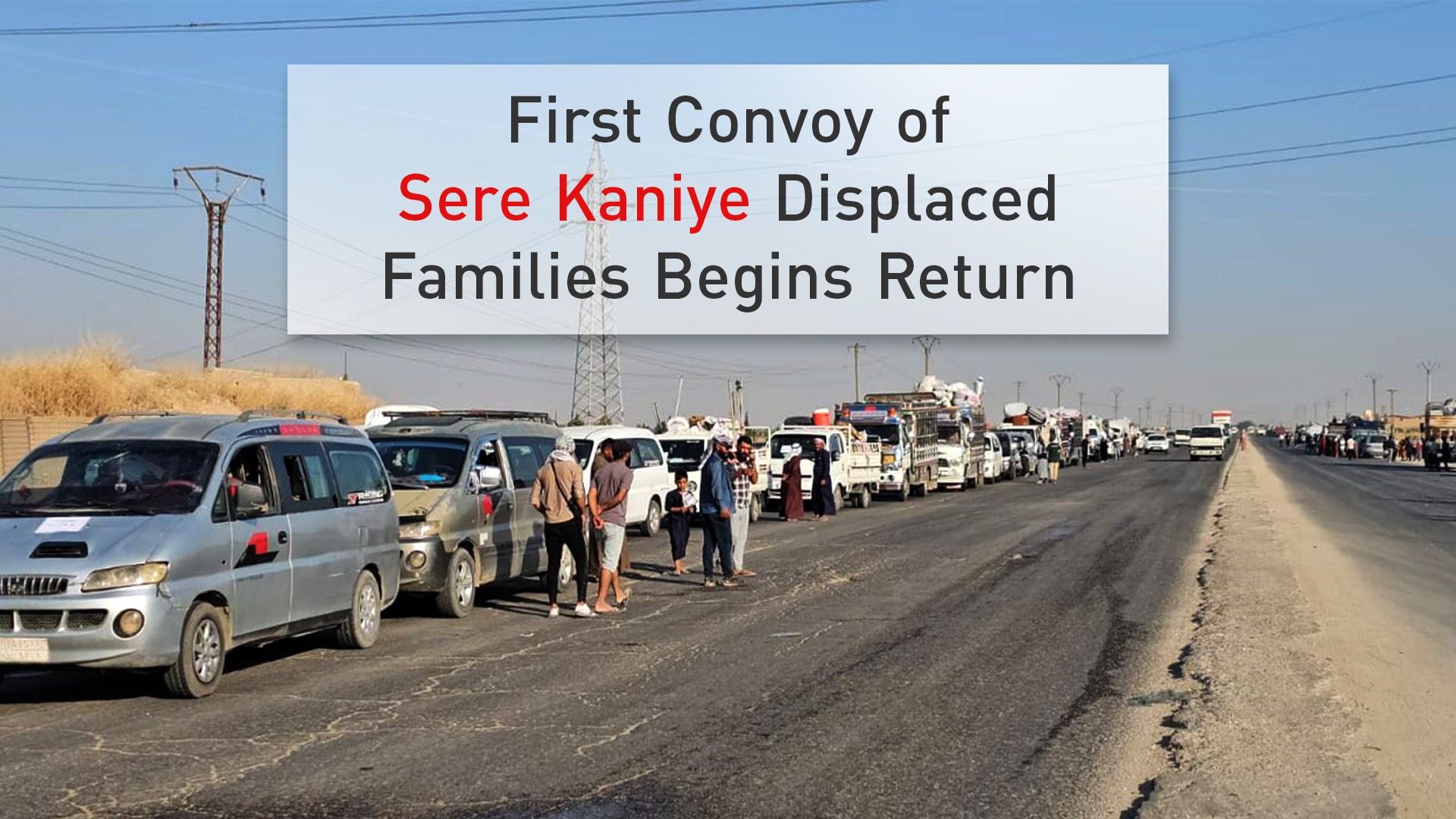
ERBIL (Kurdistan24) - The first organized convoy carrying around 650 families from Sere Kaniye (Ras al-Ayn), Western Kurdistan, began its journey home on Monday, marking a significant step in the return of residents displaced from the northeastern Syrian border town seven years ago.
The families gathered in Hasakah with their belongings before setting out for Sere Kaniye, where many left their homes during the fighting in 2019.
The return is being coordinated by the Sere Kaniye IDP Committee in cooperation with humanitarian and security organizations, including the Kurdish Red Crescent and local Internal Security Forces.
The first convoy is being closely watched by displaced residents and aid organizations as an early test of whether a broader and sustained return can be achieved.
A return after seven years
The journey comes after years of displacement in which thousands of Sere Kaniye residents remained in Hasakah and surrounding areas, uncertain about when they would be able to return.
Men, women and children joined the convoy, loading furniture and personal belongings onto trucks before departing Hasakah.
An AFP correspondent reported seeing dozens of trucks preparing to leave, with families eager to make the journey back to their hometown.
Jawan Isso, a member of a committee representing displaced residents, told AFP that a first group of about 2,500 people was returning Monday.
"This step is the result of efforts by all sides and ongoing coordination" between Damascus and Kurdish authorities, Isso said, according to AFP. He added that another group was expected to return in the following days.
For many returnees, the journey carries an emotional significance that goes beyond resettlement.
"I've been waiting for this moment... it's like a dream for a person to return to their home," 37-year-old returnee Nora Khodor told AFP.
Another returnee, Rawda Mohammed, 39, said she was happy to be going home despite not knowing what she would find there.
"I asked about my home. They told me it is totally destroyed, but we didn't get pessimistic because we're happy to return," she told AFP.
Displacement began in 2019
The residents' displacement dates to Oct. 2019, when Turkish forces and allied Syrian fighters launched an offensive against Kurdish-led forces in northeastern Syria and seized Sere Kaniye and surrounding areas.
The operation forced tens of thousands of residents from their homes.
The city, known as Ras al-Ayn in Arabic and Sere Kaniye in Kurdish, had been under Kurdish-led administration before the offensive.
According to the supplied Kurdistan24 report, more than 14,000 families, an estimated 85,000 people, were displaced from the area.
The seizure of the town fundamentally altered the demographic and social landscape of the area.
Human rights organizations have reported cases of homes and property being looted or seized following the offensive, while some fighters and their families subsequently settled in properties belonging to displaced residents.
The unresolved status of homes and land has consequently become one of the most difficult questions surrounding any potential return.

Property and compensation concerns
The convoy's departure does not resolve those disputes.
On Saturday, displaced Sere Kaniye residents protested outside the Hasakah Governorate building, calling for compensation for homes and property they said had been destroyed or looted.
The protesters also called for guarantees of security and stability, arguing that returning families need more than transportation back to their hometown.
The Sere Kaniye IDP Committee similarly emphasized the importance of protecting housing, land and property rights and ensuring that basic services and infrastructure are available for those who return.
Those concerns could determine whether Monday's convoy becomes the beginning of a broader repatriation process or remains a limited movement.
A wider political shift
The return is taking place against a changing political backdrop in Syria.
AFP reported that a January agreement between Kurdish authorities and Damascus included provisions for integrating Kurdish-led military forces and civil institutions into the Syrian state and facilitating the return of displaced residents.
The agreement came after the fall of longtime Syrian President Bashar al-Assad in December 2024 and the subsequent efforts by Syria's new authorities to extend central government control across the country.
For Sere Kaniye residents, however, political agreements must translate into practical guarantees before large-scale returns can become sustainable.
Security, property ownership, compensation, access to services and the condition of homes are all likely to influence the decisions of families still living in displacement.
A test for wider returns
Monday's convoy represents the first major organized movement of Sere Kaniye families back toward their hometown since their displacement.
The journey also comes as Syria continues to grapple with one of the world's largest displacement crises. According to the United Nations, about 5.5 million people remain internally displaced across Syria after more than a decade of conflict.
For the first 650 families, the immediate priority is reaching home and assessing what remains of their properties and communities.
For thousands of others still displaced, their experience could provide an indication of whether returning to Sere Kaniye is becoming a realistic possibility.
The Sere Kaniye IDP Committee described Monday's movement as the beginning of a path toward “a full return,” while stressing that housing, land and property rights and essential infrastructure must be protected.
After seven years away, the first convoy is therefore more than a journey home. It is an early test of whether the conditions exist for displaced Sere Kaniye residents to rebuild their lives in the city they were forced to leave.
This report was updated on Monday, Aug. 10, 2026, at 01:48pm.