Iran Says Mecca Agreement Shows U.S. Cannot Guarantee Regional Security
Iranian spokesperson Esmaeil Baqaei welcomes regional cooperation while insisting the Strait of Hormuz will remain closed as long as hostilities continue.
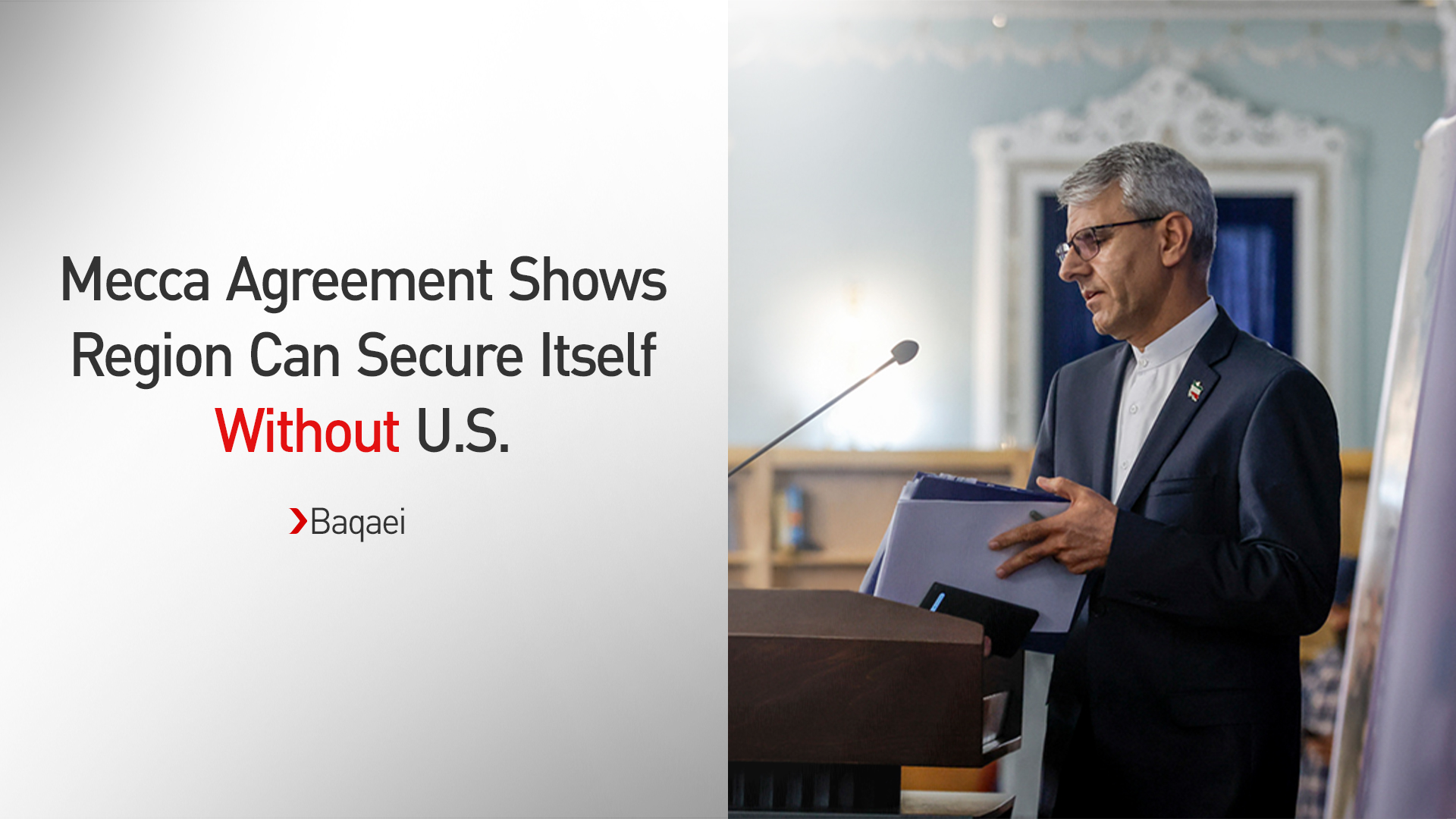
ERBIL (Kurdistan24) - Iranian Foreign Ministry spokesperson Esmaeil Baqaei said Monday that the newly signed Mecca Agreement between Saudi Arabia, Türkiye and Pakistan demonstrates that regional countries increasingly see security cooperation without the United States as the more viable path.
Speaking at his weekly press conference in Tehran, Baqaei said the agreement reflected a broader regional realization that "achieving security through the United States is not a viable solution."
He said Iran did not consider the agreement between Saudi Arabia, Türkiye and Pakistan inherently hostile, while urging neighboring states to deepen bilateral relations, build trust and develop regional security arrangements without relying on outside powers.
Tehran backs regional cooperation
Baqaei's remarks came shortly after Saudi Arabia, Türkiye and Pakistan agreed to strengthen their defense cooperation amid heightened regional tensions.
Rather than directly challenging the agreement, Baqaei framed it as evidence of what he described as an emerging preference for regional solutions.
He called on neighboring countries to ensure their territories are not used as launching points for attacks against Iran, reiterating Tehran's opposition to foreign military intervention in the region.
The Iranian spokesperson also said Tehran's approach to international agreements and treaties remains guided by its national interests.
His comments reflect Iran's broader effort to portray regional security as a matter that should be managed primarily by neighboring states rather than through U.S.-led security arrangements.
Hormuz remains central to tensions
The Strait of Hormuz remained another major focus of Baqaei's remarks as Tehran and Oman continue discussions over maritime traffic through the strategic waterway.
Baqaei said the reopening of the strait would depend on conditions on the ground and Iran's requirements, maintaining that Tehran would not allow vessels to transit while hostilities continue.
"It is natural for the Strait of Hormuz to remain closed to prevent it from being used as a platform for attacks against Iran," Baqaei said.
He added that reopening the waterway "depends entirely on Iran's conditions and the prevailing circumstances," indicating that Tehran does not currently view the resumption of normal commercial traffic as unconditional.
The strait is one of the world's most important energy routes, linking the Persian Gulf with the Gulf of Oman and the wider Indian Ocean.
Iran, Oman discuss shipping corridors
Baqaei said negotiations with Oman were continuing over arrangements for maritime navigation, including the possible designation of specific shipping corridors.
He described the discussions as constructive but said no agreement had been reached on transit fees or taxes.
"That issue has not been raised" in the talks, Baqaei said, while noting that charging fees for services provided to vessels was standard practice.
The negotiations come as regional governments face pressure to restore maritime traffic and reduce the economic consequences of disruptions to one of the world's key shipping routes.
For Tehran, however, the reopening of the strait remains closely tied to the wider conflict and its security concerns.
Baqaei's comments therefore combine two messages: Iran is open to regional diplomacy and cooperation, but it continues to reject security arrangements it believes depend on Washington and insists that control over the Strait of Hormuz remains subject to its own wartime conditions.