Iraq Vows to Protect its Airspace from Use in Attacks on Neighbors
Iraqi Prime Minister Ali al-Zaidi reviewed the country’s air defense readiness and a 2026–2031 plan to strengthen its capabilities ahead of the end of the international coalition’s mission.
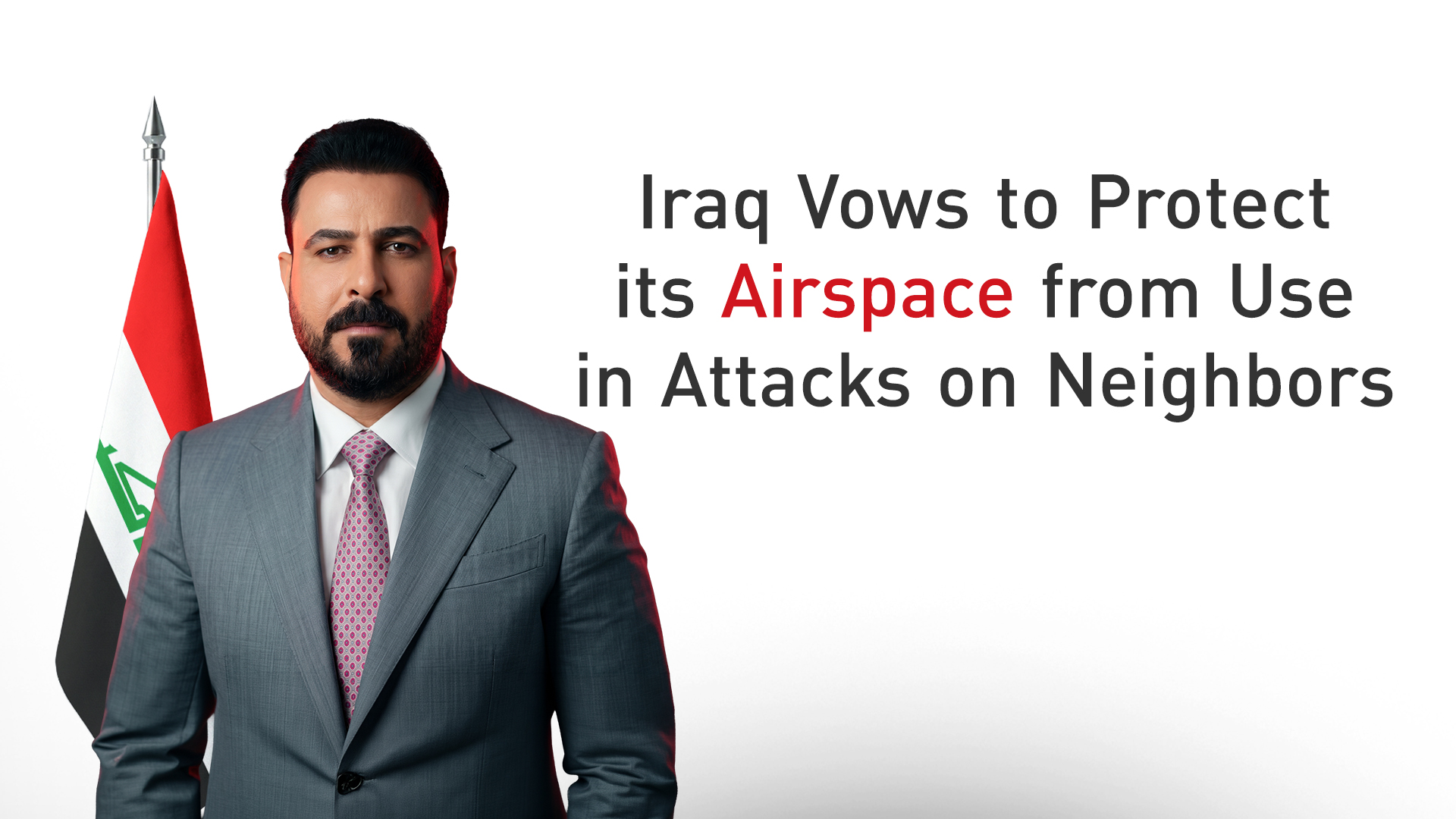
ERBIL (Kurdistan24) - Iraqi Prime Minister and Commander-in-Chief of the Armed Forces Ali al-Zaidi made a late-night field visit to the Air Defense Command’s operations center, reviewing the readiness of Iraq’s air defense systems and stressing that neither its territory nor its airspace will be allowed to become a launchpad for attacks against neighboring countries.
According to a statement from the Prime Minister’s Media Office, al-Zaidi visited the Air Defense Command’s operations center late Wednesday night into Thursday to closely review the duties and deployment of the country’s air defense units.
During the meeting, officials discussed the strategic plan for 2026 to 2031 aimed at developing Iraq’s air defense capabilities. The plan includes work to expand radar detection and surveillance systems, weaponry, and command-and-control systems, with the goal of establishing an integrated national air defense system.
Meeting with air defense commanders and officers, al-Zaidi described the force as a central pillar of Iraq’s sovereignty.
“Air defense is Iraq’s shield in the sky and the first line of defense for the country’s sovereignty,” al-Zaidi said.
He also stressed that building a strong armed force is a fundamental requirement for Iraq to be able to make its political and military decisions independently.
Al-Zaidi emphasized that Iraq would not allow its airspace to be violated in any way or its security to be undermined.
Addressing the countries of the region, he delivered a clear message:
“We will not allow Iraqi territory or airspace to become a place for launching any attack or aggression against neighboring countries.”
At the end of his visit, the Commander-in-Chief of the Armed Forces instructed officials to provide the Air Defense Command with all necessary technological and military requirements, with the aim of maintaining the highest level of readiness to protect Iraq’s sovereignty following the withdrawal of international forces.