Sipan Hamo Removed From Türkiye's Terror Wanted List
The former SDF commander's removal from Türkiye's highest wanted category comes as Ankara advances a legal framework for PKK disarmament and prepares safeguards for the next phase of the process.
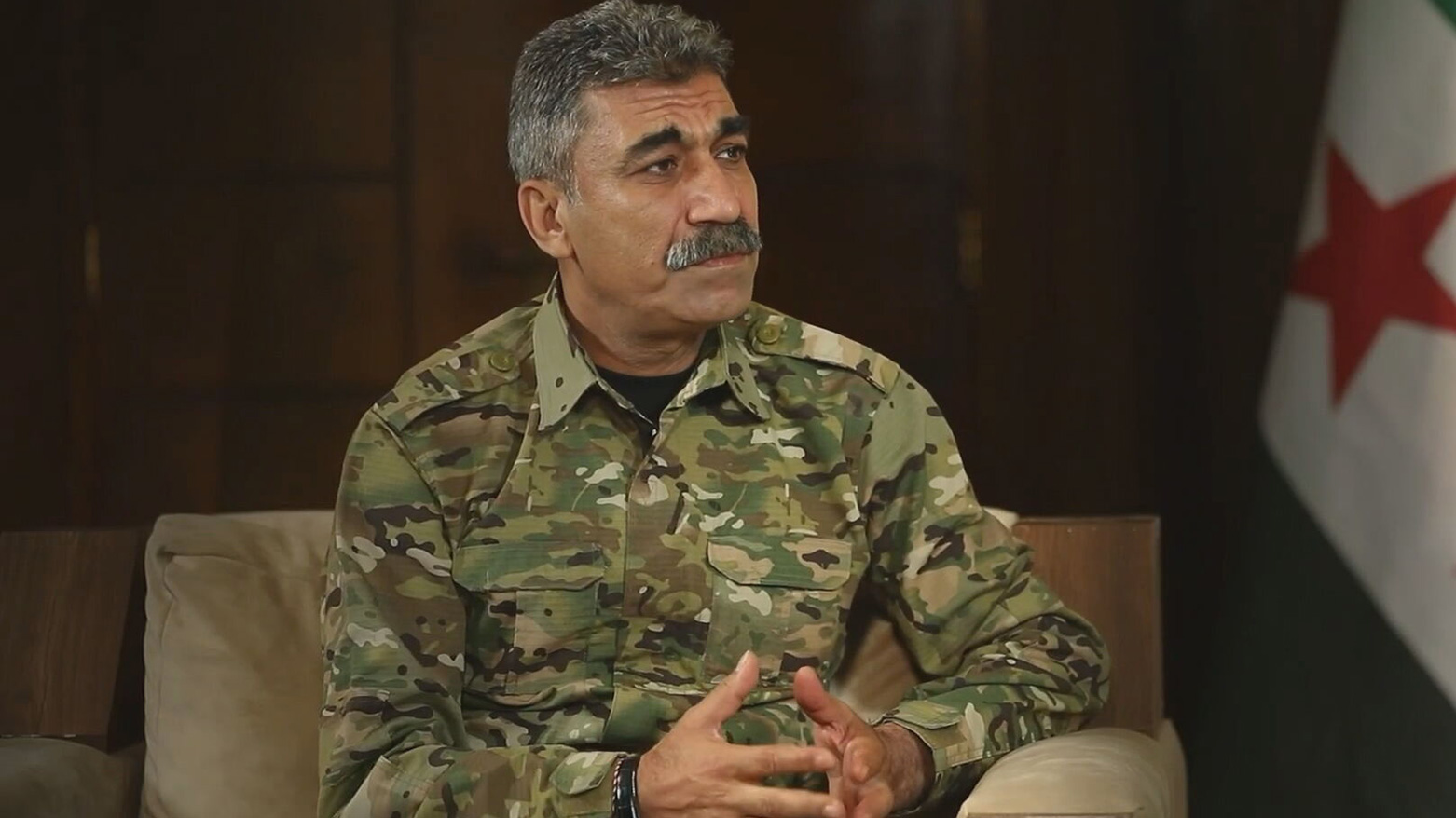
ERBIL (Kurdistan24) - Türkiye has removed Sipan Hamo, a former commander of the Syrian Democratic Forces (SDF) who now serves as Syria's deputy defense minister for eastern affairs, from its Interior Ministry wanted list, according to Turkish media reports.
Hamo, also known as Samir Oso, had previously been placed on Türkiye's Red List, the highest category in the Interior Ministry's wanted system, with a reported reward of 20 million Turkish lira for information leading to his capture.
His removal comes roughly five months after he assumed his position in Syria's government and as Ankara moves ahead with a broader legal and political process centered on the disarmament and dissolution of the Kurdistan Workers' Party (PKK).
The timing has drawn attention because senior SDF figures, including General Commander Mazloum Abdi, reportedly remain on Türkiye's wanted lists.
From SDF Commander to Syrian Government Official
Hamo's change in status follows his appointment as Syria's assistant defense minister for eastern affairs in March, after the Jan. 29 agreement between Damascus and the SDF established a framework for integrating Kurdish-led military forces and civil institutions into Syria's state structures.
The appointment represented a major shift in Hamo's political and institutional role.
For years, he had been identified by Ankara as a senior figure linked to the Kurdish-led military structure in Syria. His subsequent incorporation into Syria's official defense apparatus placed him within a state institution at a time when Damascus and Kurdish representatives were negotiating the future of security and military structures in the country.
The reported removal from Türkiye's wanted system now comes against another changing regional backdrop: Ankara is simultaneously attempting to establish a legal mechanism for the PKK's disarmament and dissolution.
Ankara Moves From Framework to Implementation
Türkiye's Parliament has approved a 12-article framework law intended to provide a legal structure for the next stage of the process.
The bill passed with a broad parliamentary majority, and AKP parliamentary group deputy chairman Abdulhamit Gül described the vote as an unusually strong political consensus.
"This is not just a number; it holds deep political meaning and demonstrates that politics in Türkiye can solve problems," Gül said, referring to the size of the parliamentary majority.
He also said the legislation is intended to serve as a transitional framework and that Parliament could adopt additional measures if new requirements emerge during implementation.
The debate has nevertheless exposed differing views over what the legislation represents.
The pro-Kurdish DEM Party has said the law does not meet all of its expectations but could provide a legal foundation for the process. Other Kurdish political actors have argued that the framework focuses primarily on security and does not address the broader political and constitutional dimensions of the Kurdish issue.
Disarmament Process Expected to Be Closely Monitored
Turkish Interior Minister Mustafa Çiftçi has stressed that the process is a legal framework rather than an amnesty.
He outlined four stages: dissolution, verification, monitoring and normalization.
According to his account, the Turkish state has taken measures to prevent attempts to sabotage or derail the process and will continue counterterrorism operations both inside Türkiye and across its borders.
Çiftçi said the authorities intend to monitor developments on the ground and verify the completion of each stage.
Once weapons have been surrendered and field verification completed, the National Security Council is expected to issue a final decision, which would then be published in the Official Gazette and trigger further judicial and institutional measures.
That structure underscores Ankara's insistence that disarmament must be verifiable and subject to state oversight.
Qandil, Erbil and Sulaimani in Focus
Turkish broadcaster Halk TV, in reporting cited in the supplied material, has provided further details about how the disarmament process could unfold.
According to the report, PKK members would surrender weapons at designated centers in mountainous areas of Erbil and Sulaimani, with the process overseen by the Turkish Armed Forces and the National Intelligence Organization, in coordination with authorities in the Kurdistan Region.
Weapons and ammunition would be inventoried as part of the process.
The report said the Qandil Mountains would be an initial stage, while the Makhmur camp would represent the final phase.
Those details have not been independently confirmed by all parties, but they illustrate the logistical and security challenges that could emerge as the political framework moves toward implementation.
A Wider Regional Connection
The developments involving Hamo cannot be separated entirely from the political changes taking place in Syria.
The Jan. 29 Damascus-SDF agreement has created a separate track for integrating Kurdish-led forces into Syria's formal institutions. Hamo's appointment within the Syrian Defense Ministry was one of the clearest institutional consequences of that arrangement.
His removal from Türkiye's wanted list, if maintained as reported, could therefore be interpreted as a sign of how regional actors are adjusting their policies as former armed commanders take positions within official state structures.
At the same time, Ankara's decision regarding Hamo does not amount to a broader removal of SDF leaders from its wanted lists. Abdi and other senior officials remain subject to Türkiye's security policies.
That distinction is important because the Syria track and the Türkiye-PKK process, while involving overlapping Kurdish political and security questions, are not formally the same process.
Political Questions Remain
The biggest question now is what follows the passage of Türkiye's framework law.
The government has emphasized legal verification and continued security operations, while Kurdish political parties have called for measures extending beyond disarmament to address political representation, language rights, constitutional questions and other longstanding grievances.
PSK council member Alaattîn Aras, for example, said his party supports the disarmament and dissolution of the PKK but does not consider those steps sufficient to resolve the Kurdish issue.
HAK-PAR Vice President Mistefa Aytaç similarly argued that the framework is focused on the PKK/KCK rather than the broader political questions surrounding Kurdish citizens.
The government, however, has described the legislation as a practical mechanism for establishing a new phase and has left open the possibility of further amendments.
Hamo's Status Offers a Possible Signal
Against that backdrop, Hamo's removal from Türkiye's wanted list stands out as a potentially significant development.
It does not by itself establish a broader policy shift toward all SDF figures or resolve the disputes surrounding the PKK's future. But it illustrates how the status of individual Kurdish commanders can change as political circumstances, institutional roles and security frameworks evolve.
For Hamo, the transition from a figure on Türkiye's highest wanted list to a Syrian government official represents a striking change in status.
For Ankara, the next challenge is more expansive: to turn the newly approved legal framework into a verifiable disarmament process while preventing violence or political disputes from derailing it.
And for Kurdish political actors, the central question remains whether the current process will stop at disarmament, or eventually address the wider political issues that have sustained the conflict for decades.