Wildfires Tear Across Europe as Blistering Heat Forces Thousands From Their Homes
France, Belgium, Germany, Croatia, Serbia, Spain, and Greece battle simultaneous blazes in one of the continent's most severe wildfire crises in recent memory, as a historically hot summer claims thousands of lives
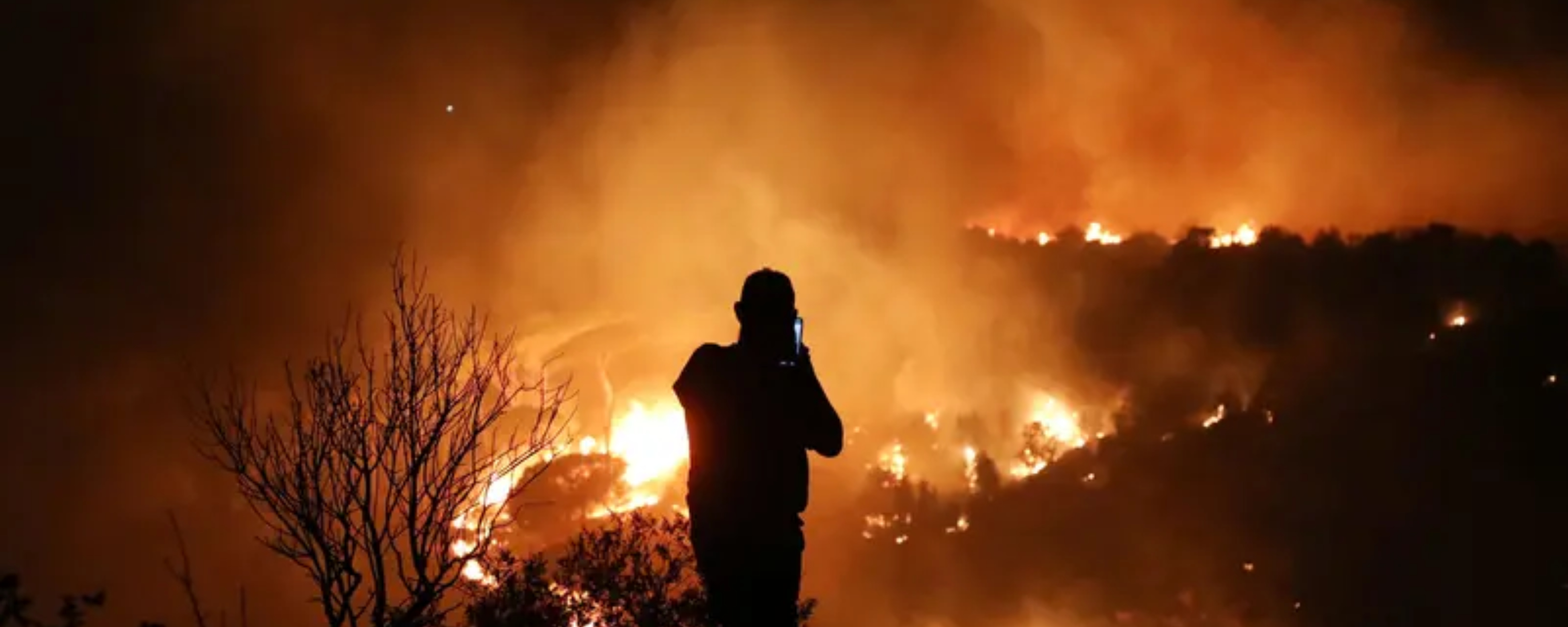
ERBIL (Kurdistan 24) - A wall of fire stretched across Europe last Saturday as countries from the Atlantic coast to the Adriatic Sea battled simultaneous wildfires driven by a historically hot summer, tinder-dry landscapes, and relentless winds, forcing thousands of residents and holidaymakers from their homes and pushing firefighting resources to their limits across seven nations.
A historically hot summer has already contributed to the deaths of thousands of people across the continent, according to European health authorities, with the lethal combination of extreme heat and rapidly spreading fires creating one of the most severe environmental emergencies Europe has faced in years.
France was among the worst affected on Saturday, as a forest fire in the Landes region of southwest France reignited in the early hours, forcing the evacuation of an additional 100 residents and holidaymakers from around the town of Luglon. The fire, which has been burning since Thursday, has now devastated 15.8 square kilometers, roughly six square miles, of forest, with some 650 people forced from their homes, according to regional government prefect Gilles Clavreul. Around 550 firefighters are battling the blaze near the site of another fire that erupted in July and consumed 37 square kilometers of land. Clavreul said he had formally requested that the government send a Chinook water-bombing helicopter dispatched by Australia to assist France's wildfire crisis.
In Belgium, a wildfire at the Fagnes natural park in eastern Belgium, near the border with Germany, has ravaged approximately 16 square kilometers of forest after starting on Friday and spreading rapidly through the night. Firefighter reinforcements from across Belgium and from Germany have been deployed to contain the blaze.
Just across the border in Germany's Eifel region, some 1,400 firefighters battled on Saturday to contain a major fire that forced the evacuation of approximately 1,800 people from Hurtgenwald, a town with a population of 9,000. The scale of the deployment underlined the severity of a fire that has taken hold in one of Germany's most densely wooded border regions.
Croatia faced twin emergencies on its coastline and islands. More than 100 firefighters and two water-bombing planes battled through the night to contain a major forest fire that broke out on Friday on the island of Dugi otok, threatening a large number of homes. Further south, a separate major fire that engulfed vineyards and olive groves on the Peljesac peninsula was brought under control on Friday evening following a fierce battle involving 240 firefighters and three aircraft.
Serbia was grappling with 25 serious forest fires simultaneously on Friday night, including one that has devastated 25 square kilometers of land at the Deliblatska national park near Belgrade, Serbian authorities confirmed.
In northeastern Spain, a fire in the Aragon region entered its sixth day on Saturday, having affected more than 15,000 hectares of land. Firefighters said they had halted its spread toward population centers and two monasteries, one of which has roots in the 10th century. Some 1,000 people from 18 villages and settlements remain evacuated, though weather forecasts are calling for light rain and lower temperatures in the coming days, offering a measure of relief.
Greece remained on high alert as strong winds kept the wildfire risk very high across several parts of the country. More than 50 agricultural and forest fires broke out in the last 24 hours, most of which were brought under control quickly, according to the Greek fire service, but the conditions driving them, extreme heat, low humidity, and powerful winds, have not abated.
The simultaneous outbreak of major wildfires across seven European countries on a single weekend reflects a pattern that climate scientists have warned about for years, in which rising baseline temperatures, earlier and drier summers, and reduced soil moisture combine to create conditions in which fires ignite more easily, spread more rapidly, and prove far more difficult to contain than in previous decades. The death toll from this summer's heat across Europe, running into the thousands before the wildfire season reached its peak, has already placed the summer of 2026 among the most deadly in the continent's recorded meteorological history.