Iran Strikes Hormuz Deal With Oman
Tehran announces maritime navigation agreement with Muscat despite American obstacles, as Iranian military official reveals three Su-24 pilots shot down in March have been held by Qatar for six months without family contact
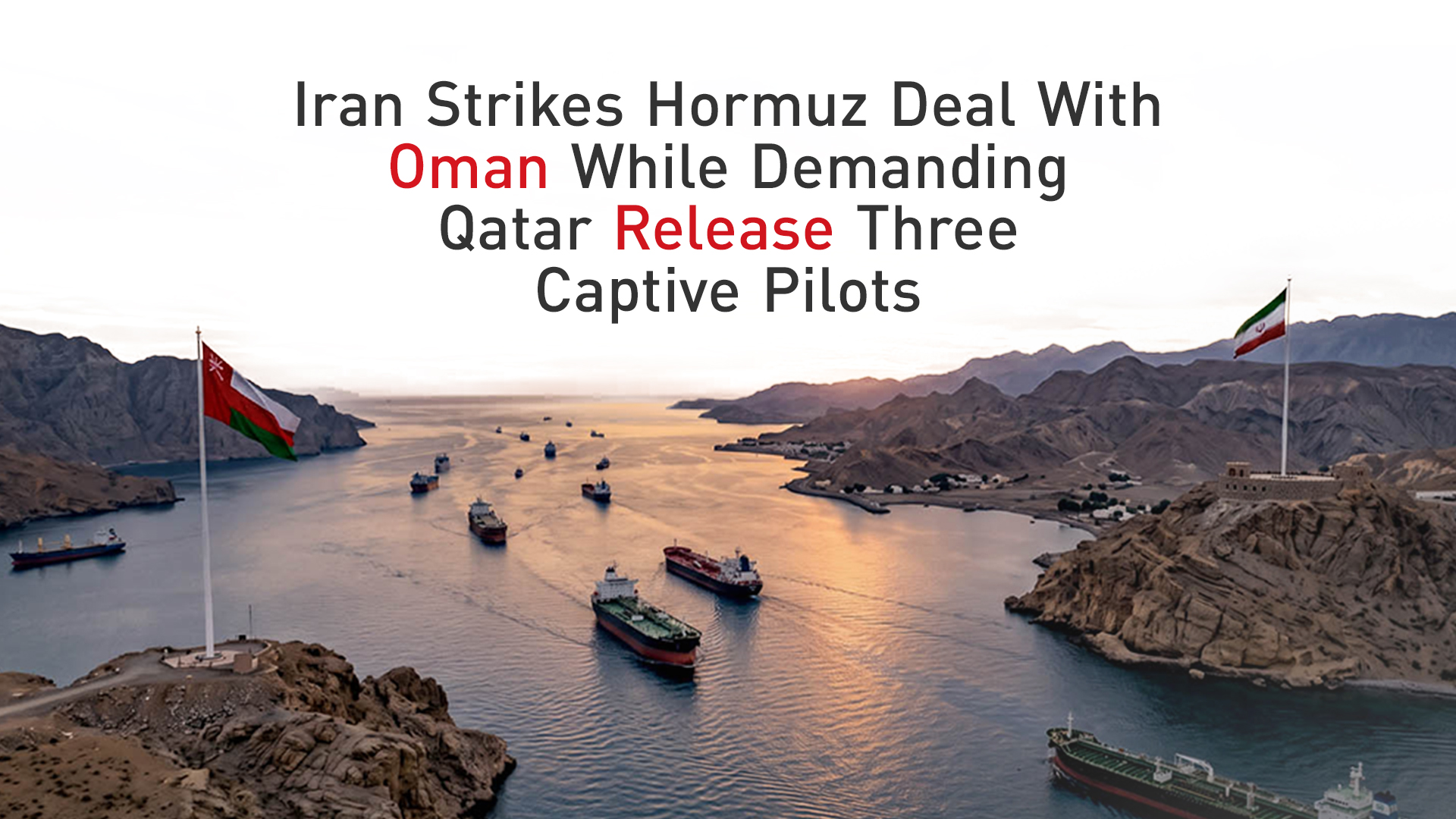
ERBIL (Kurdistan 24) - Iran delivered two significant announcements on Saturday revealing a completed maritime navigation agreement with Oman for the Strait of Hormuz while simultaneously demanding that Qatar release three Iranian Air Force pilots who have been held captive since a combat mission in March 2026, in disclosures that together illustrate the full complexity of Tehran's diplomatic and military position as the six-month war enters what may be its most consequential phase.
The Hormuz Agreement
Iranian Foreign Ministry spokesman Esmail Baghaei announced at a press conference on Saturday that Iran and Oman have reached an agreement on a maritime navigation map for the Strait of Hormuz, describing the deal as the product of sustained bilateral cooperation that overcame repeated American interference in the negotiating process.
"Despite American obstacles, the talks between Iran and Oman witnessed positive and steady progress, and an agreement was reached on the maritime navigation map for the Strait of Hormuz," Baghaei said, as Sky News Arabia reported on Saturday.
He described the agreement as the fruit of coordinated institutional cooperation between multiple Iranian state bodies, led by the Foreign Ministry and involving active participation from the country's defense, security, and environmental sectors. "As a coastal state, we began negotiations with Oman a long time ago to determine a safe maritime route through the Strait of Hormuz, and this was something that had to be accomplished regardless," he said.
Baghaei provided a timeline placing the origin of the negotiations at the same moment Washington and Tehran were finalizing their war-ending memorandum of understanding. "The talks between Iran and Oman began approximately two to three months ago, roughly coinciding with the signing of the memorandum of understanding to end the war," he said. "We were talking with the Omani side and came very close to reaching a result at certain points, but the obstacles placed by the United States and some other parties often caused disruption to this process."
The disclosure confirms that Tehran pursued a bilateral maritime management arrangement with Muscat as an independent diplomatic track, partially insulated from its direct engagement with Washington, and has now brought that track to a formal conclusion despite consistent American attempts to derail it.
Iranian Foreign Minister Abbas Araghchi had previously described the agreement with Oman as "very close" on Saturday, August 8, 2026, as Al Jazeera confirmed, while cautioning that a full reopening of the strait remains conditional on the United States meeting what Tehran describes as outstanding obligations under the June 17, 2026, memorandum of understanding, including the lifting of the naval blockade and the unfreezing of Iranian assets abroad. Saturday's announcement that the navigation map has been formally agreed upon marks the completion of the Iran-Oman track, even as those broader US-Iran conditions remain unresolved.
Three Pilots Held by Qatar for Six Months
Simultaneously, an Iranian military official revealed on Saturday that three Iranian Su-24 fighter pilots who ejected during a combat mission in March 2026 are alive and being held captive by Qatar, urging the International Committee of the Red Cross to intervene immediately.
The official said the three pilots have been held by Doha for approximately six months without any contact with their families or Iranian officials, a period of isolation that Tehran described as a violation of the pilots' rights under international humanitarian law. The ICRC was specifically called upon to press Qatar to grant the prisoners access to consular support and family communication.
The Su-24 is a Soviet-era supersonic variable-sweep wing aircraft that Iran has operated for decades as part of its Air Force's strike fleet. The March 2026 ejection incident, now disclosed publicly for the first time, places the pilots' detention at the very beginning of the conflict's most intense phase, when US and Israeli airstrikes were degrading Iran's military infrastructure across the country, and Iranian forces were conducting retaliatory operations throughout the region.
Qatar's role in the conflict has been multifaceted and sensitive. Doha has served as one of the primary mediating channels between Washington and Tehran throughout the war, hosting indirect talks between the two sides on multiple occasions, including the Doha indirect talks at the end of June 2026. Qatar also hosts the largest American military installation in the Middle East, Al Udeid Air Base, which Iran struck during the July 2026 escalation. The simultaneous disclosure that Qatar is holding Iranian military prisoners while serving as a peace mediator adds a dimension of acute diplomatic tension to a relationship that was already among the most complex in the region.
Iran's public call for ICRC intervention, rather than a direct bilateral diplomatic protest to Qatar, suggests Tehran has been unable to secure any response through private channels and has chosen to apply international public pressure as its next instrument. The six-month duration of the pilots' captivity without any family contact, if confirmed, would represent a serious humanitarian concern regardless of the political and military context surrounding their capture.
The convergence of the Hormuz navigation agreement and the pilot detention disclosure on the same day reflects the layered and often contradictory nature of Iran's diplomatic position: simultaneously advancing a bilateral maritime deal with Oman that could contribute to the strait's eventual reopening, while confronting an unresolved prisoner situation with one of the conflict's key mediators that could complicate the broader peace process at a critical moment.