China Tests New Modular HQ-16F Air Defense System in First Live-Fire Assessment
PLA's 73rd Group Army completes inaugural combat evaluation of advanced medium-range air defense system derived from the HQ-16 family, signaling a significant step in Beijing's push to modernize its layered air defense architecture
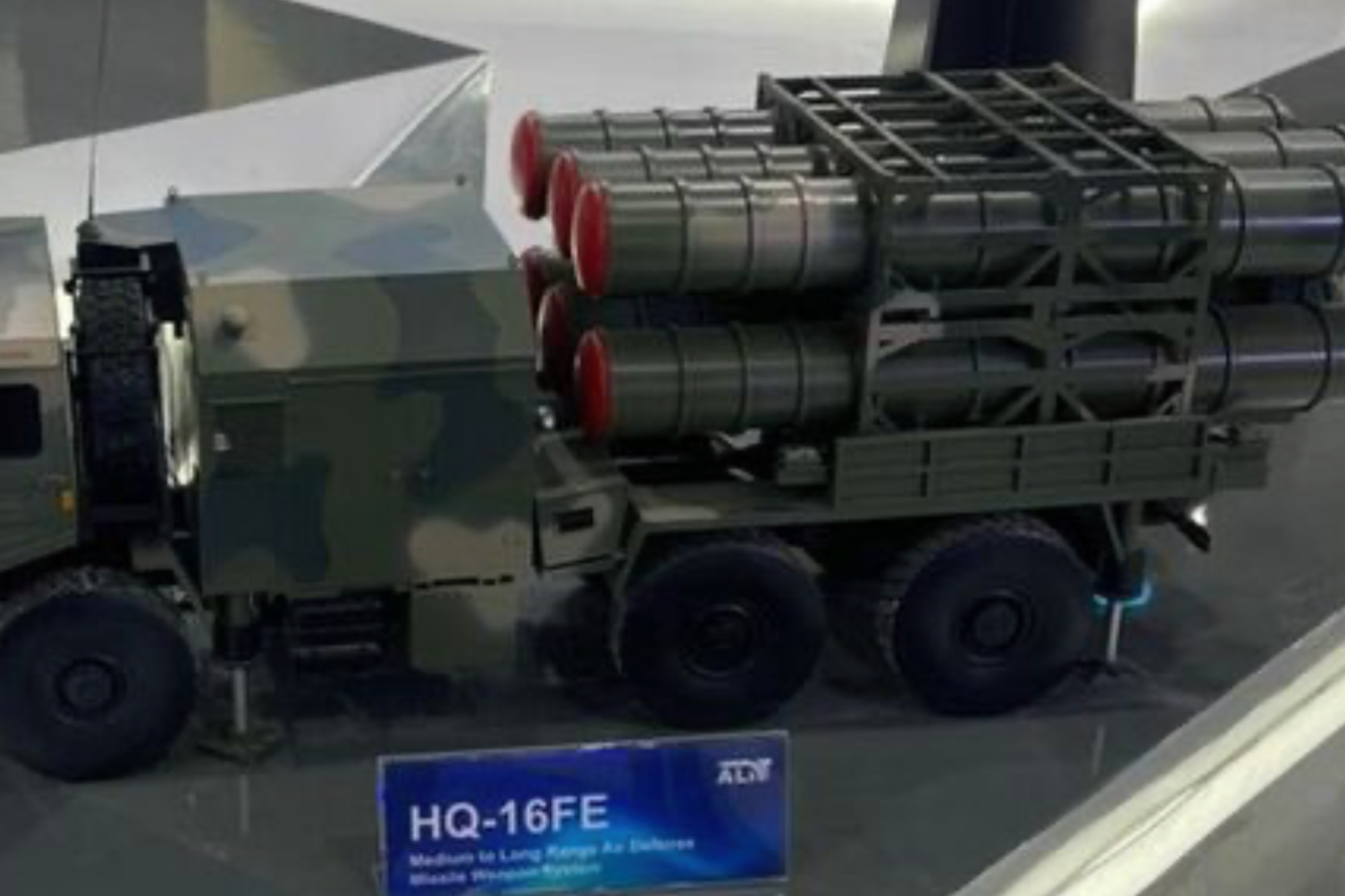
ERBIL (Kurdistan 24) - China has successfully tested a new modular air defense system derived from the HQ-16 missile family, with the People's Liberation Army's 73rd Group Army completing the first live-fire assessment of the system, designated the HQ-16F, in a development first reported by China's official Global Times and subsequently followed by international defense media outlets including GlobalSecurity.org and Defence Blog.
The live-fire evaluation represents a significant milestone in China's ongoing effort to develop and field a layered, flexible air defense architecture capable of protecting maneuvering ground forces from the full spectrum of modern aerial threats, including drones, cruise missiles, helicopters, and fixed-wing aircraft at low and medium altitudes.
The HQ-16 Family and What the F Variant Adds
The HQ-16 is a medium-range surface-to-air missile system that China has developed and fielded across multiple variants over the past two decades, serving as the backbone of the PLA's medium-altitude area air defense capability. The system was originally developed as a land-based adaptation of naval air defense technology and has been progressively enhanced across successive variants to extend its range, improve its guidance systems, and broaden the categories of targets it can engage.
As Jane's Defence Intelligence confirmed in indexed reporting on the HQ-16F, the new variant introduces a modular design philosophy that represents a departure from earlier iterations of the system. Modularity in air defense architecture allows components of the system, including its radar, command and control elements, and missile launchers, to be configured, transported, and deployed more flexibly than integrated systems that require fixed relationships between their constituent parts. For the PLA, which has increasingly emphasized operational mobility and survivability in its force modernization doctrine, a modular air defense capability that can be rapidly reconfigured to suit different threat environments carries significant tactical value.
Protecting Maneuvering Forces
As Army Recognition reported in its coverage of China's mobile air defense development programme, the broader context of the HQ-16F's development is Beijing's recognition that maneuvering ground forces face an increasingly dangerous aerial threat environment, driven by the proliferation of armed drones, loitering munitions, and precision cruise missiles that have transformed the battlefield risk calculus for armored and mechanized units. The conflicts in Ukraine and the Middle East have provided vivid operational evidence that conventional ground force formations operating without effective short-to-medium range air defense cover are acutely vulnerable to aerial attack.
China's military planners have studied those conflicts carefully, and the HQ-16F's emphasis on mobility and modularity reflects lessons drawn from the operational experience of other militaries in high-intensity combat. A system that can be rapidly displaced, reconfigured, and redeployed alongside maneuvering forces offers a fundamentally different protective model than static area defense installations that can be located, targeted, and suppressed by a sophisticated adversary.
Naval Terminal Defense Advances in Parallel
The HQ-16F live-fire assessment arrived alongside a separate but related development in China's air defense modernization. Global Times reported in May 2026 that the PLA Navy's new terminal defense system completed its type certification trials, marking the formal qualification of a close-in defensive capability designed to protect naval vessels against the final-stage threat posed by anti-ship missiles, drones, and other fast-moving projectiles in the terminal phase of their flight path.
The parallel advancement of land-based modular medium-range defense and naval terminal defense reflects a comprehensive Chinese approach to air defense modernization that spans domains and engagement ranges, from the long-range HQ-9B family that Army Recognition confirmed was unveiled in an enhanced variant in 2024, to the medium-range HQ-16 series, to the close-in naval terminal systems now entering certification.
Strategic Implications
The timing of the HQ-16F's first live-fire assessment, reported in June 2026 at the height of the US-Iran conflict that has demonstrated the decisive impact of advanced air defense systems on the course of modern warfare, adds a layer of strategic significance to what might otherwise be characterized as a routine development milestone. The conflict has provided the world's major military powers with extensive real-world data on the performance of American, Israeli, and Iranian air defense systems under genuine combat conditions, data that Chinese military planners will be absorbing and integrating into their own development priorities.
China's ability to field a modular, mobile medium-range air defense system capable of protecting maneuvering ground forces is directly relevant to the scenarios that feature most prominently in PLA operational planning, including potential operations across the Taiwan Strait and the Korean Peninsula, where the ability to sustain credible air defense coverage for ground force formations operating under sustained aerial threat would be a critical determinant of operational success.