KRG Distributes 3.5 Million Liters of Subsidized Petrol Daily
The KRG says 3.5 million liters of subsidized petrol are being distributed each day as it ends fuel coupons, expands designated stations and tightens oversight.
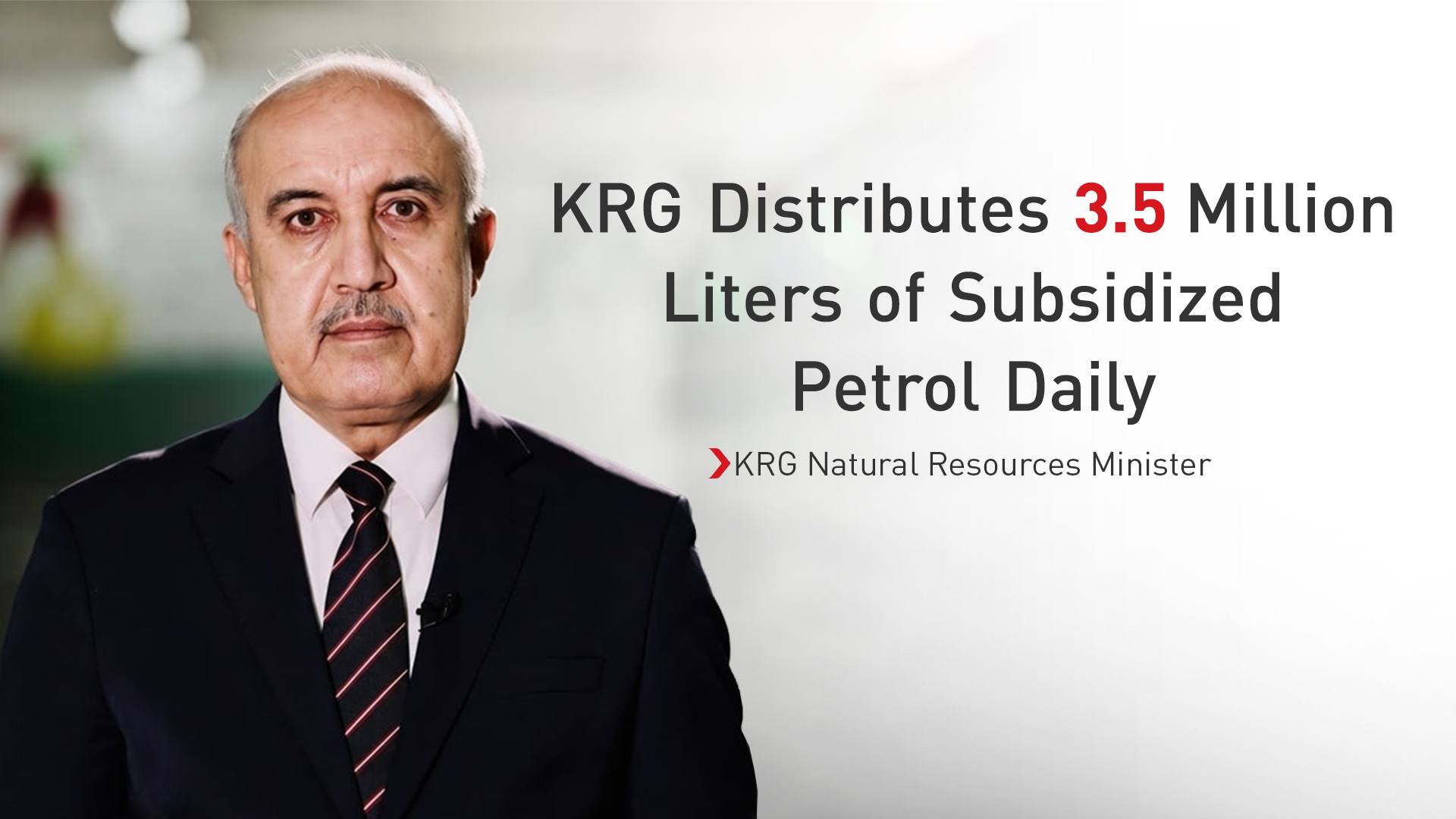
ERBIL (Kurdistan24) - The Kurdistan Region Government is distributing 3.5 million liters of subsidized standard petrol every day at 750 Iraqi dinars per liter, Acting Minister of Natural Resources Kamal Mohammed Salih said Sunday, as authorities move to ease a recent fuel shortage and tighten controls over the subsidized supply.
The program began Saturday, with the KRG covering the difference between the market cost of the fuel and the subsidized retail price.
The latest measures also mark a change in how subsidized petrol is distributed.
The Ministry of Natural Resources has ended the electronic coupon system, with drivers now able to purchase the government-subsidized grade directly at designated stations without fuel cards.
One Subsidized Grade Replaces the Coupon System
From Sunday, the ministry began distributing a single government-subsidized grade at approximately 100 stations across the Kurdistan Region.
A ministry source told Kurdistan24 that the government supplies the fuel to stations at 700 dinars per liter and sells it to consumers for 750 dinars, even though its actual cost exceeds 1,000 dinars.
The source said the fuel is the same grade previously sold at 750 dinars and is produced at the Lanaz and KAR refineries according to ministry standards.
The change is intended to simplify access and remove the need for designated government-station lists or electronic coupons.
Daily allocations are based on vehicle numbers, with more than half going to Erbil.
Under the distribution plan, Erbil receives 1.8 million liters through 50 stations, Duhok 720,000 liters through 20 stations, Sulaimani 468,000 liters through 16 stations, and Soran 360,000 liters through 10 stations. Smaller allocations go to Zakho, Raperin, Garmian and Halabja.
Supply Expands as Prices Come Under Pressure
Salih said the government is also preparing to increase the availability of premium and super petrol, which are imported and sold commercially.
He said sufficient quantities of the two grades are expected to enter the market in the coming days, a move that could reduce demand for subsidized petrol and put further downward pressure on commercial prices.
At Kurd Neft stations, supervisor Behzad Omar told Kurdistan24 that premium petrol had fallen to around 2,000 dinars per liter, while super petrol was selling for about 2,300 dinars.
He said prices could decline by another 300 dinars within several days if supply conditions remain favorable.
The shift follows a recent fuel shortage that pushed prices higher and created difficulties for drivers across the Region.
Federal Allocation Remains a Major Constraint
The KRG says one of the underlying causes of the shortage is the limited quantity of petrol supplied by Baghdad.
Salih said the federal government currently provides approximately 1.75 million liters per day to the Kurdistan Region.
With an estimated 2.8 million vehicles in the Region, he argued that the allocation amounts to less than one liter per vehicle each day.
The acting minister said negotiations with Baghdad are continuing over a new formula that could determine the Region's fuel allocation according to the number of vehicles, population or the needs of individual provinces.
The federal allocation issue has also become a political matter in Baghdad.
Sipan Sherwani, a member of the Iraqi Parliament's Oil and Gas Committee, told Kurdistan24 that a memorandum signed by 169 lawmakers has been submitted to Prime Minister Ali al-Zaidi, calling for greater federal support for the Region's fuel requirements.
Sherwani said the Kurdistan Region needs around 7 million liters of petrol a day and argued that Iraq should provide sufficient oil to address domestic demand.
Sulaimani Adds More Subsidized Stations
The expansion is already visible at the local level.
Salam Ali, spokesperson for the Sulaimani Oil and Minerals Directorate, told Kurdistan24 that the number of stations selling 750-dinar petrol in the province has increased from 13 to 16.
The newly added stations are Mela, Chwarqurna and Brayati 2.
Mohammed Hasib, director of the Sulaimani Oil and Minerals Directorate, said Saturday that distribution was proceeding smoothly.
Sixteen stations in central Sulaimani are now operating around the clock under the new arrangement.
Tighter Tracking of Fuel Tankers
The ministry is also seeking to prevent the subsidized product from being diverted or withheld for resale at higher prices.
Salih said all fuel tankers transporting subsidized petrol are equipped with GPS tracking, allowing authorities to monitor shipments from refineries to stations.
Surveillance cameras have also been installed at stations, while ministry officials, security agencies and municipal authorities are coordinating inspections.
The Lanaz refinery has additionally stationed monitors at participating stations to check meters and storage tanks.
According to the ministry source, the monitoring system is intended to prevent station operators from withholding subsidized fuel or manipulating supplies during periods of high demand.
KRG Tries to Stabilize the Market
The KRG's latest intervention combines direct price support with a broader effort to reorganize fuel distribution.
The immediate objective is to keep standard petrol available at 750 dinars while ensuring that commercial grades remain available through the private sector.
Salih said the government would continue subsidizing the standard grade and maintaining oversight of its distribution.
The longer-term issue, however, remains the Region's dependence on a combination of federal allocations, local refining capacity and imported fuel.
As Baghdad and Erbil continue negotiations over the Region's share, the KRG is seeking to stabilize the domestic market while limiting opportunities for shortages, price manipulation and diversion of subsidized fuel.
For drivers, the immediate change is simpler: the coupon system is gone, more stations are offering the 750-dinar grade, and the government says millions of liters are now entering the market every day.