PM al-Zaidi’s Image, US Flag Burned During PMF Protest in Basra
Protesters demand release of detained PMF members as tensions rise over Baghdad’s push to bring armed groups under state control
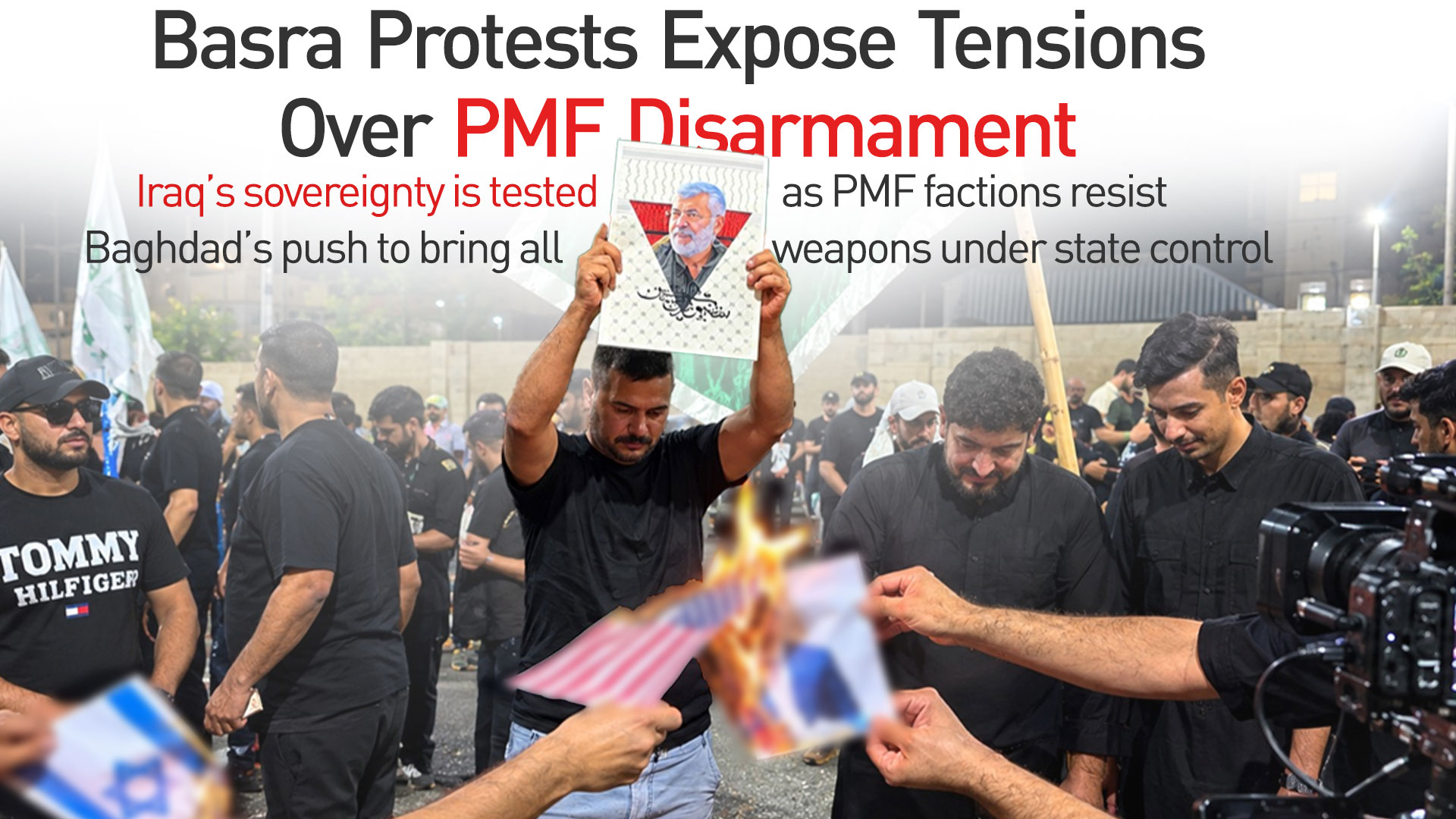
ERBIL (Kurdistan24) — Supporters and armed members of Iraq’s Popular Mobilization Forces (PMF) organized a protest in Basra Province, in southern Iraq, and burned a picture of Prime Minister Ali Faleh al-Zaidi, demanding the release of several PMF members detained on allegations of insulting the US flag during Iraq’s Sovereignty Day ceremony.
The protest was held on the Shatt al-Arab Corniche in central Basra, where participants called on the Iraqi government to release those detained in connection with the incident.
Security sources told Kurdistan24 that Iraqi security forces raided the home of Munir Ubaidi, a PMF official who participated in the Basra protest, on Tuesday night and arrested him.
The General Command of the Armed Forces and the PMF Commission have not issued statements regarding his reported arrest.
Some protesters wore military and religious clothing and carried images of Abu Mahdi al-Muhandis, the former deputy head of the PMF Commission, who was killed in a US airstrike in Baghdad in 2020.
Participants vowed to continue applying pressure until the government meets their demands, amid growing tensions over the detention of PMF members.
The PMF was formed in 2014 following a religious edict by Grand Ayatollah Ali al-Sistani, Iraq’s senior Shiite cleric, calling for volunteers to fight the Islamic State (ISIS).
The force was later formally incorporated into Iraq’s armed forces through a parliamentary decision, placing it within the country’s official security structure.
However, several factions within the PMF have continued to face accusations of pursuing political and external agendas, highlighting the complex relationship between the state and armed groups operating under the umbrella of the official security establishment.
The Iraqi government and security forces have sought to strengthen state authority over armed groups and ensure that weapons remain under government control as part of efforts to preserve national stability.
Such efforts have at times generated internal tensions and protests, particularly when security forces conduct arrests or other operations against members of armed factions.
The latest tensions come as Iraq enters a new security phase following the completion of the US-led Global Coalition’s military mission in Iraq on Sept. 30. US forces and equipment departed Erbil Air Base, formally ending Operation Inherent Resolve in Iraq and transferring primary responsibility for the country’s security to Iraqi forces.
Washington said the transition would move the relationship toward a bilateral defense partnership, while stressing that the Iraqi government now bears greater responsibility for addressing remaining security challenges, including ISIS remnants and Iran-aligned armed groups.
Prime Minister Ali Faleh al-Zaidi has linked the end of the Coalition mission to a broader effort to reinforce state authority, arguing that weapons and decisions over war and peace should remain in the hands of Iraq’s constitutional institutions.
Baghdad had initially set Sept. 30 as a deadline for armed groups to surrender their weapons, but the deadline was later pushed to June 2027 after several powerful factions rejected the timetable.
While some groups have agreed to disarm or integrate into state institutions, others have resisted the move. Harakat Hezbollah al-Nujaba leader Akram al-Kaabi has publicly challenged the government's position, including by releasing a video showing him trampling on a US flag after al-Zaidi ordered legal action over similar conduct during Sovereignty Day events.
The issue places al-Zaidi's government at the center of a difficult balancing act between maintaining Iraq's strategic relationship with Washington and managing its longstanding political, security, and economic ties with Tehran.
The next phase is likely to test whether Baghdad can translate its stated commitment to state control of weapons into effective enforcement while preventing Iraqi territory from being used by armed groups to launch attacks against the United States or neighboring and regional countries.
The government's ability to establish a single chain of command, protect diplomatic missions and foreign interests, and prevent cross-border attacks without triggering a domestic confrontation with powerful factions will be central to how Iraq's post-Coalition sovereignty is defined in practice.