SDF, YPG Set for Dissolution as Damascus Integration Nears
Senior SDF official Mahmoud Barkhodan says 99% of outstanding issues with Damascus have been resolved, with thousands of fighters already integrated into Syria’s army.
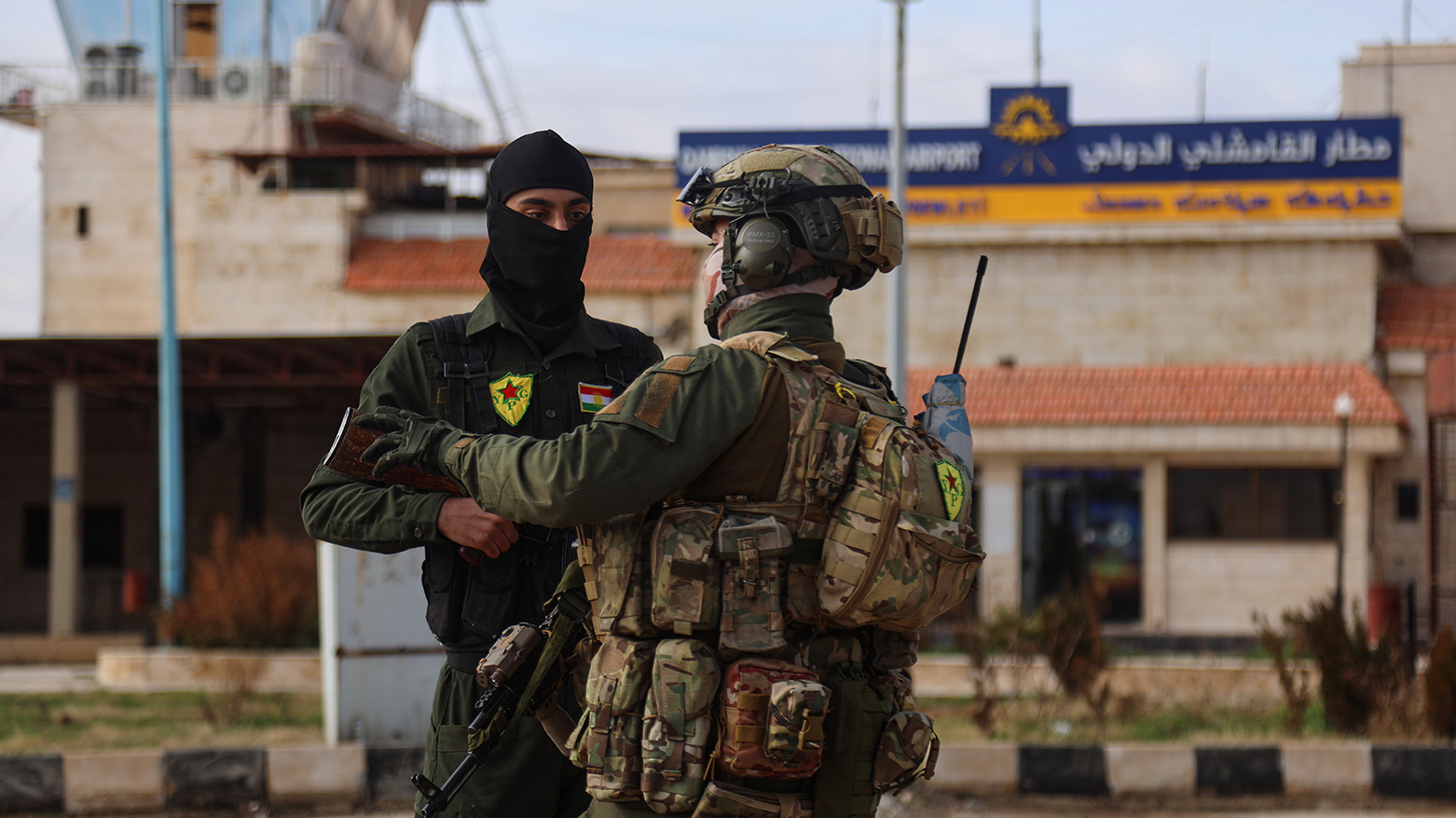
ERBIL (Kurdistan24) - The Syrian Democratic Forces (SDF - Hêzên Sûriya Demokratîk) and the People's Protection Units (YPG - Yekîneyên Parastina Gel) are expected to be formally dissolved in the coming days as negotiations with Damascus approach their final stage, a senior SDF official said, in a potentially major shift in the security and political structure of northeastern Syria.
Mahmoud Barkhodan, an SDF official in Kobani, told the Turkish newspaper Türkiye that roughly 99% of outstanding issues between the Kurdish-led force and the Syrian government had been resolved.
He said the dissolution of both the SDF and YPG would be accompanied by the end of the region's existing autonomous administration, as military and civilian structures are transferred into Syria's central institutions.
Integration Reaches Final Stage
According to Barkhodan, between 10,000 and 12,000 SDF fighters have already been integrated into the Syrian Army.
The transfer of state institutions and oil facilities to Damascus is also nearing completion, he said, suggesting that the process agreed between the two sides is moving from negotiations toward implementation.
Barkhodan called on Damascus to guarantee the rights of Syria's ethnic and religious communities through the country's new constitution.
His comments indicate that the Kurdish-led administration is seeking political guarantees even as it prepares to dismantle the structures that have governed large parts of northeastern Syria for years.
The reported timeline and figures were not independently verified by Kurdistan24, and Damascus has not, in the supplied material, publicly confirmed that the dissolution announcement will take place within days.
A Major Shift After Years of SDF Self-Rule
The SDF was established in 2015, bringing together the YPG and other local forces during the international campaign against ISIS.
With US military support, the SDF became the principal force fighting ISIS across northeastern Syria and eventually controlled a large swath of territory.
Its military success enabled the establishment of an autonomous civilian administration that developed its own security structures, local institutions and economic arrangements.
That system is now facing a fundamental transition.
The reported dissolution would represent the most consequential stage yet in efforts to restore Damascus' authority over areas that remained outside central government control for years.
Damascus Agreement Sets the Framework
The latest developments follow the Jan. 29 agreement between Damascus and the SDF, which established a framework for integrating Kurdish-led military and civilian institutions into Syria's state structures.
The agreement envisaged the incorporation of SDF personnel into Syria's official security institutions while also addressing border crossings, energy facilities, local administration and other areas of authority.
The implementation process has already resulted in several appointments and institutional changes.
Syria's government appointed Kurdish figure Nour al-Din Ahmad Issa as governor of Hasakah, while Sipan Hamo, a former senior SDF commander, was appointed assistant defense minister for eastern affairs.
The appointment of Hamo is particularly significant because it illustrates how senior Kurdish military figures are being repositioned within Syria's state institutions.
Hamo's Changing Status in Türkiye
Hamo's transition has also coincided with a significant change in his status in neighboring Türkiye.
According to Turkish media reports cited by Kurdistan24, Sipan Hamo was recently removed from Türkiye's Interior Ministry wanted list.
He had previously been listed in the country's Red List, its highest category for wanted individuals, with a reported reward of 20 million Turkish lira for information leading to his capture.
His removal reportedly came about five months after he assumed his position within Syria's Defense Ministry.
The move is notable because Ankara had previously identified Hamo as a senior figure associated with the Kurdish-led military structure in Syria. His incorporation into the Syrian government has changed his institutional role at a time when Damascus and Kurdish representatives are negotiating the future of the SDF.
The decision does not, however, represent a broader removal of Kurdish military figures from Türkiye's wanted lists. SDF Commander Mazloum Abdi and other senior officials reportedly remain subject to Ankara's security measures.
Ankara's Wider Kurdish Policy
The developments in Syria are also unfolding alongside a separate political process in Türkiye focused on the dissolution and disarmament of the Kurdistan Workers' Party (PKK).
Türkiye's Parliament recently approved a 12-article framework law designed to provide a legal structure for the next phase of that process.
Turkish officials have stressed that the legislation is not a blanket amnesty and that disarmament must be verifiable.
Interior Minister Mustafa Çiftçi outlined four stages, dissolution, verification, monitoring and normalization, and said the state would continue security operations while monitoring compliance.
The parallel developments have created a changing regional environment for Kurdish armed organizations, although the SDF-Damascus integration process and Türkiye's PKK-focused initiative remain formally separate tracks.
What Dissolution Would Mean
If the SDF and YPG are formally dissolved as announced, the move would end a period in which the Kurdish-led forces functioned as the dominant military authority across much of northeastern Syria.
For Damascus, it would represent a major expansion of central government control and support efforts to establish a unified military and state structure.
For the Kurdish side, the crucial question will be what political and constitutional guarantees accompany that transformation.
Barkhodan's call for protections for Syria's ethnic and religious communities reflects concerns that institutional integration alone will not resolve longstanding questions over Kurdish political rights, local administration and cultural identity.
The transition also carries practical challenges. Integrating thousands of fighters into a national army, transferring control of oil fields and public institutions, and dismantling autonomous governance structures require agreement over command structures, salaries, security responsibilities and local administration.
A Regional Turning Point
The reported move toward dissolving the SDF and YPG comes after years in which the Kurdish-led forces became one of the most important military actors in Syria.
Their eventual incorporation into the Syrian state would mark a profound reversal of that arrangement.
It would also reshape the security landscape along Syria's borders with Türkiye and Iraq and affect the position of the US, which has supported the SDF in the campaign against ISIS.
For now, Barkhodan's claim that 99% of outstanding issues have been resolved suggests that negotiations are nearing a decisive moment.
The next step will be whether Damascus formally confirms the timetable and whether the promised political guarantees are sufficient to accompany the military and administrative changes.
If the announcement goes ahead, the dissolution of the SDF and YPG would not simply mark the end of two Kurdish-led military structures. It would signal the beginning of a new phase in which the future of northeastern Syria will depend on how successfully Damascus can integrate the region while preserving the rights and security of its diverse population.