US Turns to Sanctions as Trump Seeks to Force Iran to Concede
Washington threatens unprecedented financial pressure and secondary sanctions, but decades of sanctions have left Tehran experienced in evading economic isolation.
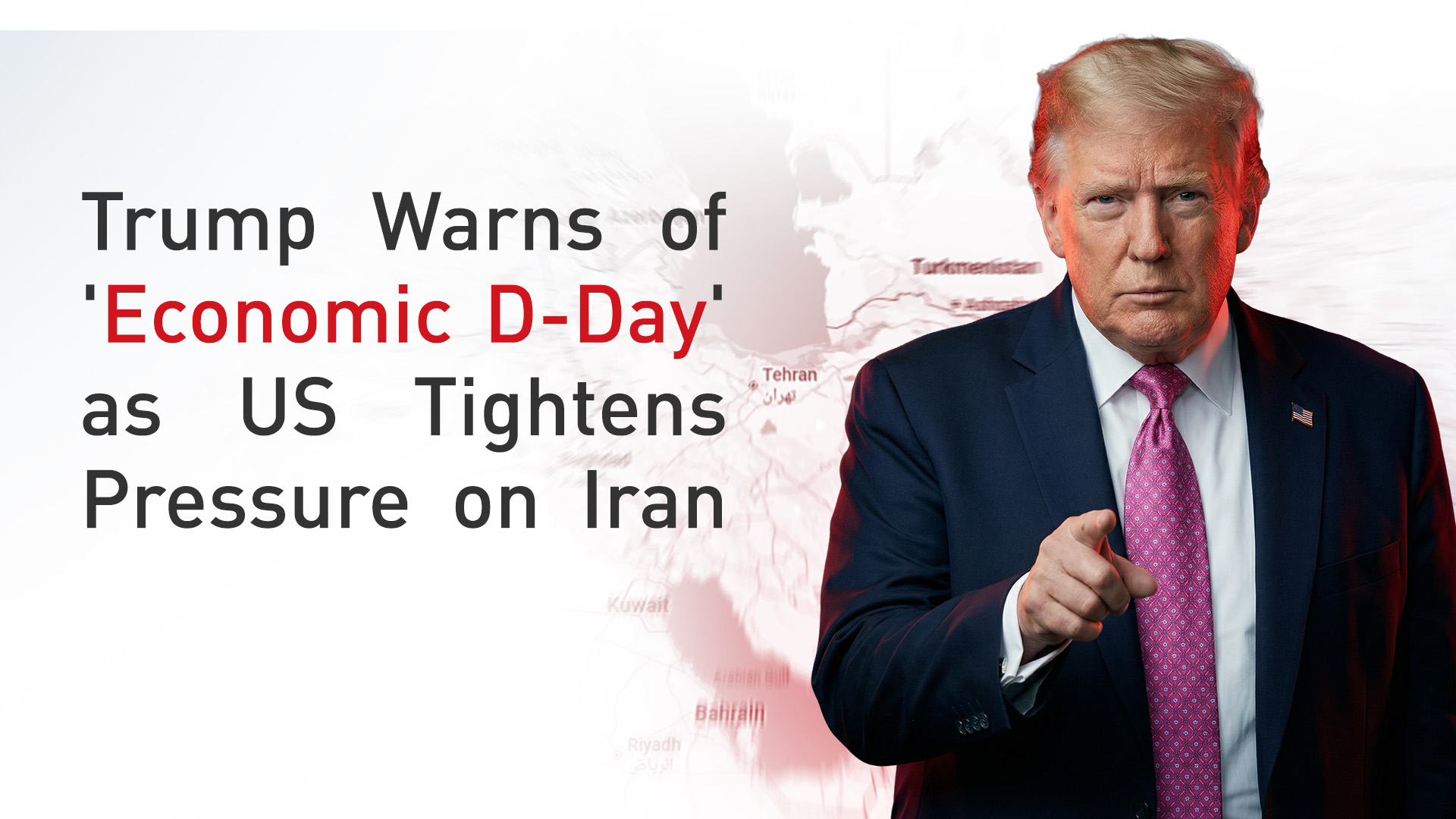
ERBIL (Kurdistan24) - US President Donald Trump is escalating economic pressure on Iran as his administration confronts a war that is approaching its six-month mark, with Washington promising an unprecedented sanctions campaign aimed at forcing Tehran to curb its nuclear program and reopen the Strait of Hormuz.
The strategy, outlined in limited detail by Trump and senior US officials this week, represents a renewed reliance on financial pressure after months of military action, an American naval blockade of Iranian ports and stop-start diplomacy failed to produce a decisive end to the conflict.
The Associated Press, in a report by Farnoosh Amiri, described the emerging policy as an effort to deliver an "economic D-Day" against a country that has endured US sanctions for decades.
Treasury Secretary Scott Bessent offered the clearest indication of what Washington may do next, warning that countries and companies continuing to conduct business with Iran could face sweeping secondary sanctions.
"If you insist on doing business with them, then the U.S. Treasury and U.S. government will put its full might and force against you," Bessent said in a CNBC interview. "It's time for our allies and the rest of the world to make a decision."
The threat is significant because Washington's next phase appears aimed not only at Iran itself but also at the economic partners that continue to provide Tehran with access to international markets.
Washington seeks a breaking point
The administration argues that Iran's economy is now under unprecedented pressure.
Trump has said the combined effects of military strikes, financial restrictions and the blockade of Iranian ports could eventually force Tehran to accept US demands.
US officials and supporters of the strategy argue that the circumstances are different from previous sanctions campaigns because Iran is simultaneously facing military pressure and restrictions on its ability to export and receive goods through the Strait of Hormuz.
Richard Goldberg, a former Trump administration official involved in Iran policy and now associated with the Foundation for Defense of Democracies, said the combination had created what he described as a potentially unique situation.
Yet Goldberg also cautioned that the consequences remain difficult to predict.
"We are in uncharted waters," he said, according to AP.
The Trump administration has also pointed to the growing isolation of Iran's economy. The United Arab Emirates, once a major commercial channel for Iranian trade, suspended trade with Tehran this week following an alleged missile attack, further narrowing one of Iran's important avenues for international commerce.
China and India in the spotlight
The next phase of Washington's strategy could become particularly consequential for countries that remain major purchasers of Iranian oil.
China and India are among the largest buyers, and efforts to force companies and governments to abandon those transactions could put the United States in direct disputes with important trading partners.
The administration's approach resembles the "maximum pressure" strategy pursued during Trump's first term, but with a major difference: this time, economic restrictions are being applied alongside direct military action.
Behnam Ben Taleblu, senior director of the Foundation for Defense of Democracies' Iran program, said the administration would need to persuade European and Asian governments to make Iran a much greater priority in their bilateral relations with Washington.
Trump's first-term experience nevertheless demonstrated the difficulties involved.
Attempts to enforce secondary sanctions against countries dependent on Iranian oil often produced exemptions and waivers, reflecting the tension between maximizing pressure on Tehran and protecting US economic and diplomatic interests.
Iran says sanctions have already failed
Iranian officials have rejected the suggestion that another sanctions campaign will force capitulation.
Foreign Ministry spokesman Esmail Baghaei has accused Washington of returning to sanctions whenever diplomacy becomes difficult, arguing that Iran has spent decades developing ways to withstand economic pressure.
"Iran has demonstrated over decades that it will not be strangled by these exhausted refrains," Baghaei said in a post on X.
His remarks reflect a longstanding Iranian argument that sanctions have inflicted significant economic damage without achieving their central political objectives.
Ali Vaez, Iran director at the International Crisis Group, similarly argued that the latest US strategy risks reinforcing rather than weakening Tehran's position.
He said years of pressure had taught Iranian officials to distrust Washington and that the latest military and economic campaign could make negotiations even more difficult.
Vaez said the fundamental problem was not simply the intensity of sanctions but the absence of a credible diplomatic outcome that Iran could trust.
"Pressure without an open door is an exercise in futility," he said, according to AP.
A war with fewer easy options
The renewed sanctions campaign also reflects growing pressure on the Trump administration to find an exit from a conflict that has become politically and militarily costly.
AP reported that US stocks of some key weapons have declined during the war, limiting Washington's military flexibility. At the same time, the conflict has remained unpopular domestically, raising political concerns ahead of the US midterm elections.
The administration is therefore attempting to shift greater weight toward economic instruments.
The calculation is straightforward: if military pressure cannot compel Tehran to accept US terms quickly, financial and commercial isolation may eventually impose costs severe enough to force negotiations.
But Iran has considerable experience adapting to sanctions. Its networks have evolved over decades, while businesses and governments in Asia and the Middle East have developed mechanisms for maintaining at least some trade despite American restrictions.
The challenge for Washington is therefore not simply designing harsher sanctions. It is persuading enough of the rest of the world to enforce them consistently.
Strait of Hormuz remains central
The economic campaign is also inseparable from the Strait of Hormuz, through which a significant share of global energy supplies traditionally passes.
Trump has made reopening the waterway a central demand in any settlement with Iran. Tehran, meanwhile, has used the strait as leverage in the conflict, complicating oil markets and increasing the economic pressure faced by countries far beyond the Middle East.
That dynamic has transformed the conflict from a dispute primarily over Iran's nuclear program into a much broader struggle over energy security, trade routes and regional influence.
For Washington, reopening Hormuz would help stabilize energy prices and ease pressure on the global economy. For Tehran, continued restrictions around the waterway provide one of its strongest sources of leverage against the United States.
The next test is enforcement
The immediate question is how far the United States is prepared to go.
If Washington applies secondary sanctions aggressively against major buyers, banks and trading companies, it could significantly reduce Iran's remaining access to international markets. But such measures could also trigger resistance from countries that do not share Washington's assessment of the conflict or are unwilling to sacrifice their commercial interests.
That makes the next stage of Trump's policy as much a diplomatic test as an economic one.
The United States is betting that unprecedented pressure will eventually force Iran to change course. Tehran is betting that it can absorb the pain, preserve enough economic lifelines and wait for the political costs of the conflict to weaken Washington's resolve.
After decades of sanctions, Iran already knows how to operate under economic isolation.
What remains uncertain is whether the combination of military pressure, the Strait of Hormuz blockade and a far more aggressive sanctions campaign will finally produce a result that previous rounds of economic warfare could not.
For Trump, that is the central gamble behind his promised "economic D-Day": not simply whether the United States can make Iran poorer, but whether it can make Tehran believe that accepting Washington's terms is preferable to enduring the pressure.