Kurdistan Oil Output Rebounds as KRG Pushes for 450-Dinar Gasoline
Kurdistan Region oil production has recovered to 220,000-230,000 barrels per day as the KRG presses Baghdad for equal refining costs to cut gasoline prices.
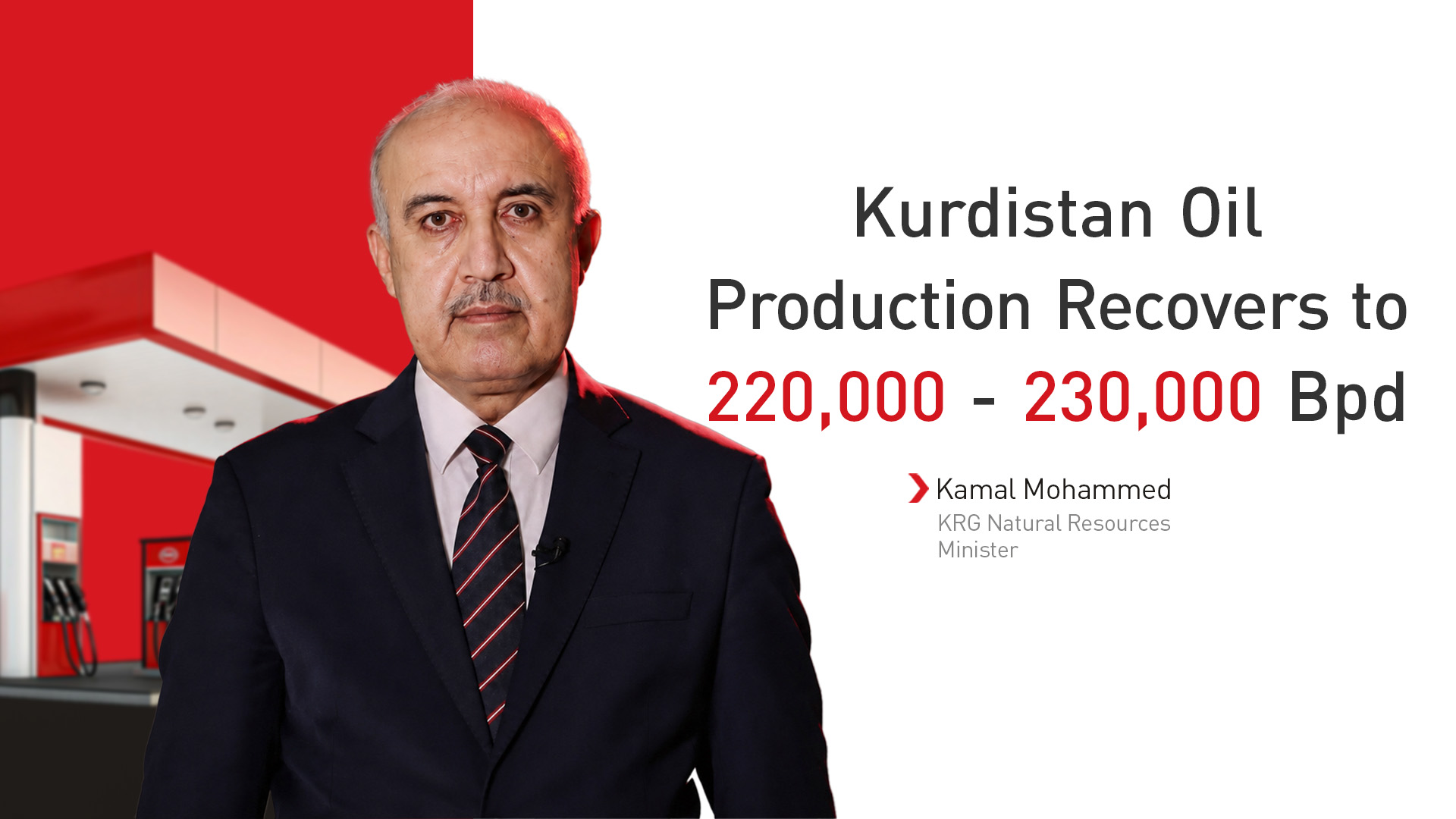
ERBIL (Kurdistan24) - Oil production across the Kurdistan Region has recovered to between 220,000 and 230,000 barrels per day as companies resume operations, while the KRG says gasoline could be sold to residents for 450 Iraqi dinars per liter if Baghdad applies the same refining-cost calculation used in central and southern Iraq.
Acting Kurdistan Regional Government Natural Resources Minister Kamal Mohammed Salih outlined the latest production and fuel figures Saturday in an exclusive interview with Kurdistan24 reporter Hoshmand Sadiq.
Salih said all oil companies operating in the Kurdistan Region had returned to work, with current output ranging between 220,000 and 230,000 barrels per day.
Part of that production is being used to meet domestic requirements.
The recovery marks an important improvement for the Kurdistan Region's energy sector after repeated security disruptions affected oil infrastructure and production.
Refining gap remains central to gasoline shortage
Salih said the immediate gasoline shortage had been largely eased, but a lasting solution still depended on the federal government providing the Kurdistan Region with what the KRG considers its allocated share.
At the center of the dispute is the way refining costs are calculated.
"The federal government calculates the cost of refining each barrel of oil at its own refineries at 5,900 dinars, approximately $4, but calculates the cost for refineries in the Kurdistan Region at $16," Salih said.
"If Baghdad calculates the oil it supplies to the Kurdistan Region at $4, we will undoubtedly be able to provide gasoline to residents for 450 dinars per liter," he added.
KRG officials raised the same issue during negotiations in Baghdad earlier this week, arguing that equal treatment in federal fuel subsidies and refining costs could substantially reduce retail gasoline prices in the Kurdistan Region.
Salih said the Region currently has refining capacity of only around 50,000 barrels per day, while domestic demand requires the equivalent of approximately 140,000 barrels per day.
That gap makes additional refining capacity and federal support central to any longer-term fuel strategy.
Baghdad decision awaited
KRG representatives met members of the Iraqi Parliament's Oil and Gas Committee and officials from the federal Oil Ministry on Aug. 26 and 27 to discuss the gasoline shortage.
Salih said the Kurdistan Region is now awaiting the committee's recommendations to Iraqi Prime Minister Ali Zaydi before a final federal decision is made.
He added that the KRG would abide by whatever decision the federal prime minister issues.
The negotiations follow proposals submitted by KRG officials calling for Baghdad either to cover refining and transportation costs associated with available crude or provide the Kurdistan Region with its population-based share of federal fuel subsidies.
KRG officials have said those measures could allow regular gasoline to be distributed at 450 dinars per liter.
Subsidized distribution continues
In the meantime, the KRG is continuing its existing subsidized gasoline program at 750 dinars per liter.
More than 3.7 million liters were allocated Saturday for distribution through 103 filling stations across the Kurdistan Region, with nearly 93,000 vehicles expected to receive fuel.
In Erbil alone, 1.296 million liters were supplied to 36 filling stations, enough to serve more than 32,000 vehicles.
Fuel card No. 4 also became active in the capital Saturday, replacing card No. 3.
Under the electronic distribution system, private vehicles can receive 40 liters of subsidized gasoline once per week, while taxis are entitled to an allocation twice weekly.
Last week, approximately 26 million liters were distributed across the Kurdistan Region, supplying around 650,000 vehicles.
The electronic system was introduced to regulate access to subsidized gasoline, reduce queues and limit opportunities for monopolization or smuggling.
For the KRG, however, the larger issue remains the price structure behind the fuel itself.
With oil production now recovering toward 230,000 barrels per day, Salih said expanding refining capacity and securing equal federal treatment are necessary if the Kurdistan Region is to move from temporary relief measures toward a stable and lower-cost gasoline supply.