Shanidar Cave Yields 75,000-Year-Old Secret: Cambridge And Kurdistan Joint Research Reveals Oldest Known Spear-Kill Wound
Official joint announcement by the KRG General Directorate of Antiquities and Cambridge University reveals the 75,000-year-old Neanderthal known as Shanidar A was killed by a wooden spear aimed at the heart, survived severe facial trauma for over a year with group care, and was buried deliberately
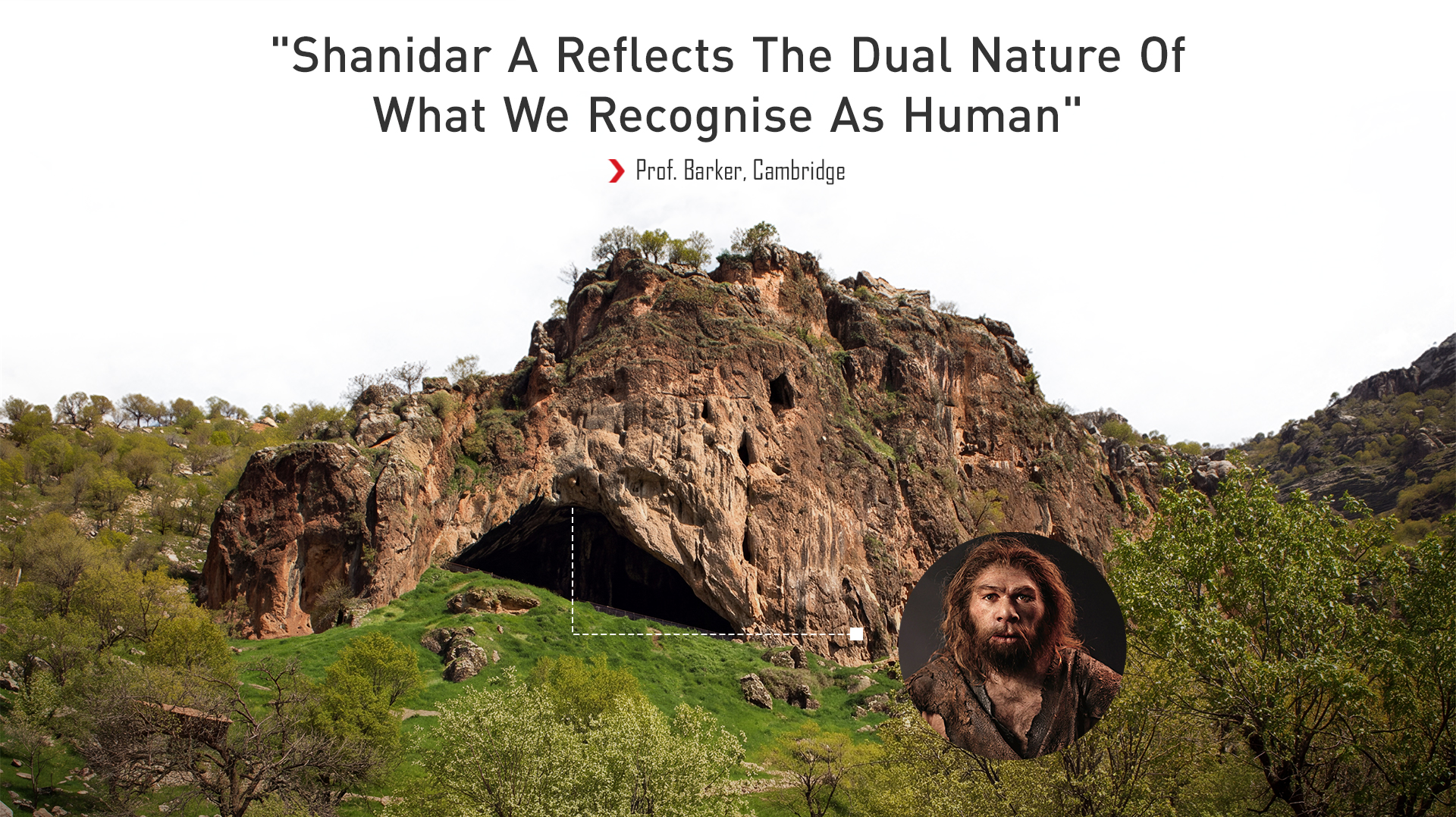
ERBIL (Kurdistan 24) - The Kurdistan Region's General Directorate of Antiquities and Heritage and the University of Cambridge jointly announced on Friday, October 16, 2026, the findings of a new scientific paper published in Nature Scientific Reports revealing that a Neanderthal individual known as Shanidar A, whose remains date to approximately 75,000 years ago and were excavated from Shanidar Cave in Iraqi Kurdistan, died from what may be the oldest known wooden spear wound in human history, after surviving severe facial trauma with the care of his group and being deliberately buried in a cluster that now numbers at least five individuals.
The joint announcement was released simultaneously in Kurdish for domestic audiences and in English for international scientific and media audiences, reflecting the formal and equal scientific partnership between the two institutions that has been operating successfully for several years under an official agreement to conduct examination and excavation at Shanidar Cave.
A Historic Joint Discovery
Mohammad Lashkari of the KRG General Directorate of Antiquities and Heritage, who supervised the project, said: "Our long and productive partnership with Cambridge University and its international team, led above all by Dr. Emma Pomeroy and Professor Graeme Barker, continues to reveal the great secrets of human history in the Kurdistan Region."
He added:
Shanidar Cave is not just an archaeological site, it is an international gateway to understanding the social roots, behaviors, and shared history of humanity. We are very proud of this partnership and welcome every initiative that introduces our rich archaeological sites to the world.
Dr. Emma Pomeroy, from the Department of Archaeology at Cambridge University and head of the project's research team, emphasized the significance of the discovery. She Announced that
Working at Shanidar Cave under the umbrella of a joint agreement with the KRG General Directorate of Antiquities and Heritage and the Soran Antiquities Directorate has been a unique and scientifically rich experience. The continuous support of the Region's relevant parties allowed us to reach this level of detailed investigation. The remains of Shanidar A shed new light on the complex nature of Neanderthal relationships, in which violence and compassion are intertwined at the same time.

The Discovery: What Was Found
The newly discovered remains of Shanidar A include a complete right hand, two left ribs, a rib fragment, the left scapula, and several teeth, recovered from a very confined area where the famous Shanidar 4 flower burial cluster had previously been excavated. With this new individual, the minimum number of individuals in this specific section of the cave reaches five, strengthening the hypothesis that Neanderthals used a specific location deliberately and intentionally for burying or placing their dead across multiple generations.
The remains were preserved under nearly seven and a half meters of rock and sediment due to the cave's favorable environmental conditions. A short but powerful flood after decomposition of soft tissues displaced most of the bones, but parts of the hand and scapula were protected in place by a large boulder nearby.

The Fatal Wound
A circular hole approximately 15 millimeters in diameter was discovered in Shanidar A's left shoulder blade, created by the impact of a sharp object at the time of death. Researchers confirmed this was a lethal wound, and while it could have resulted from hunting or interpersonal violence, it ranks among the rarest recorded injuries in human history.
The circular shape of the hole and three-dimensional scan imaging show the wound is very similar to injuries caused by sharpened wooden spears or rounded pointed weapons, because stone or flint spearheads leave angled and flat-edged wounds. Researchers note that this fatal blow was directed toward the heart and caused the individual's rapid death. Cambridge and Kurdistan archaeologists describe this as the oldest known evidence of the use of wooden weapons in human-on-human violence anywhere in the world.
Professor Graeme Barker, fellow of St. John's College Cambridge and leader of the Shanidar Cave excavations, said:
All we can ever know about the end of this Neanderthal's life is that it was violent, and came at the end of a wooden spear." He added: "It is fascinating to have evidence for both compassion and violence amongst Neanderthals, our closest evolutionary cousins, embodied in this one individual.
Violence And Social Compassion Together
Despite his violent end, the remains of Shanidar A contain other evidence of a different kind. A broken and damaged tooth and traces of severe trauma to the face show the individual suffered a major injury before death. But examination confirmed that this person survived that severe injury for at least a year or more afterward. This proves the individual needed care, nursing, and continuous support from other members of his group to continue living, which is indisputable evidence of the existence of compassion, affection, and deep social bonds among Neanderthals.
Dr. Pomeroy said:
We see evidence of two contrasting facets of human nature, care and violence, juxtaposed in the same individual.
Shanidar A is the deepest individual yet found in the burial cluster and possibly the first laid to rest in the space, positioned on their back with head facing east, as with the body placed directly above. The body was placed in a very specific spot in the cave, tucked behind a huge rock that stood between the individual and the cave entrance. Over the subsequent years or decades, the remains of at least four other Neanderthal individuals were placed directly above.

Wooden Weapons and Scientific Implications
Because organic materials and wood are almost never preserved in these regions over such timescales, bone studies of this kind are the only means of confirming advances in hunting weaponry of that era. The discovery provides indirect but valuable evidence about the use of wooden weapon technology in the Middle Paleolithic period at Shanidar, making it a uniquely important find for understanding the technological capacity of Neanderthals 75,000 years ago.
The Kurdistan Region's Role and the Ninth Cabinet's Support
Shanidar Cave, located in the Mergasor district of Erbil governorate, has been one of the world's most significant prehistoric sites since American archaeologist Ralph Solecki first excavated it in 1953. The Kurdistan Region's formal scientific partnership with Cambridge University, conducted under the supervision of the KRG General Directorate of Antiquities and Heritage and the Soran Antiquities Directorate, reflects the Ninth Cabinet's sustained commitment to positioning the Kurdistan Region as an international center for archaeological research and heritage preservation.
Prime Minister Masrour Barzani's government has consistently supported the Shanidar Cave excavation project as part of a broader policy of promoting the Kurdistan Region's extraordinary archaeological wealth to the international scientific community and to the world. The simultaneous release of today's announcement in both Kurdish and English, ensuring equal access for domestic and international audiences, is a direct expression of that policy in practice. The KRG General Directorate of Antiquities and Heritage confirmed that the joint excavation project at Shanidar Cave will continue, with further discoveries about the Region's ancient civilization expected in the future.