Iran Claims Defense Self-Sufficiency Above 90% as Weapons Output Rises
Iran says it produces more than 1,000 types of weapons and ammunition, has surpassed 90% defense self-sufficiency and is preparing new battlefield systems.
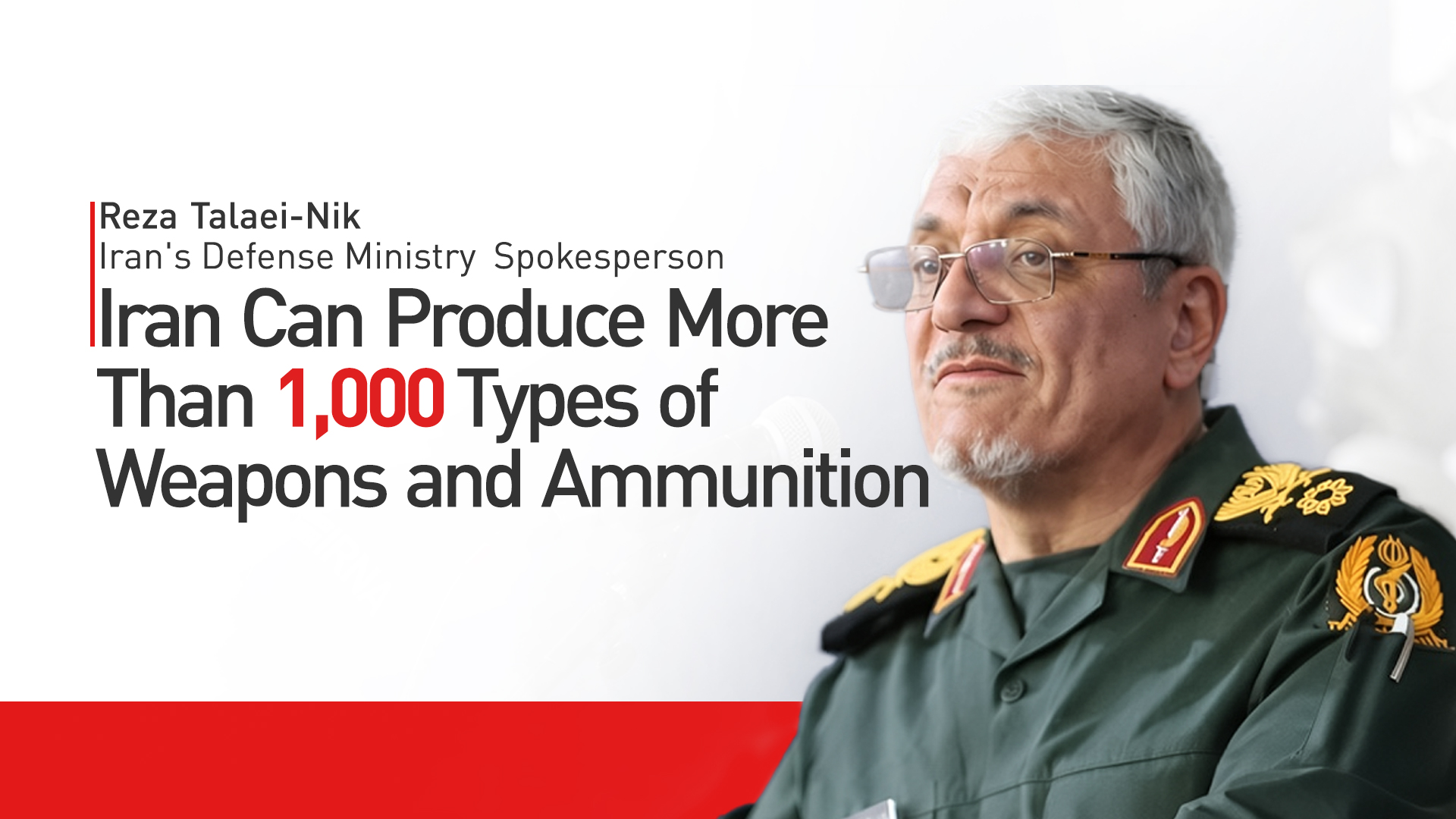
ERBIL (Kurdistan24) - Iran says its defense industry now produces more than 1,000 types of weapons and ammunition, has achieved more than 90% self-sufficiency and is preparing new weapons and tactics for future battlefield use as Tehran seeks to demonstrate that months of conflict with the United States and Israel have not crippled its military-industrial base.
Reza Talaei-Nik, spokesperson for Iran's Ministry of Defense and Armed Forces Logistics, made the claims during a visit to the state-run IRNA news agency for Government Week.
He said Iranian weapons production had more than doubled since the 12-day war with Israel in June 2025 and that output of some military equipment had risen severalfold.
The figures and capability assessments were provided by the Iranian Defense Ministry and could not be independently verified.
Talaei-Nik said Tehran intended to expand production further, particularly in strategic areas including long-range missiles, cruise missiles and unmanned aerial vehicles.
"Based on the principle of surprise, several new weapons and tactics have been prepared and will be unveiled on the battlefield," he said.
The statement comes as Iran attempts to project continued military resilience six months into its broader confrontation with Washington and Israel, even as the United States says it has significantly weakened Tehran's ability to control the Strait of Hormuz.
9,300 companies supporting defense production
Talaei-Nik said Iran entered the recent conflicts with strategic reserves of weapons and ammunition already in place, allowing manufacturing to continue despite attacks on military and industrial infrastructure.
According to the Defense Ministry spokesperson, a network of approximately 9,300 Iranian companies continued supporting production during wartime.
He said those companies account for around two-thirds of the country's defense industrial network.
Iran's defense industry produces more than 1,000 different categories of weapons and ammunition, Talaei-Nik claimed, while domestic self-sufficiency in defense requirements has surpassed 90%.
He also argued that Iran had progressed beyond relying primarily on reverse engineering foreign military systems.
In some sectors, he said, Iranian engineers are now developing original domestic designs and technologies.
Tehran has spent decades building a domestic arms industry under international sanctions and restrictions that have complicated access to Western military equipment and technology.
Missiles and drones have consequently become particularly prominent areas of Iranian investment and military strategy.
Talaei-Nik said Iran intends to continue exporting weapons where it has production surpluses, though he did not specify potential customers or give detailed export figures.
War becomes test of industrial resilience
The Defense Ministry spokesman presented Iran's ability to sustain production during conflict as evidence that attempts to degrade the country's military capacity had fallen short of their objectives.
He said the government of President Masoud Pezeshkian had operated under unusually difficult circumstances during the past two years, confronting wars, security threats and rapid changes across the region.
Although attacks caused significant damage, Talaei-Nik argued that the conflicts also accelerated developments in defense, industry, science and other fields.
He described Iran's resilience as one of the principal surprises of the conflict, saying Tehran's adversaries had expected its military, economy and wider state capabilities to weaken rapidly.
The Defense Ministry had also incorporated lessons from the 12-day Israel-Iran war into its defenses, he said.
Talaei-Nik specifically pointed to improvements in counter-drone systems, claiming they helped reduce Defense Ministry losses in the subsequent conflict.
His comments amount to an Iranian assessment of battlefield performance rather than an independently established measure of how much military capability Tehran retains after repeated U.S. and Israeli attacks.
Washington says Iran has lost leverage at Hormuz
Iran's effort to emphasize growing weapons production comes as Washington is presenting a very different picture of the military balance.
Kurdistan24 reported Friday that U.S. officials believe they have substantially weakened Iran's grip over the Strait of Hormuz through airstrikes, mine clearance, protected shipping corridors and a blockade of Iranian ports.
Read More: U.S. Says It Has Gained Upper Hand in Strait of Hormuz
Axios journalist Barak Ravid reported, citing U.S. officials, that Iran's ability to disrupt commercial vessels has diminished over the past two months.
U.S. Central Command commander Adm. Brad Cooper has also said internationally recognized shipping lanes have been cleared of Iranian sea mines.
President Donald Trump told Axios that the strait was effectively open and portrayed Iran's response to U.S. operations as limited.
Those U.S. claims face some scrutiny, however.
Independent tanker trackers have questioned Washington's estimates for the volume of renewed shipping, while vessels have continued to report occasional attacks and threats.
Traffic also remains below levels recorded before the war.
The competing narratives are significant: Washington says Iran's ability to impose costs through Hormuz has been degraded, while Tehran is emphasizing domestic weapons production and the capacity to sustain a prolonged confrontation.
Nuclear rhetoric also hardens
The Defense Ministry's presentation of expanding conventional capabilities follows an unusually explicit statement from another senior Iranian military official concerning nuclear deterrence.
Kurdistan24 reported Saturday that Ebrahim Zolfaghari, spokesperson for the Khatam al-Anbiya Central Headquarters, said Iran needed nuclear weapons to deter Israel.
Read More: Khatam al-Anbiya Official Calls for Nuclear Deterrent Against Israel
The remark represented a marked escalation from Iran's longstanding public position that its nuclear program is peaceful.
It has not, however, been accompanied by any formal announcement from Iran's government or supreme leadership that the country has decided to develop a nuclear weapon.
That distinction remains critical.
The nuclear statement, Talaei-Nik's description of rapidly expanding conventional weapons production and Tehran's continued emphasis on missiles and drones together point to an intensifying debate over how Iran intends to restore deterrence after repeated direct attacks.
At the same time, President Pezeshkian and other Iranian officials continue to leave open the possibility of diplomacy, suggesting divisions remain over how far Tehran should pursue confrontation.
For Iran's Defense Ministry, the immediate message is that military pressure has accelerated rather than dismantled domestic production.
Whether the claimed increases translate into a meaningful shift in battlefield capability is harder to establish.
But by advertising more than 1,000 weapons and ammunition types, a vast domestic supplier network and additional systems still to be revealed, Tehran is seeking to make clear that it intends to remain militarily capable even as Washington argues that the strategic balance is moving against it.