Oil Prices Jump Nearly 3% After US Strikes Iranian Rocket Launchers
Asian stocks and US futures fall as renewed Strait of Hormuz tensions fuel concerns over regional escalation and higher inflation
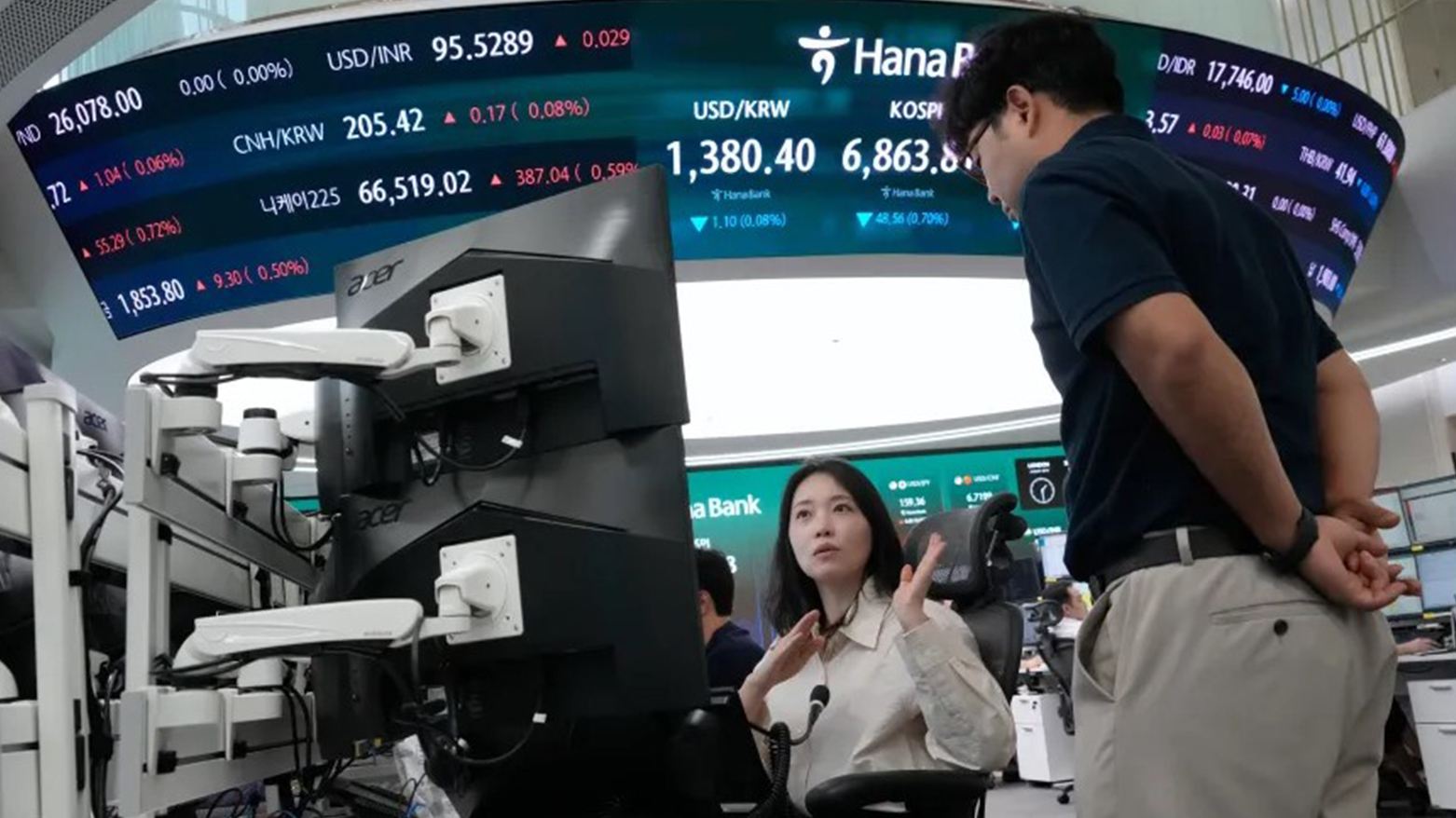
ERBIL (Kurdistan24) — Asian stocks fell, and US stock futures declined on Monday as investors reacted to renewed tensions in the Middle East and growing expectations that the US Federal Reserve could raise interest rates to curb persistent inflation.
Oil prices surged nearly 3% after US forces struck Iranian rocket launchers near the Strait of Hormuz, marking the first direct US military action in the area in about a month and raising concerns that renewed confrontation could threaten one of the world's most important energy routes.
Brent crude, the international benchmark, rose 2.9% to $90.61 a barrel in early trading, while US West Texas Intermediate crude gained 2.7% to $85.66.
“The Middle East had finally gone quiet enough for oil traders to start sanding some of the war premium out of crude. Then Sunday arrived, with a reminder that quiet in the Strait of Hormuz is not the same as peace,” Stephen Innes of SPI Asset Management said in a commentary.
The renewed military activity came only days after the Trump administration shifted its focus toward economic pressure on Iran, increasing concerns among investors that a return to open conflict could destabilize the region and push energy prices higher.
Asian markets retreat
Markets across Asia were also pressured by expectations of tighter US monetary policy following a speech Friday by Federal Reserve Chairman Kevin Warsh.
Warsh signaled that the central bank remains prepared to use interest rates to bring inflation down, even if doing so causes short-term pain for the US economy.
The prospect of higher US interest rates weighed on investor sentiment, with futures for the S&P 500 and Dow Jones Industrial Average both falling 0.3% early Monday.
Japan's Nikkei 225 declined 0.4% to 66,164.66, while South Korea's Kospi fell 0.5% to 6,757.67.
Hong Kong's Hang Seng Index dropped 0.4% to 25,479.52, while mainland China's Shanghai Composite bucked the regional trend, rising 0.4% to 3,967.94.
Australia's S&P/ASX 200 fell 0.2% to 9,076.80. Taiwan's Taiex declined 0.4%, while India's Sensex was down 0.6%.
In China, an official survey released Monday showed manufacturing activity remained in contraction for a second consecutive month in August. However, some indicators, including new export orders and production, showed modest improvement.
Investors are also watching the Hong Kong market ahead of the planned Tuesday debut of shares in Chinese-founded e-commerce and fast-fashion company Shein. The listing is expected to be Hong Kong's biggest initial public offering of the year.
Bond yields rise on rate expectations
US government bond yields rose sharply after Warsh's speech, reflecting increased expectations that the Fed could keep monetary policy tighter than previously anticipated.
The yield on the two-year Treasury note, which is particularly sensitive to expectations for Fed policy, climbed to 4.35% from 4.22% before Warsh's remarks at the annual economic symposium in Jackson Hole, Wyoming.
The move came as investors reassessed expectations that the Fed might ease monetary policy. Warsh stressed that short-term interest rates remain the central bank's primary tool for controlling inflation.
Longer-term Treasury yields also increased. The 10-year yield rose to 4.72% from 4.67% late Thursday, while the 30-year yield reached 5.21%, up from 5.19%.
Longer-term yields have risen in recent months amid concerns that inflation could remain elevated, complicating the Fed's efforts to balance price stability with a strong labor market.
US President Donald Trump, who appointed Warsh, has repeatedly called for lower interest rates, putting his preference at odds with concerns that inflation may require tighter monetary policy.
On Friday, the S&P 500 fell 0.2%, while the Dow Jones Industrial Average declined less than 0.1%. The Nasdaq Composite lost 0.5%.
Dollar mixed
Currency markets were relatively subdued on Monday. The US dollar slipped to 159.85 Japanese yen from 160.10 yen, although it has recovered from a rare coordinated intervention by the US Treasury and Japanese regulators in late July.
The euro edged higher to $1.1588 from $1.1580.
The combination of renewed Middle East tensions, higher oil prices and uncertainty over the Federal Reserve's next policy move leaves investors facing a difficult outlook, with both geopolitical risks and inflation concerns once again shaping global markets.