Trump Blames Immigration for France Unrest, Urges Country to Close Borders
US president says migration has shattered France as riots, arson and looting follow nationwide protests over living costs and public services
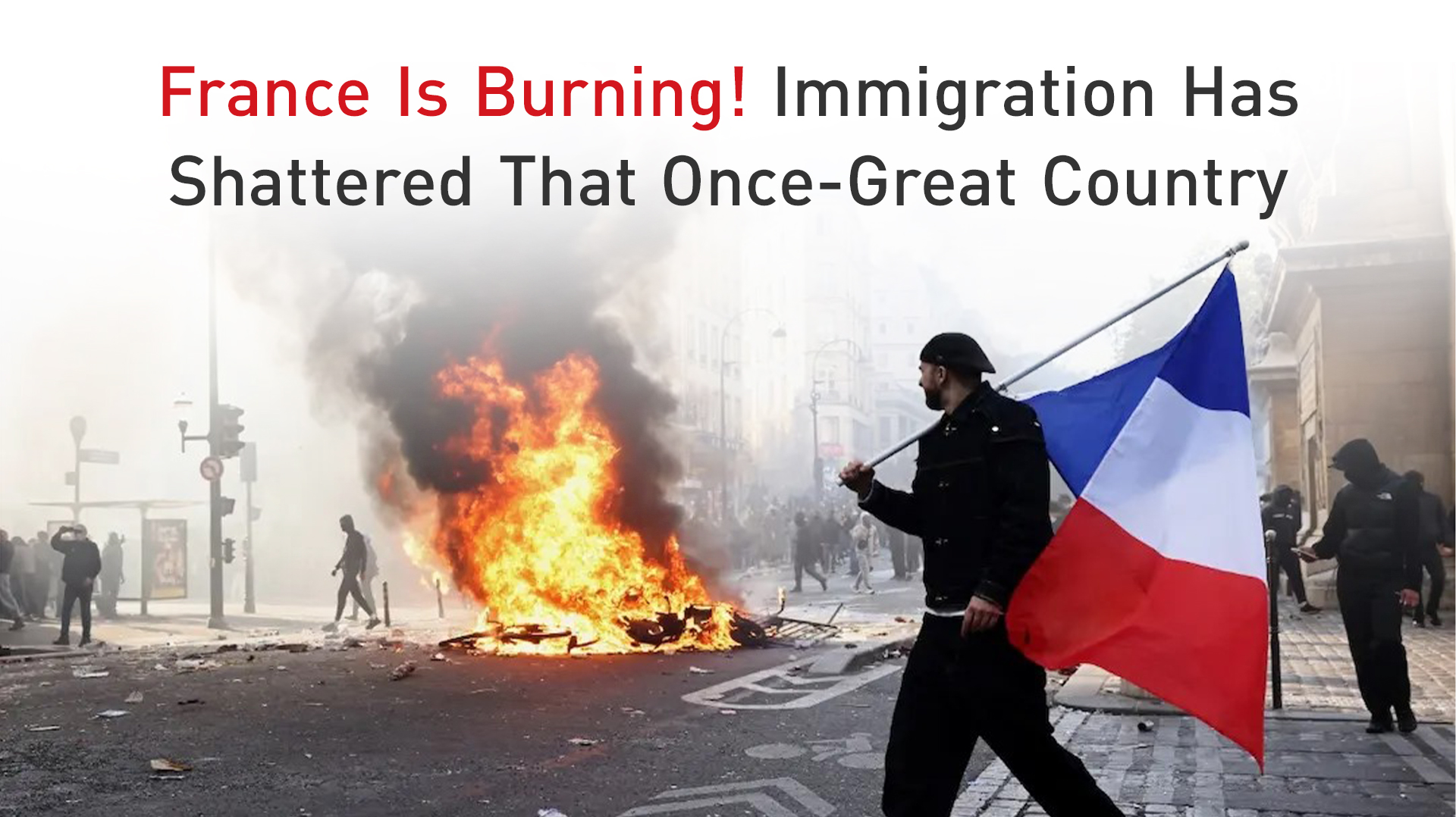
ERBIL (Kurdistan24) — US President Donald Trump on Sunday blamed immigration for the violent unrest sweeping France, urging the country to close its borders and regain control, as riots, arson and widespread looting followed nationwide demonstrations over rising living costs and deteriorating public services.
“France is burning!” Trump wrote on his Truth Social platform on Sunday, arguing that immigration from what he described as “an entirely different world” had damaged the country.
“The immigration of people from an entirely different world, people with hatred in their hearts, has shattered that once great country,” Trump wrote. “Close your Borders and take control, before it is too late!”
His remarks came after violent incidents across France on Saturday, when groups of rioters set fires, looted businesses and clashed with security forces.
French authorities, however, have attributed the demonstrations primarily to economic and social grievances and have not established that immigration caused the violence.
According to reports from French authorities cited by international news agencies, police arrested nearly 1,800 people nationwide. More than 500 police officers and other security personnel were reported injured, while a demonstrator died after suffering a cardiac arrest during the unrest.
Trump’s hardline immigration agenda
Trump’s latest comments reflect his longstanding position that large-scale immigration threatens national security, social cohesion and Western cultural identity.
Since returning to the White House in January 2025, he has pursued an extensive campaign to restrict immigration to the United States, with particular emphasis on unauthorized border crossings, deportations and tighter asylum rules.
His administration has expanded immigration enforcement, increased deportation efforts and sought to restrict access to asylum and other immigration pathways.
The president has also pressed federal agencies to strengthen border security and has pursued measures intended to deter unauthorized entry.
Trump has repeatedly presented immigration enforcement as a matter of national sovereignty, arguing that governments must determine who enters their territories and remove people who have no legal right to remain.
His approach has also generated legal challenges and criticism from civil rights organizations over due process, detention and the treatment of migrants.
The president has extended that argument beyond the United States, frequently criticizing European governments for what he considers permissive immigration policies and warning that uncontrolled migration could undermine the continent’s national identities and institutions.
In June 2026, a report by The Washington Post described the European Union’s move toward stricter migration rules, including tighter border controls, faster deportations and longer detention periods. European governments have increasingly adopted tougher measures amid domestic pressure over irregular migration and asylum systems, although their approaches vary considerably between countries.
Trump’s repeated criticism of Europe
Trump’s Sunday statement followed earlier criticism of France’s protests. On Oct. 6, he blamed the unrest on what he called “out of control mass migration,” arguing that the demonstrations were not primarily about school conditions but about Islam and immigration.
His latest remarks reinforce a central theme of his political agenda: that European leaders have failed to adequately control migration and that the resulting social tensions threaten the continent’s stability.
The debate over immigration has become increasingly prominent across Europe, where governments face competing demands to secure borders, manage asylum applications, address labor shortages and meet international obligations toward refugees.
Several European countries have tightened immigration rules in recent years, while political parties advocating substantially lower migration levels have gained support in a number of national elections.
The European Union has also moved to reform its migration and asylum system, seeking stronger external border management and more effective returns for people who do not qualify to remain.
However, the causes of public disorder and political discontent vary between countries. Although migration remains a contentious issue in European politics, the presence of riots or public protests does not by itself establish a connection between immigration and the violence.
France faces widespread damage after violent protests
France was assessing the damage on Sunday after demonstrations across the country escalated into some of the most serious unrest in years.
The protests, which initially gathered momentum around demands for better school conditions and staffing, expanded into a broader movement against rising living costs, declining public services and government spending decisions.
Hundreds of thousands of people took part in demonstrations, most of which were peaceful, according to reports from the country.
Violent groups nevertheless carried out extensive damage in several major cities. In Paris, shops were ransacked, storefronts smashed and businesses looted as police deployed to contain clashes.
In Marseille, masked individuals damaged public property and entered the city hall building, while Lyon reported a fire at its tourist office.
One of the most serious incidents occurred in Limoges, in central France, where a fire deliberately set at the historic city hall caused extensive damage and threatened to destroy the building.
Authorities said the violence had placed considerable pressure on police and emergency services. Paris Mayor Emmanuel Grégoire announced emergency support measures for affected businesses, describing the scale of the destruction as considerable and unprecedented.
French Prime Minister Sébastien Lecornu blamed radical left-wing groups and criminals for exploiting the demonstrations, while President Emmanuel Macron condemned those responsible for the attacks and pledged that they would face justice.
The unrest has intensified political tensions ahead of France’s next presidential election, expected in 2027, with rival political factions disputing responsibility for the violence and the government’s handling of the broader crisis.
Despite Trump’s claims, French authorities have not established that immigrants were responsible for the nationwide disorder. Officials have instead pointed to violent fringe groups and people who took advantage of the demonstrations to loot shops and attack public buildings.
Unrest and migration tensions across Europe
France’s unrest comes amid broader European debates over immigration, economic pressures and public confidence in government institutions. Demonstrations and clashes have also been reported in other European countries, although their scale, causes and levels of violence differ.
In Belgium, several hundred people gathered in Brussels during demonstrations linked partly to the wider wave of protests, with some participants clashing with police. Italy and Portugal also experienced smaller demonstrations amid economic discontent and concerns over the cost of living.
In Albania, protesters continued to rally over allegations of government corruption, unemployment and weaknesses in public services and education. These demonstrations reflected domestic political grievances rather than a single Europe-wide cause.
Across the European Union, immigration policy remains a major political fault line. Governments are under pressure to reduce irregular arrivals and accelerate the removal of people whose asylum claims have been rejected, while migration remains an important source of labor in sectors facing shortages.
The EU has pursued tighter border management and changes to asylum procedures, reflecting growing political support for stricter controls. Critics, including refugee-rights organizations, warn that some measures risk restricting access to asylum and weakening protections for vulnerable people.
Trump’s latest intervention places the French unrest within his broader argument that European governments must adopt tougher border policies.
His statement, however, goes beyond the evidence publicly established by French authorities about the causes of the violence, leaving the relationship between immigration and the latest unrest a politically contested question.