Major Brick Factory Begins Production in Erbil With 1,200-Tonne Daily Capacity
Akad Brick has begun production near Erbil with a daily capacity of 1,200 tonnes, advanced European and Japanese technology and 450 direct and indirect jobs.
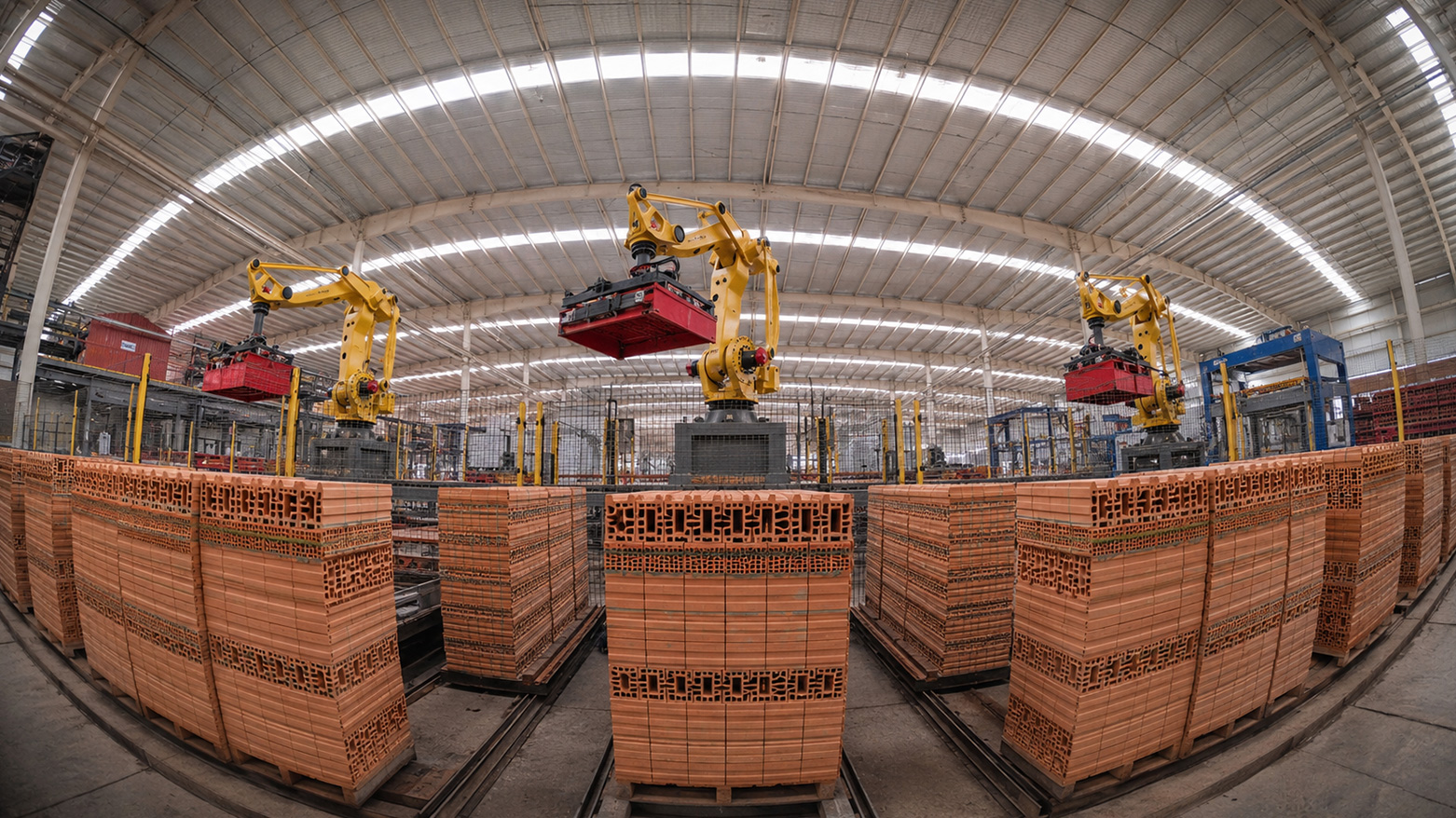
ERBIL (Kurdistan24) - One of the largest and most technologically advanced brick factories in the Middle East has begun production south of Erbil, with a daily capacity of 1,200 tonnes, hundreds of jobs created and an expanding market extending from the Kurdistan Region to central and southern Iraq.
The Akad Brick factory, located near Qushtapa in Erbil province, covers more than 24 acres and uses highly automated European and Japanese production systems, according to Kurdistan Region investment officials and company executives who spoke to Kurdistan24.
Bargasht Akrayi, spokesman for the Kurdistan Region's Board of Investment, described the project as one of the Region's major strategic industrial investments.
"Akad Brick is a major brick factory in the Middle East and is considered one of the largest facilities of its kind," Akrayi told Kurdistan24.
He said the factory's brick-firing kiln was particularly notable, describing it as the largest of its kind in the world.
"This makes it the first and largest kiln of its kind in the world," Akrayi said.
The claim reflects the assessment of the Board of Investment and company officials. Kurdistan24 has not independently verified the kiln's global ranking.
262-meter kiln and automated production
Mohammed Soran, executive director of Akad Brick Company, told Kurdistan24 that the factory's kiln measures 262 meters long and nine meters wide.
He said bricks are fired at approximately 850 degrees Celsius.
The factory operates a single production line capable of producing around 50 tonnes of bricks an hour in five different sizes. Over a full 24-hour production cycle, that amounts to approximately 1,200 tonnes.
Soran said the production process is almost entirely automated and electronically controlled.
Human involvement is primarily limited to operating and supervising machinery, while production equipment performs most of the physical manufacturing process.
The factory incorporates technology sourced from Europe and Japan.
Akrayi said robotic systems had been imported from Japan, while some electronic and industrial equipment came from German engineering company Siemens.
Soran said the entire production line was designed around modern European and Japanese systems intended to improve efficiency, consistency and output.
More than 24 acres of industrial space
The factory occupies more than 24 acres (100 dunams) of land, with around 30,000 square meters dedicated specifically to production facilities.
Its location south of Erbil was selected partly because of proximity to raw materials.
Soran said the factory's main source of production material is approximately 27 kilometers away, reducing transport requirements between extraction and manufacturing.
The location also gives the company access to Erbil and major transport routes leading to other provinces.
The factory's initial output has largely been directed toward construction demand in Erbil province, but its distribution network has already expanded.
According to company officials, Akad Brick products are being supplied to other cities in the Kurdistan Region as well as markets in central and southern Iraq.
450 direct and indirect jobs
The project has created around 450 direct and indirect employment opportunities.
Soran said approximately 250 people work directly for the factory, while another 200 benefit through related employment.
He said 99% of those employed are from the Kurdistan Region and approximately 95% come from the surrounding local area.
The factory has also prioritized young engineers and recent university graduates.
According to Soran, many of the engineers currently working at Akad Brick are recent graduates of Salahaddin University.
The company says this approach is intended not only to fill current industrial positions but also to develop a new generation of local technical specialists.
The emphasis on local recruitment was also highlighted during a visit to the factory by KRG Municipalities Minister Sasan Awni, Board of Investment Chairman Dr. Mohammed Shukri and Erbil Governor Omed Khoshnaw.
Officials were received by representatives of Haql Taboq Company and the wider business group behind the project.
Part of wider push for local production
The factory received its investment license under the Ninth KRG Cabinet, according to Akrayi.
He described the plant as an "important national asset," arguing that its production capacity could reduce dependence on imported construction materials and strengthen domestic manufacturing.
KRG officials have increasingly promoted local industrial projects as part of a broader effort to diversify the Kurdistan Region's economy and expand private-sector employment.
Brick production is closely tied to the construction sector, one of the most visible areas of economic activity in Erbil and other cities across the Region.
A large domestic producer capable of maintaining steady output can therefore supply local construction demand while competing in markets elsewhere in Iraq.
For Akad Brick, the immediate objective is to establish itself as a major supplier within the Kurdistan Region before further expanding its reach.
Its combination of large-scale production, automated technology, proximity to raw materials and local staffing gives the project an industrial profile considerably larger than a conventional brickworks.
With production now underway, the factory represents both a substantial addition to Erbil's manufacturing base and another test of the KRG's strategy of encouraging domestic industry to meet local demand while expanding into the wider Iraqi market.
Kurdistan24 senior journalist and news writer Muhammad T. Hamad contributed to this report.