Iraq Accelerates Arms Procurement as Coalition Withdrawal Nears
Iraq is accelerating arms procurement and implementing a multiyear air-defense plan as Baghdad prepares for the Sept. 30 end of the international coalition mission.
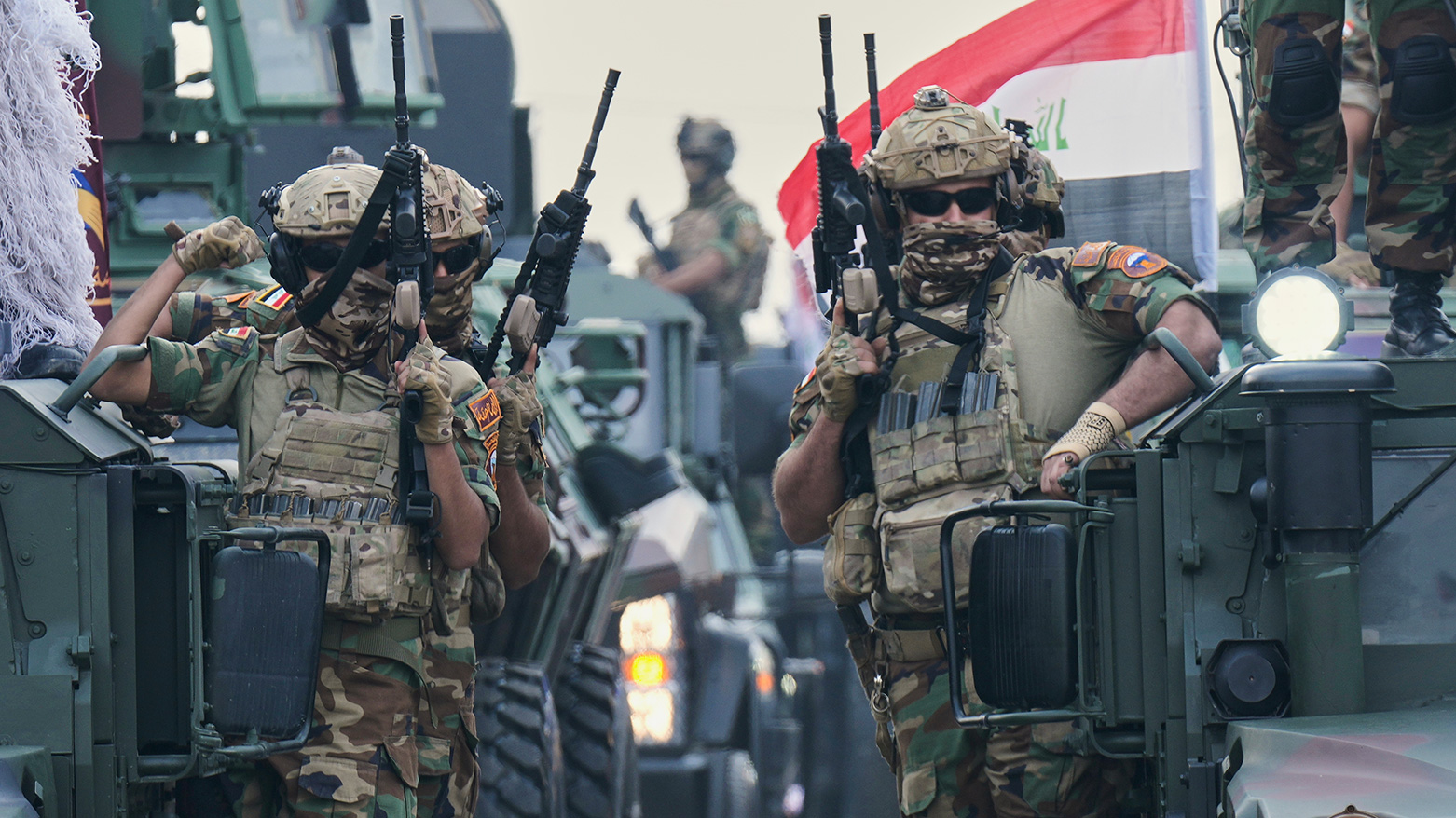
ERBIL (Kurdistan24) - Iraq is accelerating arms procurement and implementing a new multiyear air-defense plan as Baghdad prepares for the scheduled end of the international coalition's mission on Sept. 30 and the transfer of full security responsibility to Iraqi forces.
Maj. Gen. Saad Maan, head of media and security relations in the office of the commander-in-chief of the armed forces, said Tuesday that Prime Minister Ali Falih al-Zaidi's government had made significant security progress during its first 100 days.
Maan identified the finalization of arrangements for the coalition's withdrawal as one of the government's principal achievements, saying the transition would strengthen independent Iraqi decision-making and leave the country's regular security forces responsible for national defense.
He said Baghdad was also moving ahead with plans to strengthen air-defense capabilities through accelerated procurement contracts and a broader multiyear modernization program.
The announcement comes as Iraq seeks to reduce vulnerabilities in its airspace while reshaping its security relationship with international partners from a coalition framework toward more conventional bilateral military cooperation.
Weapons control becomes government policy
Maan said bringing weapons exclusively under state authority had moved beyond political rhetoric and become a formal government program.
Decisions concerning war and peace, he said, must remain with constitutional institutions, while armed formations cannot independently determine Iraq's security policy.
Baghdad has also reaffirmed that Iraqi territory must not be used as a launching point for attacks against neighboring countries or as an arena for regional conflicts.
The weapons-control issue has gained urgency as the coalition deadline approaches, particularly amid continuing debate over armed groups operating outside direct state command.
The government has repeatedly said that unlicensed weapons must be brought under official control while constitutionally recognized forces remain part of Iraq's formal security architecture.
Air defenses and border security
Maan said Iraq's post-coalition strategy also includes tighter border security through intelligence coordination with neighboring states.
The objective is to prevent infiltration by armed groups, reduce smuggling and stop Iraqi territory from being drawn into external conflicts.
Air defense is another central component.
Baghdad has been seeking new systems and aircraft as it attempts to strengthen surveillance, transport and defensive capabilities.
Kurdistan24 reported Monday that the U.S. State Department had approved a possible Foreign Military Sale to Iraq valued at up to $800 million.
The proposed package includes Bell 412EPX and Bell 407M helicopters, weapons systems, targeting equipment, missile-warning technology, training, spare parts and logistical support.
Bell-Textron of Fort Worth, Texas, was named as the principal contractor.
The State Department approval clears the proposed sale for the U.S. foreign military sales process and congressional review; it does not by itself constitute a finalized purchase contract.
Post-coalition security model
The helicopter package illustrates how Iraq's security relationship with Washington may continue even after the formal coalition mission ends.
Rather than maintaining the same multinational operational presence, Baghdad is increasingly seeking equipment, training and bilateral defense cooperation that allow Iraqi forces to assume greater responsibility themselves.
Maan presented that transition as part of a broader sovereignty agenda: coalition forces leave, Iraqi forces take full responsibility, weapons are brought under constitutional authority, and military capabilities are strengthened through new procurement.
For Baghdad, the test after Sept. 30 will be whether those plans translate into the practical ability to secure Iraq's airspace, borders and territory without relying on the coalition structure that has supported Iraqi forces for years.