Iraqi Lawmaker Says Mandali Could Be Next Iran Crossing to Close
KDP lawmaker Salwan Taha Akreyi says Washington asked Iraq to close Iran border crossings and disarm armed groups as Baghdad faces political and security disputes.
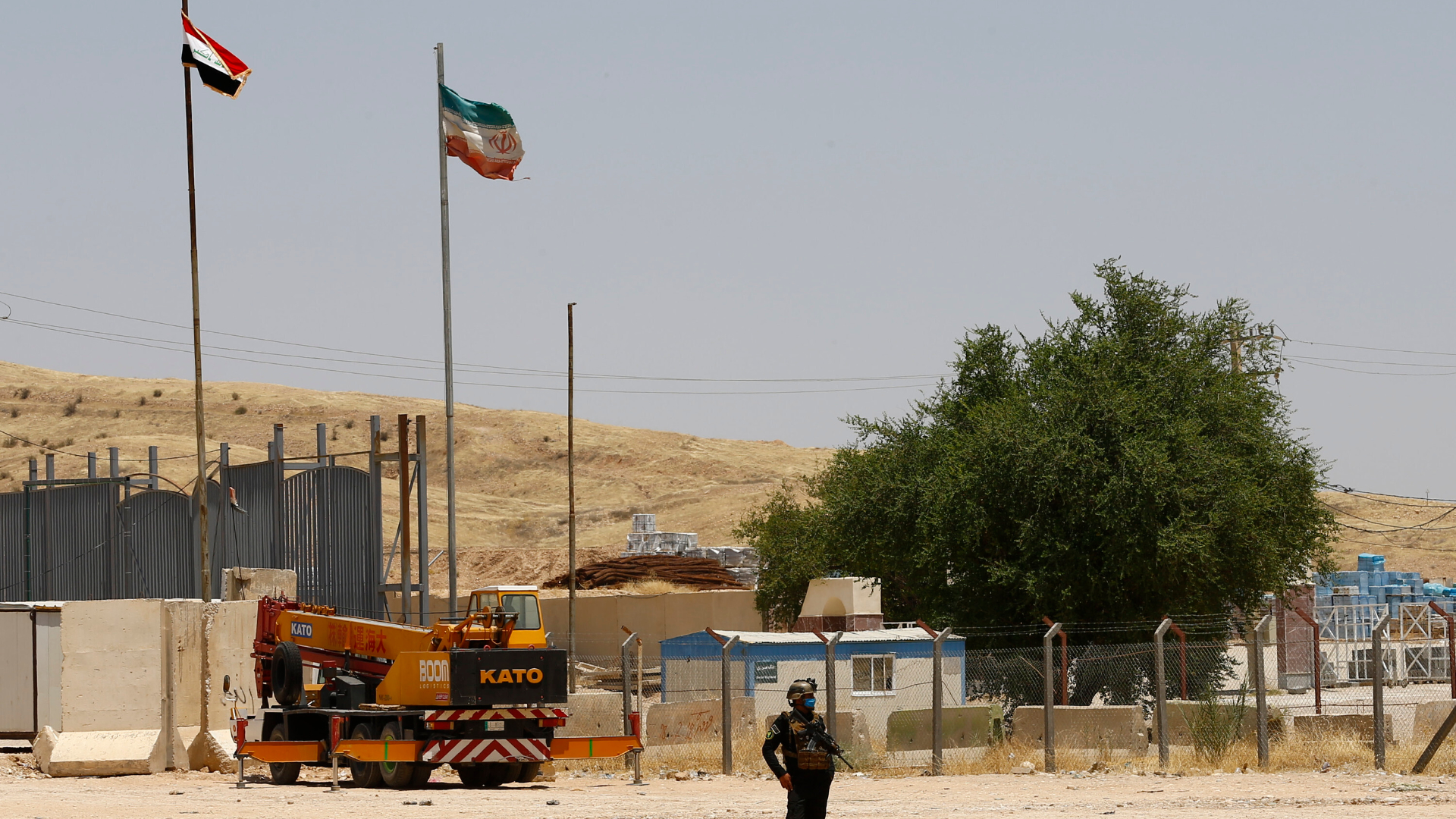
ERBIL (Kurdistan24) - A member of the Iraqi parliament's Border Crossings Committee says Washington formally asked Iraqi Prime Minister Ali Faleh al-Zaidi to close border crossings with Iran and bring armed groups under control, as disagreement grows inside Baghdad over security, trade and the risk of Iraq being drawn into a wider regional conflict.
Salwan Taha Akreyi, a KDP lawmaker and member of the committee, told Kurdistan24's Basi Roj program's Zhino Mohammed that, according to information available to him, the request was raised during al-Zaidi's visit to the United States.
"According to the official information we have," Akreyi said, Washington asked the prime minister to ensure that armed groups lay down their weapons and that the crossings with Iran be closed.
His account adds to claims already made by Hussein Shihani, a member of the Sadiqoun Movement's political bureau, who told Kurdistan24 that al-Zaidi presented a U.S.-requested border-closure proposal to leaders of the Coordination Framework, where it met strong opposition.
The U.S. State Department, however, has not publicly confirmed a blanket demand to close all Iraq-Iran crossings.
In response to Kurdistan24, a State Department spokesperson said Washington expects al-Zaidi to honor commitments made to President Donald Trump in July, including countering terrorism, preventing attacks "in and from Iraqi territory" and strengthening Iraq's sovereignty and bilateral ties.
The dispute has intensified following the closure of the al-Sheeb crossing in Maysan.
Akreyi described al-Sheeb as the first practical step in al-Zaidi's broader plan and said he expects Mandali to be among the next crossings considered for closure.
He said he had contacted the Border Crossings Authority and had been told that no formal letter ordering Mandali's closure had yet been issued.
Akreyi said the official letter regarding al-Sheeb did not specify a security justification.
The Iraqi government has publicly said the crossing was suspended because it lacked adequate technical and logistical infrastructure, including proper scanning and monitoring equipment, and that trade with Iran was continuing through other crossings.
Akreyi nevertheless argued that security concerns and the wider regional confrontation form part of the political context.
He said Iraqi officials were preparing for the possibility of renewed fighting involving Iran, the United States and Israel and claimed he had information suggesting another phase of the conflict could be broader.
That assessment was Akreyi's own; no independent confirmation of an imminent new war was provided in the interview.
For the lawmaker, the principal concern is that Iraqi territory or border routes could be used by armed factions for the movement of weapons and personnel.
He said border closures could serve two purposes depending on regional developments: limiting the movement of weapons and fighters if conflict resumes, or increasing economic pressure on Iran if it does not.
Akreyi repeatedly linked the issue to armed groups operating outside direct state control.
His comments come as some factions continue to resist Baghdad's demands over weapons. Harakat al-Nujaba military deputy Abdul Qadir Karbalai said this week that disarmament was not part of the movement's position, illustrating the challenge facing the government as it seeks greater state control over armed actors.
Akreyi said some factions openly declare their support for Iran and could complicate al-Zaidi's effort to keep Iraq outside a broader war.
He credited the Kurdistan Region with maintaining a policy of non-involvement and said President Masoud Barzani had consistently stressed that the Region should not become a party to the conflict.
Asked about the practical ability of Iraq to secure its approximately 1,400-kilometer frontier with Iran, Akreyi said he did not believe Baghdad currently had sufficient capacity to control the entire border alone.
He cited limited aerial surveillance and insufficient advanced scanning systems, arguing that manpower alone would not be enough.
"Iraq alone cannot control this entire border," he said, adding that Baghdad would need assistance from the United States, European countries and coalition partners.
He contrasted that assessment with conditions at border crossings administered by the Kurdistan Regional Government.
Akreyi said crossings in the Kurdistan Region operate under stricter procedures and singled out Ibrahim Khalil as a highly developed international crossing.
He also said no federal instruction had yet been issued requiring the Kurdistan Region to close crossings with Iran.
If Baghdad did send such an order, Akreyi said he believed the KRG would comply.
However, he argued that because the Region's crossings are more tightly controlled, any future closure there would, in his assessment, be more likely to serve an economic-pressure objective than a security one.
Akreyi said he expected federal attention to remain focused primarily on Mandali, Maysan and Wasit, while also suggesting Zurbatiyah could be affected.
He further claimed that most crossings could ultimately close while two remain open for commercial trade, although he said those two had not yet been formally identified.
The lawmaker suggested Shalamcheh could be one of them.
The prospect of wider closures has generated concern over trade.
Iran is an important commercial partner for Iraq, and Akreyi acknowledged that restricting crossings could create economic consequences.
He nevertheless argued that Iraq has alternative trade routes through Türkiye, Jordan, Saudi Arabia and Kuwait and said Baghdad should distinguish legitimate commerce with Iran from smuggling.
Akreyi claimed that weapons, narcotics, prohibited goods and dollars are moved illegally through some federal border areas and argued that stronger controls could reduce pressure on Iraq's currency.
"If Ali al-Zaidi can control dollar smuggling and prevent dollars from being sent to Iran, then in my view the dollar exchange rate would come down," he said.
That was Akreyi's economic assessment rather than a conclusion established by the material.
On opposition within the Coordination Framework, Akreyi cautioned against portraying the alliance as completely unified against the closures.
He said some factions remain strongly supportive of Iran and armed groups and are applying pressure on al-Zaidi, but he did not believe the dispute would bring down the government.
"There is no alternative to Ali al-Zaidi under the current circumstances," he said, citing Iraq's difficult economic, political and security environment.
Akreyi also used the interview to revisit the long-running dispute over customs administration and the ASYCUDA system.
He said the Kurdistan Regional Government had formally sought to resolve disagreements over border crossings with Baghdad since 2021 and had repeatedly sent delegations for negotiations.
According to Akreyi, the KRG and federal government eventually agreed to implement ASYCUDA, with the arrangement passing through the Ministerial Council for the Economy.
He said the KRG remains ready to implement the system but argued that political disagreement over revenue distribution remains an obstacle.
Akreyi maintained that constitutional and financial-management provisions entitle the Kurdistan Region to a share of border-crossing revenues, while Baghdad has sought full transfer of customs income to the federal treasury.
For Akreyi, both the ASYCUDA dispute and the current Iran-border controversy point to the same unresolved question: whether Baghdad can establish effective state control over borders, revenues and armed groups while navigating competing domestic and regional pressures.
His central argument was that al-Zaidi has the legal authority to close crossings and should use that authority if necessary to keep Iraq outside another regional war.
But the competing statements surrounding al-Sheeb also show that the policy remains politically contested: some Iraqi officials describe the closure in technical terms, political figures say Washington requested wider restrictions, Tehran has objected to the move, and factions within the Coordination Framework oppose broader closures.