Trump Threatens Trade War on Deficit Countries If Fed Refuses to Cut Rates
President threatens to halt trade with every deficit country if the Federal Reserve refuses to act, telling its new chairman Kevin Warsh to "be patriots for a change" as markets push Treasury yields to a one-year high
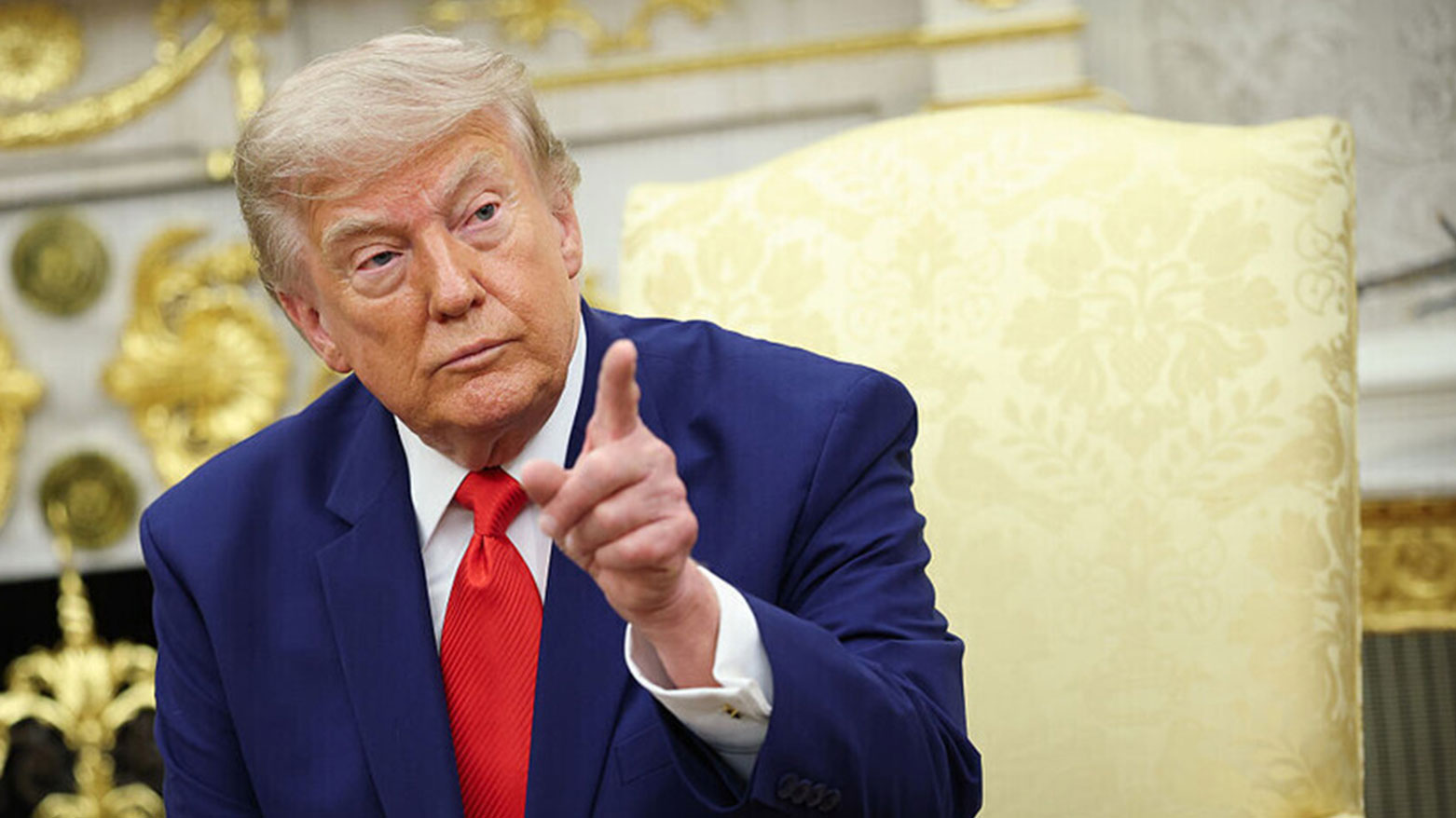
ERBIL (Kurdistan 24) - President Donald Trump issued one of his most sweeping demands yet to the Federal Reserve on Friday, September 4, 2026, calling on the central bank to slash interest rates to the lowest level of any country in the world following a stronger-than-expected August jobs report that added 162,000 jobs and significantly exceeded forecasts, while simultaneously threatening to halt trade with every country the United States runs a trade deficit against if rates are not cut.
"Great jobs number just announced, breaking all estimates (except mine!) by double and triple," Trump wrote on Truth Social on Friday, adding: "EMPLOYERS ADDED 162,000 JOBS IN AUGUST. Lower the interest rates because the U.S.A. is a much stronger credit than it was just a short time ago!"
Trump said the United States has stronger credit and should have lower interest rates than any other country in the world, as it once did.
"A STRONG COUNTRY MEANS A LOWER INTEREST RATE. IT'S BETTER CREDIT. Very simple!"
He wrote, framing the demand as an elementary economic principle rather than a political preference.
Trump told the Fed board, under what he described as "its great new leader," to "BE PATRIOTS for a change," a reference to Kevin Warsh, whom Trump installed as Federal Reserve chairman after a prolonged campaign to remove Jerome Powell.
The president then escalated the pressure significantly, threatening to halt trade with every deficit country if the Fed refuses to cut rates. "LOWER THE RATE OR I'LL STOP TRADING WITH COUNTRIES WITH WHICH WE HAVE A DEFICIT," Trump wrote, presenting the trade threat as an alternative to tariffs and a direct consequence of the Fed's inaction.
Trump argued that the United States' stronger creditworthiness should translate into lower interest rates and said the country should have the lowest rates in the world. Trump also stepped up the pressure by directly linking interest rates to his trade policy, presenting this approach as an alternative to tariffs.
Trump also referenced a Supreme Court ruling in his post, saying the president has broad authority in this area and that the ruling is "better than tariffs," without specifying the exact ruling he had in mind.
Markets pushed 10-year Treasury yields to a one-year high of 4.79 percent after the jobs report, signaling that traders expect fewer rate cuts, not more. The market reaction directly contradicts Trump's demand, with bond investors interpreting the strong jobs data as evidence that the economy does not need rate cuts and that inflation risks remain elevated. Trump's own Fed Chair Kevin Warsh had warned at Jackson Hole that the Fed had work to do on inflation, sparking market bets on rate hikes.
Unemployment remained steady at 4.1 percent alongside the 162,000 jobs added in August. The figure significantly exceeded consensus economist forecasts and represents one of the stronger monthly jobs reports of Trump's second term, coming despite the economic uncertainty generated by the ongoing US-Iran conflict, the 50 percent tariffs on Canada that took effect in August, and the turbulence in global energy markets caused by the Strait of Hormuz closure.
Trump's demand for the world's lowest interest rates represents an escalation of a pressure campaign he has waged against the Federal Reserve throughout his second term. He was repeatedly critical of former Chairman Jerome Powell's unwillingness to cut rates and has since managed to install Kevin Warsh as his replacement. Whether Warsh will comply with Trump's demands or maintain the Fed's traditional independence from political pressure will be one of the defining institutional questions of the coming months.