Iranian Media Report Explosions Near Kharg Island
Iranian media reported several explosions near Kharg Island, Iran’s major oil-export hub, while one outlet alleged a U.S. strike on a tanker. Neither government immediately confirmed the claim.
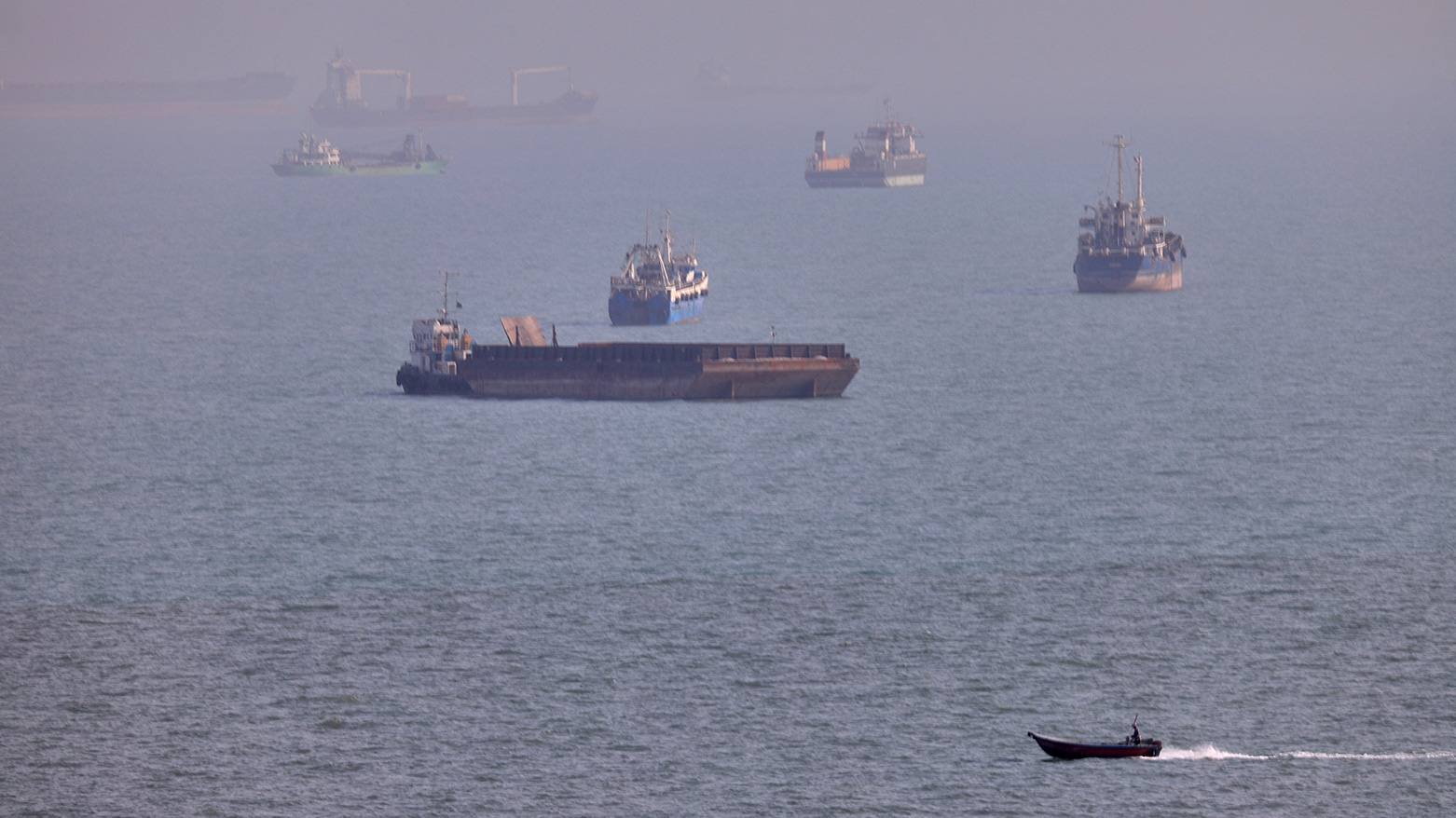
ERBIL (Kurdistan24) - Iranian media reported several explosions Saturday near Kharg Island, the country's major oil-export hub in the Persian Gulf, as renewed fighting between Iran and the United States continued and tensions remained high around the Strait of Hormuz.
Iran's Fars News Agency said its correspondent heard several blasts in the Kharg Island area but saw no smoke, according to Agence France-Presse.
Another Iranian outlet, SNN, claimed that "an Iranian tanker was targeted by the US" near the island.
There was no immediate confirmation from either Iranian or U.S. officials, AFP reported, leaving the cause of the explosions and the allegation of an American attack unverified.
The location makes the reports particularly sensitive. Kharg Island is central to Iran's oil-export infrastructure and sits inside the wider Persian Gulf theater where Washington and Tehran are contesting maritime access and military control.
Any confirmed military attack near the island could therefore have implications for both Iran's energy sector and the broader confrontation over Gulf shipping. As of the initial reports, however, there was no independently verified evidence establishing whether a tanker had been hit or whether U.S. forces were responsible.
Renewed Fighting Across the Gulf
Saturday's incident comes less than a week after U.S.-Iran fighting resumed following a period of relative calm in a conflict that has now lasted more than six months.
The United States launched new strikes against Iran last Sunday, prompting Tehran to retaliate against American targets across the Middle East.
Iran said Thursday that its armed forces had struck U.S. military bases in Kuwait and the United Arab Emirates as retaliation for American attacks earlier in the week.
The two sides also remain locked in a confrontation over the Strait of Hormuz, the strategic waterway connecting the Persian Gulf to global shipping routes.
Iran has restricted passage through the strait, while Washington has maintained what AFP described as a counter-blockade of Iranian ports.
The confrontation has increasingly placed oil infrastructure, tankers and other commercial vessels within the wider military contest.
Kharg Island's role in Iran's petroleum exports means any sustained disruption around the island could potentially affect Tehran's ability to generate energy revenue while adding further uncertainty to global oil markets.
For now, however, the specific allegation that a U.S. strike targeted an Iranian tanker comes only from SNN and has not been corroborated by official statements in Washington or Tehran.
Trump Calls Iran Conflict 'Small Potatoes'
The reports emerged less than a day after U.S. President Donald Trump sought to play down the scale of the confrontation.
Associated Press White House reporter Aamer Madhani reported Friday that Trump described the fighting as "small potatoes" for the United States and defended Vice President JD Vance's contention that six months of intermittent U.S.-Iran hostilities should not necessarily be characterized as a war.
Trump said American attacks on Iran had become "intermittent" and described the confrontation as a "military conflict."
"I call it a military conflict because it's small potatoes for us," Trump told reporters, according to AP.
That description came despite significant costs.
AP reported that the conflict has cost U.S. taxpayers more than $37.5 billion and killed 18 American service members since the U.S.-Israeli campaign against Iran began on Feb. 28.
Vance told reporters Thursday that he "wouldn't call it a war" and avoided predicting whether the conflict would end before the Nov. 3 U.S. midterm elections.
His remarks came even as Iran carried out retaliatory attacks against U.S. regional allies and American military facilities.
Trump has continued to argue that U.S. and Israeli operations have substantially weakened Iran's nuclear and military capabilities, while maintaining that Tehran will not be permitted to acquire a nuclear weapon.
Other assessments have suggested, however, that Iran retains the ability to sustain military pressure and exploit its position around Hormuz.
Kurdistan24 reported Saturday that a Fox News opinion article by Erfan Fard argued that U.S. strikes are degrading Iran's military machinery but warned that Washington still lacks a defined political endgame for the conflict.
The reports from Kharg Island highlight why the maritime dimension remains central.
Washington has sought to protect shipping while targeting Iranian radar, air-defense, maritime and mine-laying capabilities that it says threaten U.S. forces and commercial navigation.
Iran, meanwhile, continues to use its position around Hormuz as strategic leverage.
If Saturday's explosions are ultimately confirmed as military action, an incident involving Kharg Island or an Iranian tanker would represent another escalation around infrastructure directly connected to Tehran's oil-export system.
But significant uncertainties remain.
Fars reported explosions without visible smoke. SNN alleged that an Iranian tanker had been attacked by the United States. Neither government immediately confirmed those accounts.
Until official information or independently verified evidence emerges, what happened near Kharg Island, and whether the explosions mark a new U.S. strike in the escalating Gulf confrontation, remains unclear.