Kore-Shaqlawa Road Set to Open in October
The Kore-Shaqlawa-Qandil road has reached 70% completion and is set to open in October, cutting Erbil-Soran travel time by more than 30 minutes.
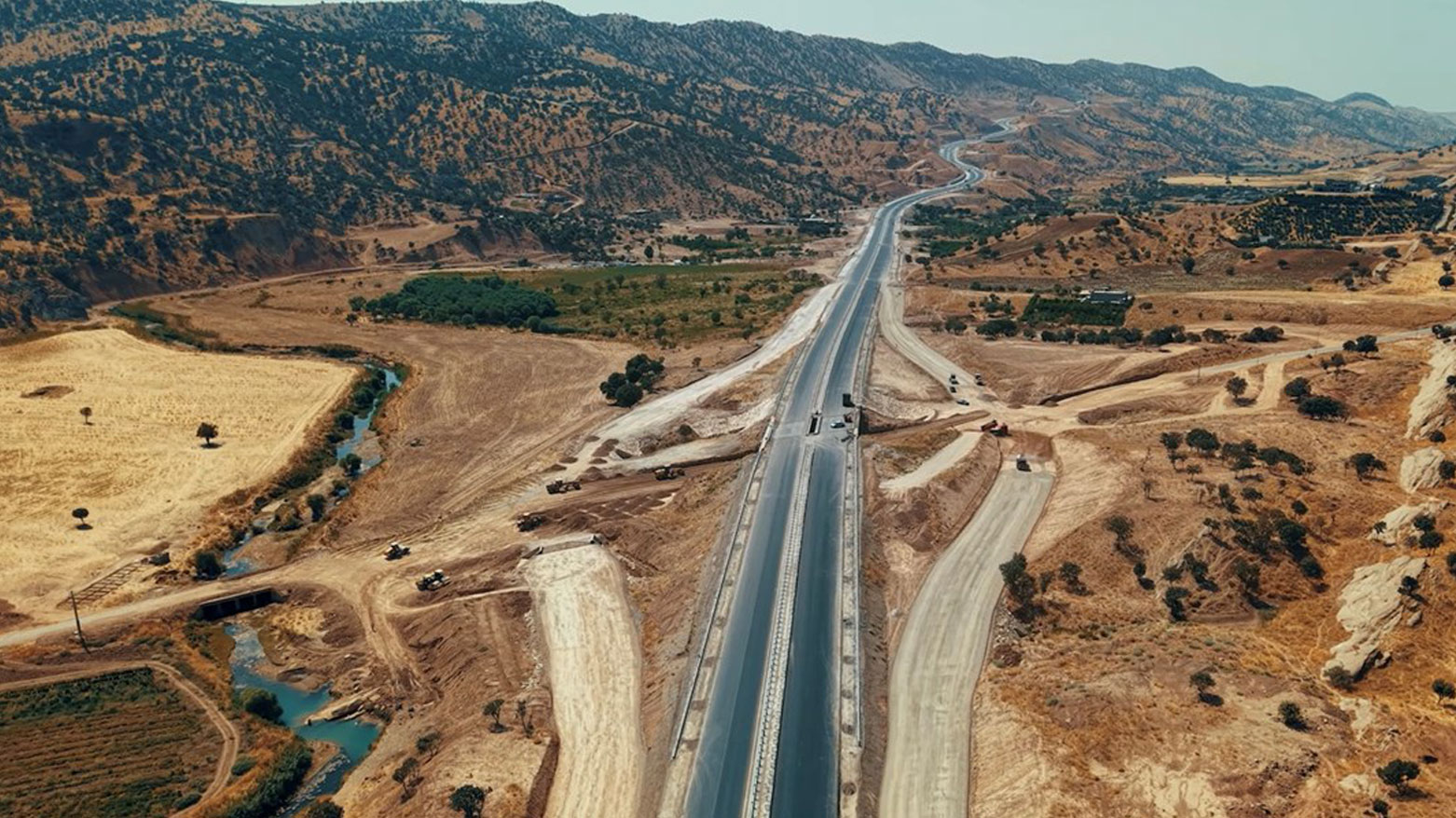
ERBIL (Kurdistan24) - The strategic Kore-Shaqlawa-Qandil road project has reached 70% completion and is scheduled to open to motorists in October, the Kurdistan Regional Government said, promising shorter journeys, safer winter travel and improved commercial links along one of the Kurdistan Region's principal transport corridors.
According to a statement from the KRG's Department of Media and Information, the 10-kilometer project consists of a dual carriageway, two tunnels and three interchanges designed to relieve traffic congestion and improve the connection between Erbil and the Soran Independent Administration.
Construction work on the Mawaran Tunnel is advancing rapidly and according to required standards, while lighting and safety systems have already been installed inside the Mirawa Tunnel, the government said.
The project also incorporates an emergency escape ramp for heavy vehicles that suffer brake failure, allowing trucks to leave the main carriageway and stop safely rather than continuing downhill without control.
Once the road opens, the KRG expects travel time between Erbil and the Soran administration to be reduced by more than 30 minutes.
A Safer Route Through Mountainous Terrain
The new road forms part of the main highway connecting Erbil with the Haji Omeran international border crossing, making it important not only for local travel but also for commercial traffic between the Kurdistan Region and neighboring countries.
The existing route across Mount Safin is particularly vulnerable during winter, when snowfall and difficult weather can obstruct traffic and make travel more hazardous.
By directing motorists through the new tunnels and modernized road network, the government says the project will provide a safer and more reliable year-round alternative.
Reducing traffic accidents is one of the stated objectives of the scheme, alongside easing congestion and improving access for residents and tourists traveling between Erbil, Shaqlawa and destinations across the Soran area.
The route serves one of the Kurdistan Region's most important tourism corridors, particularly during holiday periods when large numbers of visitors travel toward Shaqlawa, Soran, Rawanduz and the mountainous districts farther northeast.
Improved access is therefore expected to support tourism businesses as well as freight and passenger transport.
The KRG also expects the route to accelerate movement toward Haji Omeran, an important commercial gateway on the Kurdistan Region's eastern border.
Part of a Wider KRG Road-Building Program
The Kore-Shaqlawa-Qandil project is one component of the Ninth Cabinet's much broader investment in transport infrastructure, which the government has promoted as a region-wide expansion and modernization of the road network.
According to previous Kurdistan24 reporting based on KRG statistics, the Ninth Cabinet launched 1,271 road projects with planned investment exceeding 5.3 trillion Iraqi dinars, covering approximately 5,940 kilometers of roads.
Of those projects, 810 covering around 3,055 kilometers have been completed, while 461 projects spanning roughly 2,885 kilometers remain under implementation.
The program extends across Erbil, Duhok, Sulaimani and Halabja provinces as well as the Soran, Garmian, Raparin and Zakho independent administrations.
The government's road strategy combines new highways, tunnels and bridges with the rehabilitation and resurfacing of older routes.
During 2025 alone, the KRG said it completed 172 road construction, rehabilitation and asphalting projects at a cost exceeding 92.46 billion dinars.
Road safety measures have also accompanied new construction.
KRG figures covering 2019 to 2026 show that authorities marked 2,723 kilometers of roads, installed 19,342 traffic signs and 62 kilometers of guardrails, and built 59 pedestrian bridges.
Other major projects under the program include the Erbil-Koya dual carriageway, the Kalar-Darbandikhan road, the Dukan-Chwarqurna route, ring roads in Erbil and Sulaimani, the Zey Gawra Bridge and Darbandi Ranya Bridge.
The Bestana-Khalakan-Dukan project, another major scheme, includes the 380-meter Frizala Bridge and extensive drainage works designed to improve connectivity through mountainous terrain.
Financing for the wider road program comes from several sources, including the KRG investment budget, the Ministry of Construction and Housing's regular allocations and a portion of revenues generated from vehicle weigh stations, which the government directs toward road maintenance and rehabilitation.
The Kore-Shaqlawa-Qandil corridor reflects the broader approach of treating roads as more than individual construction projects.
For the Ninth Cabinet, improved transport infrastructure is intended to link cities and rural areas, reduce travel times, facilitate agricultural and commercial activity, expand access to border crossings and strengthen the tourism economy.
When the new route opens in October, its immediate effect will be felt by motorists traveling between Erbil and Soran.
Its wider significance, however, lies in its position on a strategic corridor connecting the Kurdistan Region's capital with mountain communities, tourist destinations and one of its principal international trade routes.