Iran Says It Attacked Six Vessels in Retaliation for US Strikes on Tankers
IRGC says its naval forces targeted three oil tankers and three vessels allegedly linked to the United States, warning ships against using unauthorized routes through the Strait of Hormuz
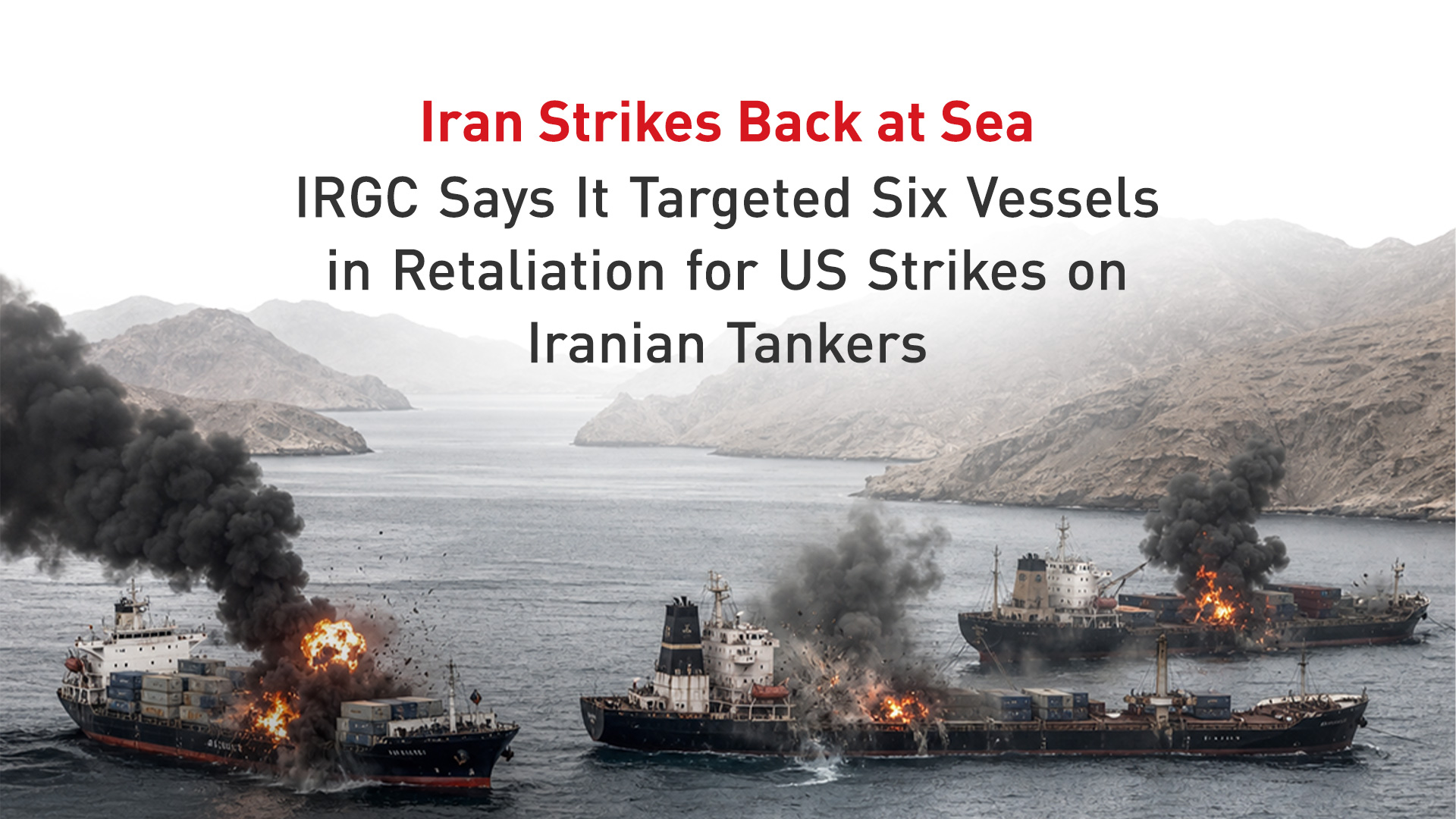
ERBIL (Kurdistan24) — Iran’s Islamic Revolutionary Guard Corps (IRGC) said Saturday that its naval forces had attacked six vessels, including three allegedly affiliated with the United States, in retaliation for US strikes that disabled three Iranian oil tankers earlier in the day, escalating an already dangerous confrontation around the Strait of Hormuz.
The IRGC said its naval forces “targeted three oil tankers on the unauthorized route of the Strait of Hormuz and three vessels affiliated with” the United States in other areas.
The Guards also warned other vessels against attempting to transit through what it described as unauthorized routes, raising concerns over further disruption to commercial shipping through the strategic waterway.
The Iranian announcement followed US Central Command (CENTCOM) strikes against three Iranian crude oil carriers after the IRGC launched ballistic missiles toward two US Navy warships operating in regional waters.
CENTCOM said the US strikes were carried out on Saturday after an American aircraft carrier and a guided-missile destroyer successfully evaded multiple Iranian attacks. No US personnel were injured, according to the command.
US forces permanently disabled the M/T Downy off the coast of Iran’s Kharg Island and the M/T Stark 1 near Jask, while the unladen crude oil carrier M/T Kylo, also known as the “Noxen,” was completely destroyed in the Gulf of Oman, CENTCOM said.
The command said the three tankers were part of a multibillion-dollar “shadow network” that generates revenue for the IRGC and its regional proxies.
“Let the message to the IRGC be clear: If you shoot at two of our ships, we will impose an even higher economic cost — taking out three of yours,” CENTCOM Commander Adm. Brad Cooper said.
“We will not hesitate to defend American forces, and if necessary, destroy Iran’s limited and exposed oil fleet,” Cooper added.
The spokesperson said Iran’s armed forces would respond with attacks against US military bases and command centers across the region, adding that any such response would not be confined to a single location.
The warning raised the prospect of a wider expansion of military operations across the Middle East as tensions between Tehran and Washington increasingly spill into international waters and major maritime routes.
The Strait of Hormuz has become a particular flashpoint. The narrow waterway between Iran and Oman is one of the world’s most important energy corridors, carrying a significant share of global oil and liquefied natural gas shipments.
The latest escalation also comes amid heightened disruption to maritime traffic across the wider region, increasing the strategic importance of alternative routes through the Gulf of Oman, Arabian Sea and Red Sea.
The exchange marks another sharp escalation in the wider Middle East war that began in late February with US-Israeli strikes on Iran. Iran and the United States have since engaged in repeated military confrontations, while Iranian-aligned groups have expanded attacks against US and allied interests across the region.
With Washington warning that it could destroy Iran’s remaining oil fleet and Tehran threatening harsher attacks on US military positions, Saturday’s exchange has significantly increased the risk of further confrontation at sea and across the region.