Iraqi Crude Exports to the US Resume at 38,000 Barrels Per Day After Brief Return to Zero
US Energy Information Administration confirms Iraq has rejoined America's top ten oil suppliers for the second consecutive week, even as Canada's 4 million barrel daily dominance dwarfs all other exporters combined
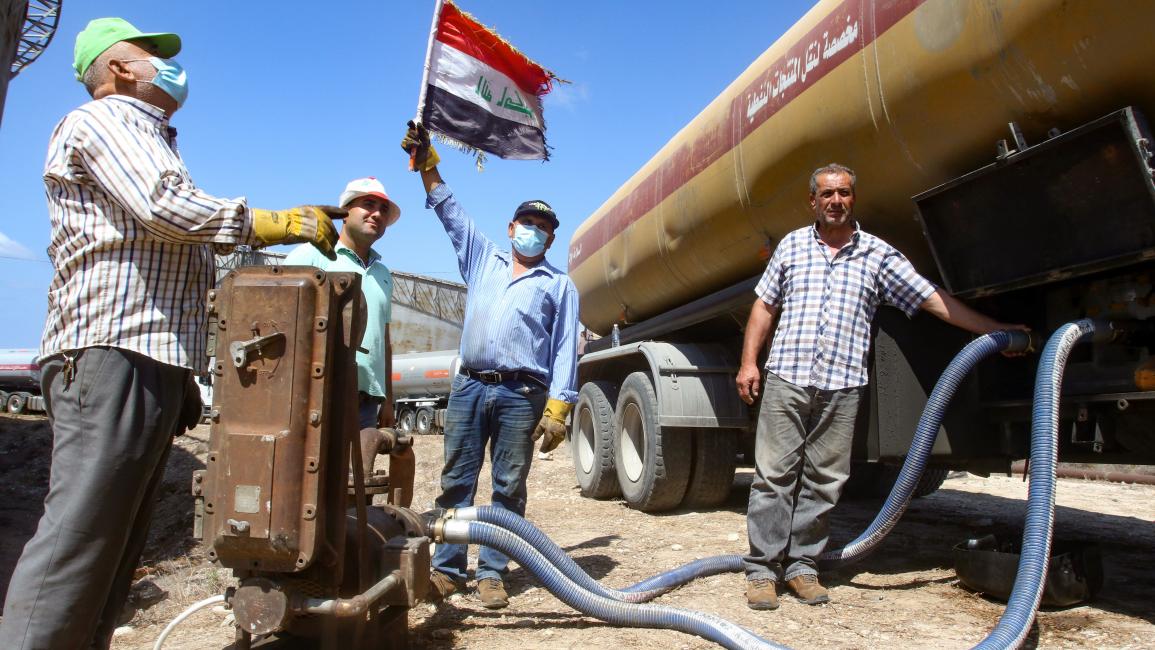
ERBIL (Kurdistan 24) - Iraqi crude oil exports to the United States have resumed for the second time in two weeks, with the US Energy Information Administration announcing on Sunday, September 6, 2026, that Iraq exported an average of 38,000 barrels of crude oil per day to the United States during the previous week, placing it ninth among America's largest oil suppliers.
The resumption marks a notable improvement from the previous week's complete collapse back to zero, which itself came just one week after Iraq had briefly resumed exports at 6,000 barrels per day on August 23, 2026, ending seven consecutive weeks at zero. The EIA's latest data showing 38,000 barrels per day represents the strongest weekly Iraqi crude figure recorded since the US-Iran war began on February 28, 2026, and effectively closed the Strait of Hormuz to normal commercial traffic.
The recovery in Iraqi crude flows to the United States, however modest in absolute terms compared with pre-war volumes, reflects the broader partial reopening of Hormuz transit that has been developing over recent weeks. UK Maritime Trade Operations Center data confirmed last week that nearly 200 ships navigated the strait in a single week, a nearly 400 percent surge from the conflict's most disruptive phase, with maritime intelligence firm Kpler estimating that oil flows through Hormuz have recovered to approximately two-thirds of pre-war levels.
According to the EIA data, Canada dominated US crude imports last week by an extraordinary margin, supplying 4 million and 11,000 barrels per day and maintaining a gap with its nearest competitors that reflects America's accelerated efforts to secure North American energy supply chains since the closure of the Strait of Hormuz began. Venezuela ranked second at 598,000 barrels per day, followed by Saudi Arabia at 379,000 barrels, Mexico at 210,000 barrels, Brazil at 137,000 barrels, Colombia at 111,000 barrels, Ecuador at 101,000 barrels, Nigeria at 71,000 barrels, Iraq at 38,000 barrels, and Libya at 1,000 barrels per day in tenth place.
The United States relies primarily on Canada to meet the majority of its imported crude oil needs. This dependence has deepened significantly since the Iran war disrupted Gulf supply routes, even as the 50 percent tariffs the Trump administration imposed on Canadian goods in August 2026 have created a simultaneous trade dispute with its most indispensable energy partner.
As Kurdistan 24 reported on August 23, 2026, when Iraqi crude exports to the United States first resumed after seven consecutive weeks at zero, the fragility of the recovery was immediately apparent. That week's 6,000 barrels per day proved unsustainable, falling back to zero the following week before recovering more strongly to 38,000 barrels this week. The volatility of Iraq's export figures to the United States reflects the continued instability of the shipping and insurance infrastructure connecting Iraq's southern export terminals to American refineries, as well as the contested navigation environment in and around the Strait of Hormuz where the US "Tanker for Tanker" policy, Iranian mine-laying operations, and the ongoing naval blockade of Iranian ports continue to create uncertainty for commercial operators.
Iraqi Foreign Minister Fuad Hussein had warned on June 6, 2026, that Iraq's oil exports had collapsed from nearly 100 million barrels in February, generating approximately six billion dollars in revenue, to below 10 million barrels in April, producing just over one billion dollars. The fiscal shortfall forced Baghdad to raise its money-printing ceiling to cover government obligations. This week's 38,000 barrels per day, while a meaningful recovery signal, represents a fraction of the pre-war baseline and leaves Iraq's oil revenue still severely depressed relative to its fiscal needs.