Hassan Rouhani's Remarks on War and Hormuz Stir Controversy in Iran
Former Iranian President Hassan Rouhani has drawn conservative criticism after urging public consultation over ending the war and advocating a more measured approach to retaliation and the Strait of Hormuz.
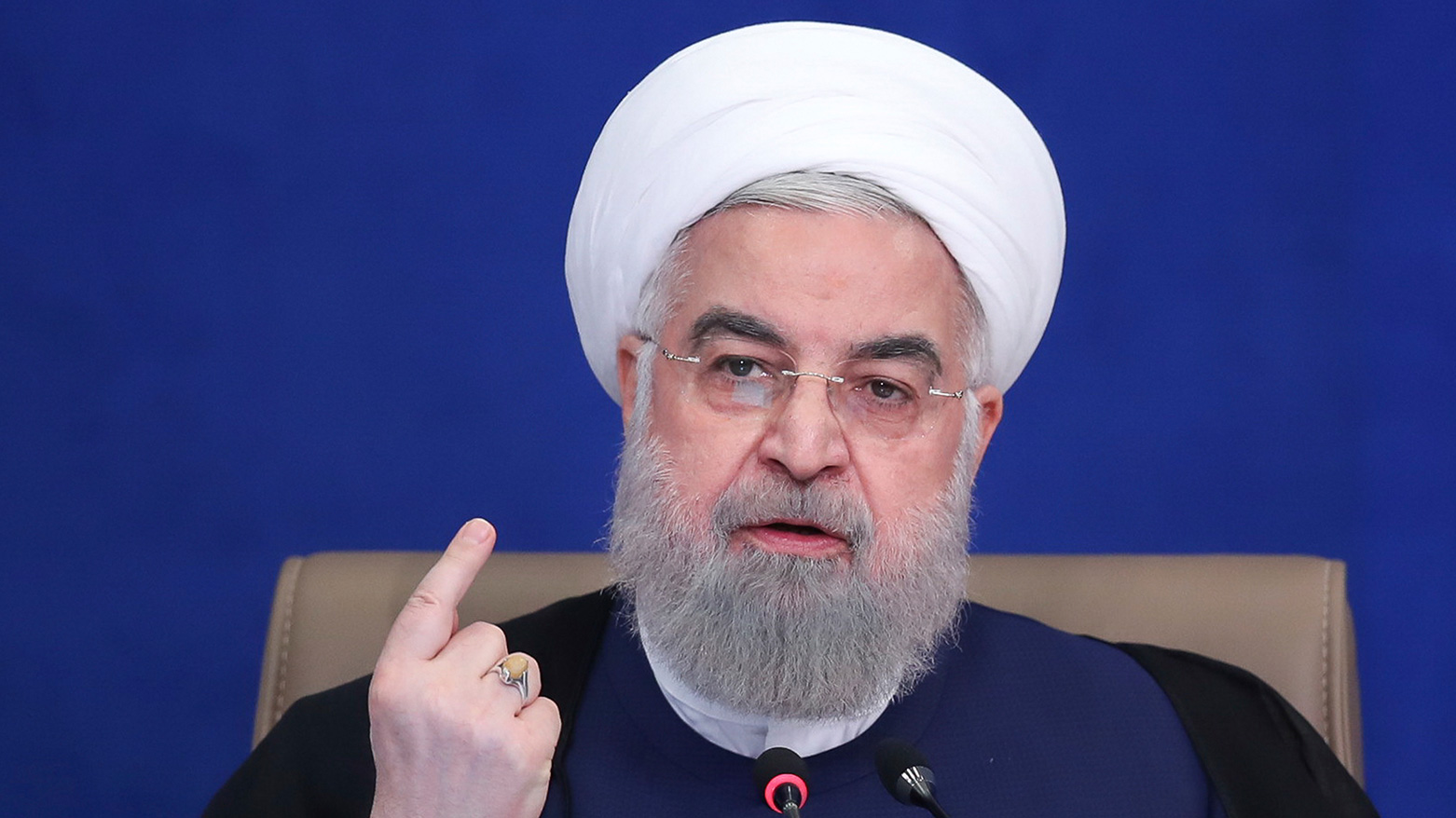
ERBIL (Kurdistan24) - Former Iranian President Hassan Rouhani has drawn sharp criticism from conservative politicians and media outlets after calling for greater public consultation over the direction and eventual end of the war and advocating a more measured approach toward retaliation and the Strait of Hormuz.
The controversy has exposed growing divisions inside Iran's political establishment over how long the country should sustain its confrontation with the United States and what role military pressure, diplomacy and public opinion should play in determining an eventual exit from the conflict.
Rouhani argued that Iranians should have a voice in major national decisions concerning the continuation of war and that the country should remain prepared for an honorable end to the fighting in accordance with national interests.
His critics, however, have portrayed such arguments as potentially weakening Iran's defense posture at a moment when Tehran remains engaged in direct military exchanges with Washington.
Conservative commentators have argued that consultation or a referendum over the course of the conflict could be interpreted as retreat under foreign pressure rather than democratic decision-making.
They have also criticized Rouhani's comments concerning the Strait of Hormuz, interpreting his position as too conciliatory toward a waterway that Tehran increasingly regards as one of its most important instruments of strategic leverage.
At the center of the dispute is a basic disagreement over what constitutes effective deterrence.
Iran's hard-line establishment has emphasized military retaliation and control over access to the Strait of Hormuz as essential tools for imposing costs on the United States and its regional partners.
Rouhani has argued for a different balance between military resistance and diplomacy, questioning whether retaliation should automatically take precedence over attempts to end the conflict.
His broader position is that Iran's military and diplomatic instruments should complement one another rather than allowing the war to become indefinite.
Conservative critics have responded that the country did not choose the conflict and is defending itself against external attack, making the suggestion of asking whether Iran should continue fighting misleading in their view.
The disagreement is particularly sensitive because Hormuz has become one of the central fronts of the six-month conflict.
Kurdistan24 reported Sunday that U.S. Central Command said the Iranian crude carrier M/T Kylo had sunk in the Gulf of Oman after American forces struck it the previous day.
CENTCOM said the Kylo was one of three tankers targeted in retaliation for what Washington described as attempted Iranian attacks on U.S. warships.
Iran, in turn, said it attacked tankers using routes through Hormuz that Tehran had not authorized and later claimed to have struck a U.S. unmanned surface vessel attempting to enter the strait. Washington had not immediately confirmed the latter claim.
Those exchanges illustrate why any debate in Tehran about reducing tensions around Hormuz carries enormous political weight.
The strait was a conduit for roughly one-fifth of global oil supplies before the war, giving Iran the ability to impose significant economic costs internationally by making navigation more dangerous.
The controversy around Rouhani also reflects the increasing economic and human burden of the conflict.
Hard-liners argue that demonstrating willingness to absorb those costs is necessary to preserve deterrence and prevent Washington from concluding that sustained pressure will force Tehran into concessions.
Moderates and pragmatic figures increasingly question whether an open-ended confrontation can serve Iran's long-term interests if sanctions, damaged infrastructure, restricted oil exports and continued military attacks deepen economic pressure on the population.
Rouhani, who served as president from 2013 to 2021, remains closely associated with the diplomatic strategy that produced the 2015 nuclear agreement between Iran and major world powers.
That legacy has repeatedly placed him at odds with hard-line factions that regard negotiations with Washington with deep suspicion.
Although he no longer holds executive office and his political influence has diminished since leaving the presidency, Rouhani remains an important voice within Iran's moderate and pragmatic political camp.
His latest intervention suggests that arguments once centered primarily on nuclear diplomacy have now expanded into a larger question: how Iran should ultimately end an active military conflict with the United States.
The dispute is unfolding amid signs of heightened political and internal-security pressure.
Agence France-Presse reported Sunday that Iranian authorities arrested several people accused of appearing in a video carrying the flag of the outlawed People's Mujahedin Organisation of Iran, or MEK.
Iranian state television said authorities had identified and detained everyone who appeared in the footage, which reportedly showed people riding motorcycles near Karaj, west of Tehran.
The number arrested was not disclosed.
The MEK has advocated regime change from abroad for decades and is regarded by Tehran as a hostile organization.
The arrests underline the sensitivity surrounding political dissent as Iran remains at war and its leadership confronts pressure both from abroad and within society.
Against that backdrop, Rouhani's comments go beyond a disagreement over tactical military policy.
They raise a broader question about who should determine the country's war aims and how much weight should be given to public sentiment as the conflict continues.
For conservatives, maintaining deterrence and resisting external pressure must remain paramount.
For Rouhani and others advocating a more pragmatic course, preserving national strength also requires knowing when military resistance should give way to diplomacy and an eventual political settlement.
That argument is likely to become more consequential as the economic costs rise and the conflict around Hormuz shows few signs of a durable resolution.