Oil Surges Toward $98 as Hormuz Tanker Strikes and Saudi Aramco Attacks Rattle Energy Markets
Brent touches six-week high of $97.62 while WTI rebounds above $92 as US forces strike three Iranian oil tankers, Iran retaliates, and fresh attacks on Saudi Aramco facilities send prices nearly 40 percent above pre-war levels
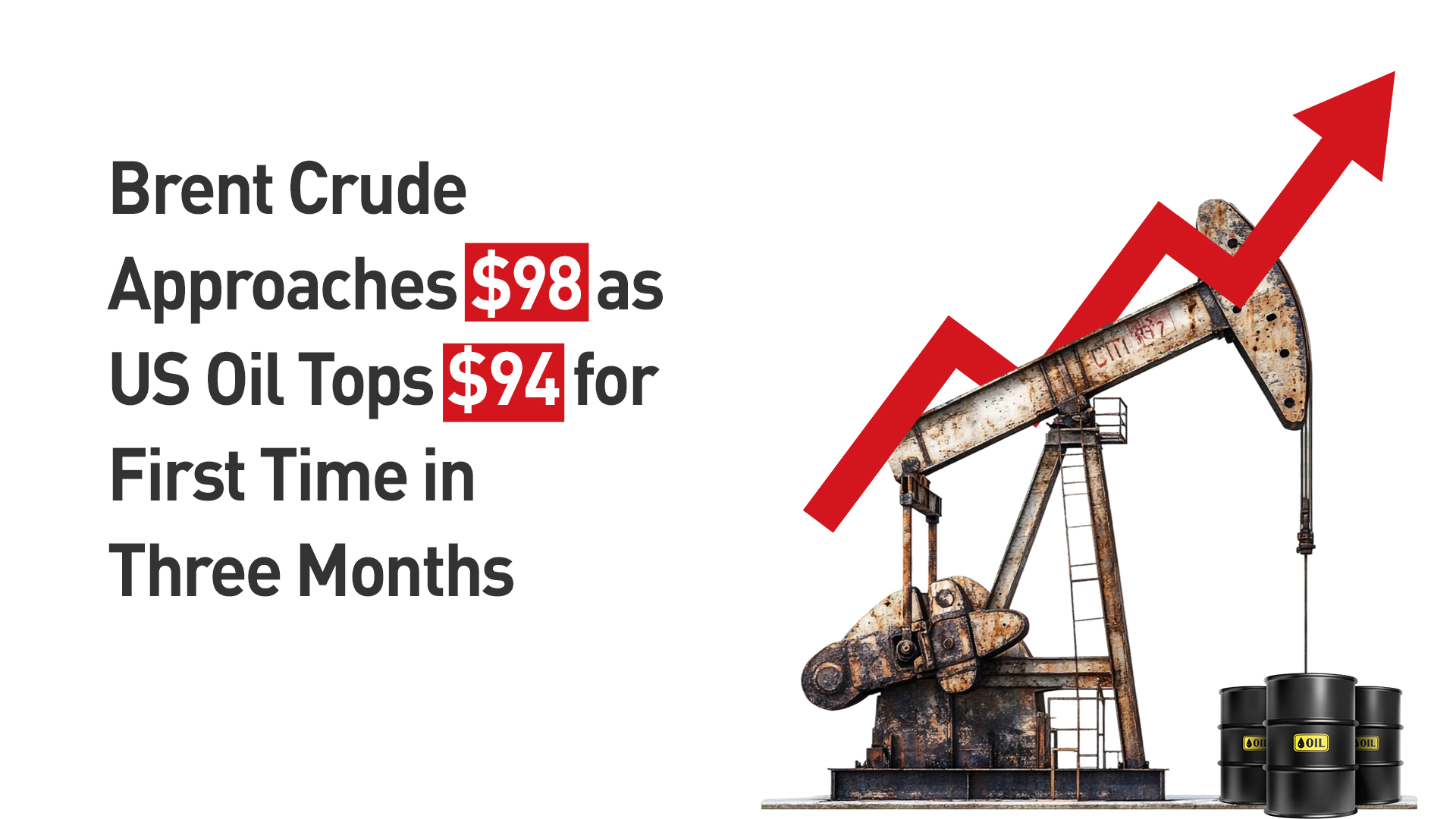
ERBIL (Kurdistan 24) - Global oil prices surged on Monday, Tuesday with Brent crude rising to $97.5 per barrel, a six-week high and nearly 40 percent above levels from before the outbreak of the war in Iran, as a cascade of escalatory events including US strikes on Iranian oil tankers, Iranian retaliatory strikes on commercial vessels, and fresh attacks on Saudi Aramco facilities sent energy markets to their highest levels in weeks.
Brent crude oil reached $97.89 a barrel and WTI crude $92.30 a barrel as of September 7, 2026, with both benchmarks recovering from session lows reached last week when Brent fell near $94.65 and WTI near $89.30, before rebounding hard as Iran and the US traded tanker strikes in the Strait of Hormuz.
Crude oil fluctuated above $91 a barrel on Monday after surging 9.7 percent last week, as escalating tensions between Washington and Tehran raised fears of prolonged disruptions to energy shipments through the Strait of Hormuz. The US said it had struck three Iranian oil tankers, while Tehran also claimed to have targeted three tankers, although the reports could not be independently confirmed.
Reports from the Financial Times showed Saudi Aramco oil facilities were hit in fresh attacks on Monday, adding to the upward price pressure. Iran also said it was close to agreeing on a tanker route through the Strait of Hormuz with Oman.
A greater rebound in crude prices was prevented by major economies tapping their inventories to manage higher import costs, with the US Strategic Petroleum Reserve plunging to less than 290 million barrels, its lowest level since 1982. China also significantly cut imports of crude oil and refinery runs.
US Energy Secretary Chris Wright said Washington would maintain its naval presence and blockade, aimed at limiting Iranian oil exports while supporting the safe passage of commercial vessels. Wright previously said that millions of barrels of crude were still moving through the Strait of Hormuz despite the escalating conflict.
During the current Hormuz crisis, Brent has traded at a larger premium to WTI because Middle East supply disruptions affect Brent-priced barrels more directly than US domestic production, as PriceOfOil.com confirmed on Monday. The 52-week price range for Brent Oil futures now spans from $58.72 to $97.62 per barrel, reflecting the extraordinary volatility that the US-Iran war has introduced into global energy markets since February 28, 2026.
The surge in oil prices comes on a day of extraordinary regional density. US forces struck three Iranian oil tankers under the "Tanker for Tanker" policy announced on September 2, 2026, as CENTCOM struck approximately 100 Iranian military targets in a single operation. Iran's Khatam al-Anbiya Central Headquarters warned that strikes against American military vessels will be more severe than before and could expand if the blockade continues. And Israel's Defense Minister Israel Katz warned that Israel anticipates Iranian attacks during the upcoming Jewish holiday period and that any such attack will be met with a historically unprecedented military response.
The approach to $98 per barrel for Brent crude on Monday underlines the economic stakes of a conflict that has now lasted more than six months without a durable settlement, with the Strait of Hormuz remaining the central battleground between American naval power and Iranian military capability, and with every exchange of strikes adding a new layer of risk premium to the price of oil that consumers around the world are absorbing at the pump.