700 Displaced Serê Kaniyê Families Set to Return Home
Around 700 displaced Serê Kaniyê families are set to return home Tuesday as the Barzani Charity Foundation provides food and medical assistance following an earlier return disrupted by violence.
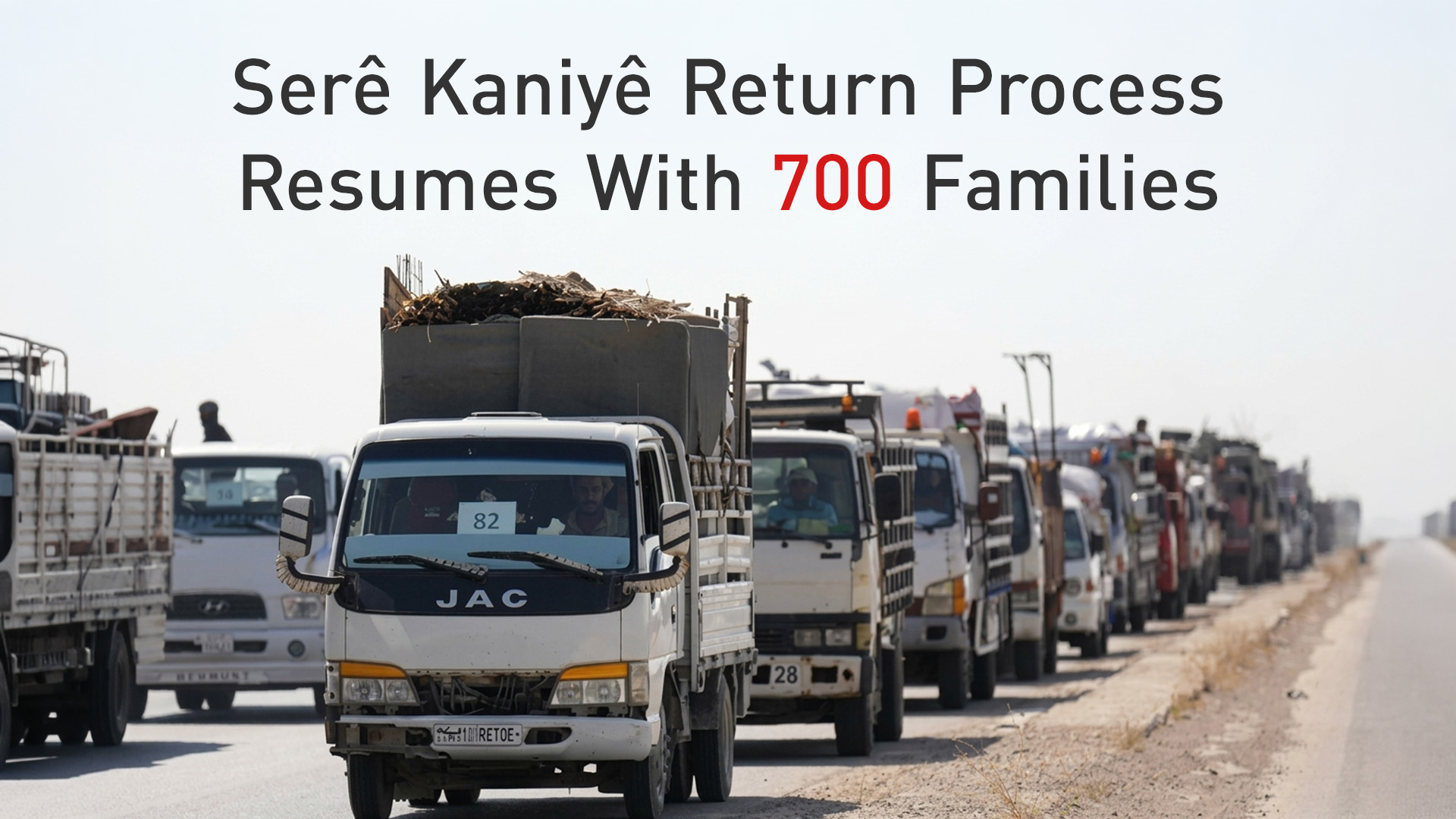
ERBIL (Kurdistan24) - Around 700 displaced families from Serê Kaniyê are set to return to their hometown on Tuesday, according to an envoy of the Syrian president, as the Barzani Charity Foundation deploys food supplies and medical assistance to support the latest phase of the return process.
Dr. Mustafa Abdi, an envoy of the Syrian president, told Kurdistan24 that preparations for the return had been completed and that the families would leave displacement camps in Hasakah province for Serê Kaniyê on Sept. 8.
Abdi sought to reassure the displaced families following violence that disrupted an earlier return attempt in August.
He said officials had met with authorities in Serê Kaniyê and had been assured that the homes of the returning families were vacant and ready for them to move back into.
He also told the families that the incidents that accompanied the previous return would not be repeated.
The new movement represents a renewed effort to organize the return of residents displaced from Serê Kaniyê, also known as Ras al-Ayn, following years in camps and other temporary accommodation in northeastern Syria.
Barzani Charity Foundation Deploys Aid Convoys
The Barzani Charity Foundation is supporting the returning families with two humanitarian convoys carrying food and essential supplies, as well as medical assistance.
The aid includes approximately 100 cartons of food and other necessities, along with a mobile ambulance intended to provide medical care during the return process.
Dr. Muneeb Ahmed, head of the foundation's health department, told Kurdistan24 that BCF teams were assisting families leaving camps in Hasakah.
He said the assistance includes milk, food baskets and lighting equipment.
Medical teams are also conducting free examinations and distributing medication to patients.
The humanitarian support is intended to ease the immediate needs of families who are returning after years of displacement and may face shortages of food, medical care and basic household necessities as they resettle.
Serê Kaniyê is located in northern Syria, or Western Kurdistan, near the Turkish border.
Thousands of Kurdish families and members of other communities fled the city in 2019 during Türkiye's military operation and the advance of allied Syrian armed groups.
Many subsequently settled in displacement camps in Hasakah province, where they have remained under difficult humanitarian conditions.
Return Process Follows August Attacks
Tuesday's planned return follows an earlier attempt to repatriate hundreds of families in August.
On Aug. 10, Kurdistan24 reported that an initial organized convoy carrying around 650 families began leaving Hasakah for Serê Kaniyê after nearly seven years of displacement.
At the time, a member of the committee representing displaced residents said approximately 2,500 people were participating in the first phase.
Families traveled with furniture and personal belongings, and several returnees described the journey as an emotional moment after years away from their homes.
The optimism surrounding that return was short-lived.
Kurdistan24 reported later the same day that members of the returning group were assaulted after arriving in Serê Kaniyê.
The Serê Kaniyê Displaced Persons Committee attributed the attacks to Arab residents who had been resettled in the city and demanded that authorities restore security and protect the returning families.
The committee held Syrian state authorities, local security bodies and Serê Kaniyê's administration responsible for guaranteeing the safety of the returnees.
The following day, the return process was temporarily suspended.
Siyamend Afrini, deputy commander of the Internal Security Forces in Hasakah, said convoys would remain halted until security conditions improved and adequate guarantees were secured.
He said several suspects had been arrested following the violence and that investigations were continuing.
The incidents highlighted one of the central challenges facing the wider return process: ensuring that families can return voluntarily and safely while resolving disputes over security, homes and property.
More than 14,000 families, representing an estimated 85,000 people, were displaced from the Serê Kaniyê area following the 2019 fighting, according to figures previously cited by local representatives in Kurdistan24 reporting.
Property ownership has remained particularly sensitive.
Previous reporting documented concerns that some homes belonging to displaced residents had been occupied, looted or otherwise rendered inaccessible during the years their owners were away.
Abdi's statement that the homes of the 700 families scheduled to return Tuesday are vacant therefore addresses one of the most immediate concerns surrounding the latest convoy.
The success of the new return will depend on whether those assurances hold once families arrive and whether authorities can prevent a recurrence of the violence that interrupted the August process.
For the returning families, the Barzani Charity Foundation's food and medical assistance is intended to address immediate humanitarian needs.
But the broader test will be whether this latest group can re-establish their lives in Serê Kaniyê safely and permanently after years of displacement.