Yemen Conflict Escalates as Fighting Threatens Red Sea Security
Renewed Houthi attacks on multiple fronts and threats to shipping through the Bab al-Mandab raise regional security concerns as Saudi Arabia and international forces step up defensive measures
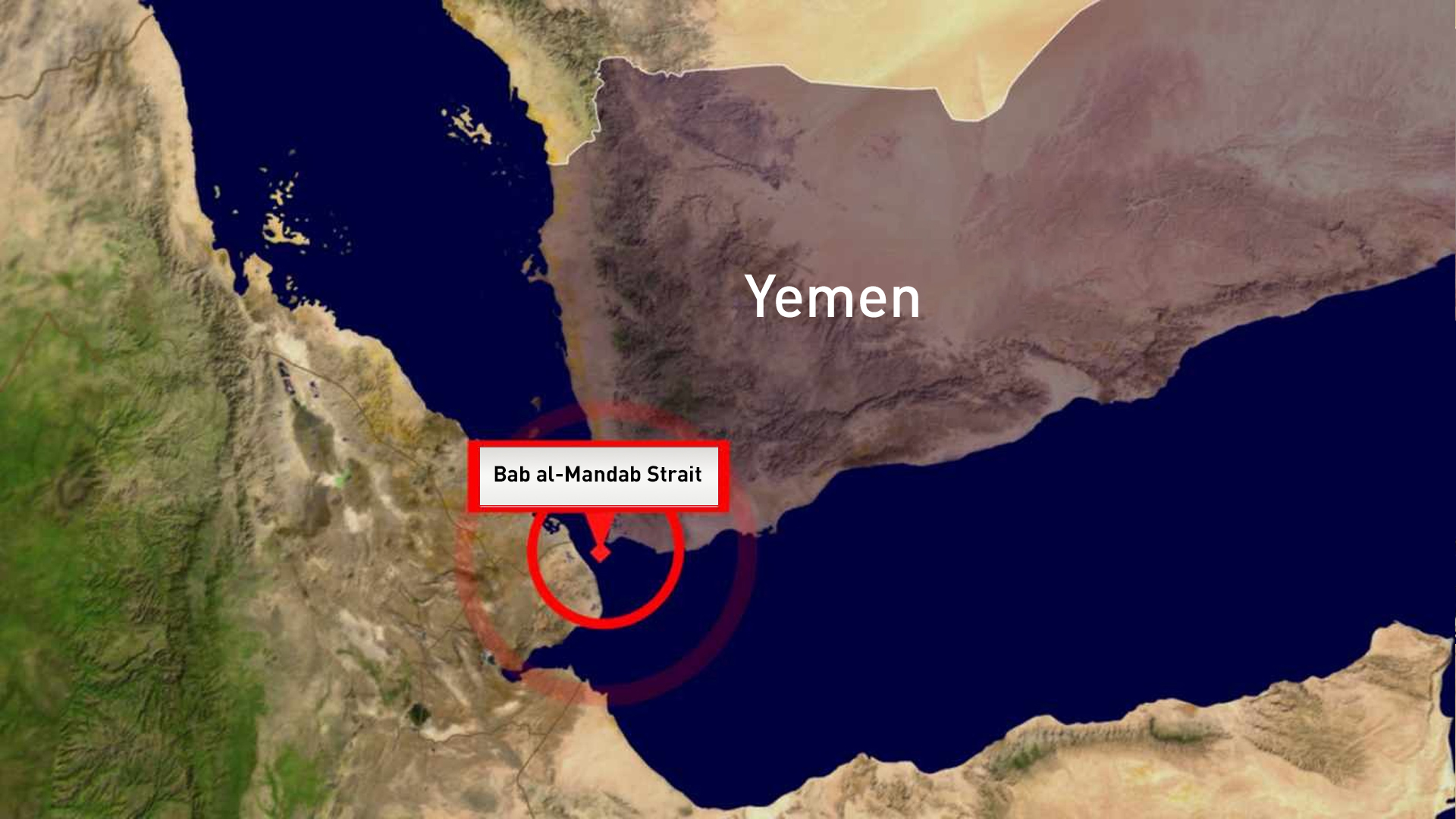
ERBIL (Kurdistan24) — Yemen’s fragile ceasefire has given way to a renewed wave of military escalation, with intensified fighting on several fronts and growing threats to shipping in the Red Sea and Bab al-Mandab Strait raising concerns over the conflict’s wider regional and international consequences.
The latest escalation has pushed the Yemen conflict beyond its traditional domestic battle lines, increasingly linking the country’s military confrontation to the security of one of the world’s most important maritime trade corridors.
On the ground, fighting intensified after the Houthi group launched attacks across several fronts, particularly around Taiz and Yemen’s western coast. Government forces and the National Resistance responded with heavy clashes aimed at regaining strategic positions around Taiz and Jabal Habashi.
Fighting also spread to the provinces of Al Bayda and Al Jawf, where forces sought to secure vital supply routes.
The Houthis, meanwhile, deployed additional fighters and senior commanders to the western coast in an apparent effort to reorganize their forces and establish new positions on the battlefield.
Red Sea becomes a key front
The escalation has also extended into the maritime domain, with the Bab al-Mandab Strait and the Red Sea emerging as increasingly important elements of the conflict.
The Houthis have targeted commercial shipping with drones, missiles and sea mines, seeking to connect maritime security with Yemen’s broader military and political confrontation.
The attacks have prompted Arab coalition and international forces to intensify maritime patrols aimed at protecting freedom of navigation.
Saudi researcher and political analyst Ishaq bin Mohammed bin Saidan told Kurdistan24 that the latest developments reflected what he described as a “decision to settle” the conflict by Yemen’s internationally recognized government through a comprehensive ground operation aimed at retaking Sanaa and restoring state institutions.
Saidan said fighting in several key provinces had produced strategic gains, including the recapture of the Al-Yatima area.
He argued that the escalation came in response to Houthi attempts to advance toward Bab al-Mandab and use the strategic waterway as a maritime blockade and an “external pressure card” benefiting Iran.
He also said the group was seeking to escape growing internal pressures after financial and military support from Tehran had been reduced.
Cross-border attacks raise regional tensions
The latest escalation has also revived concerns over cross-border attacks, with the Houthis announcing strikes against strategic facilities and military bases inside Saudi Arabia.
The group said it had targeted Abha airport, King Khalid Air Base and facilities belonging to Saudi oil giant Aramco.
Saudi air defenses responded to the reported attacks, according to the account provided.
The Saudi Cabinet subsequently reiterated its rejection of what it described as hostile Houthi conduct, while affirming the kingdom’s right to take defensive measures to protect its territory and population.
Riyadh also reaffirmed its support for Yemen’s internationally recognized government and its national institutions.
Calls for political integration
Despite the renewed fighting, some analysts have argued that a lasting solution will require bringing the Houthis into Yemen’s formal political system rather than attempting to resolve the conflict solely through military means.
Ali Mohammed Al-Hail, a professor of political science at Qatar University, told Kurdistan24 Arabic that the only way out of the crisis was to integrate the Houthis into a government based in the interim capital, Aden, and transform the group into a formal political movement.
He said a comprehensive settlement should include all major forces operating on the ground, including the Giants Brigades and tribal groups.
Al-Hail argued that the Houthis’ integration into the political process could also help resolve the security dimension of the conflict by incorporating their military forces into the national army and bringing their weapons under state control.
Such an arrangement, he said, could serve the interests of Yemen and the wider region, including Saudi Arabia, particularly as the political landscape has become more complicated with the growing role of the Southern Transitional Council.
He added that a political settlement could help ease Yemen’s severe humanitarian crisis and address widespread poverty affecting millions of Yemenis.
US backs Yemen government and Saudi defense
The United States has also blamed the Houthis for the latest escalation.
In a statement, the US Embassy to Yemen held the group fully responsible for the renewed violence and its consequences. Washington reiterated its recognition of the Yemeni government as the legitimate authority entitled to protect its citizens and secure the country’s coastline.
The United States also explicitly backed Saudi Arabia’s right to defend its territory and population against cross-border attacks.
Conflict threatens global trade
The rapid escalation demonstrates how Yemen’s conflict has evolved from a primarily domestic struggle into a broader security and economic crisis with consequences extending far beyond the region.
The militarization of the Red Sea has disrupted one of the main maritime routes connecting Asian and European markets through the Suez Canal, forcing shipping companies to reassess routes and contributing to higher transportation and insurance costs.
Continued instability around the Bab al-Mandab Strait also threatens global supply chains and could contribute to renewed inflationary pressures if disruptions to maritime trade persist.
With recent political efforts showing limited progress, the principal parties continue to rely heavily on military pressure to strengthen their negotiating positions.
The latest escalation therefore marks a potentially decisive phase in Yemen’s long-running conflict, with developments on the battlefield increasingly intertwined with the security of the Red Sea, the interests of regional powers and the stability of global trade.