Iran Nuclear Chief's IAEA Attendance in Doubt Over UN Travel Ban
Iran says nuclear chief Mohammad Eslami left for Vienna, but an official told AP a UN travel ban is expected to keep him from the IAEA conference.
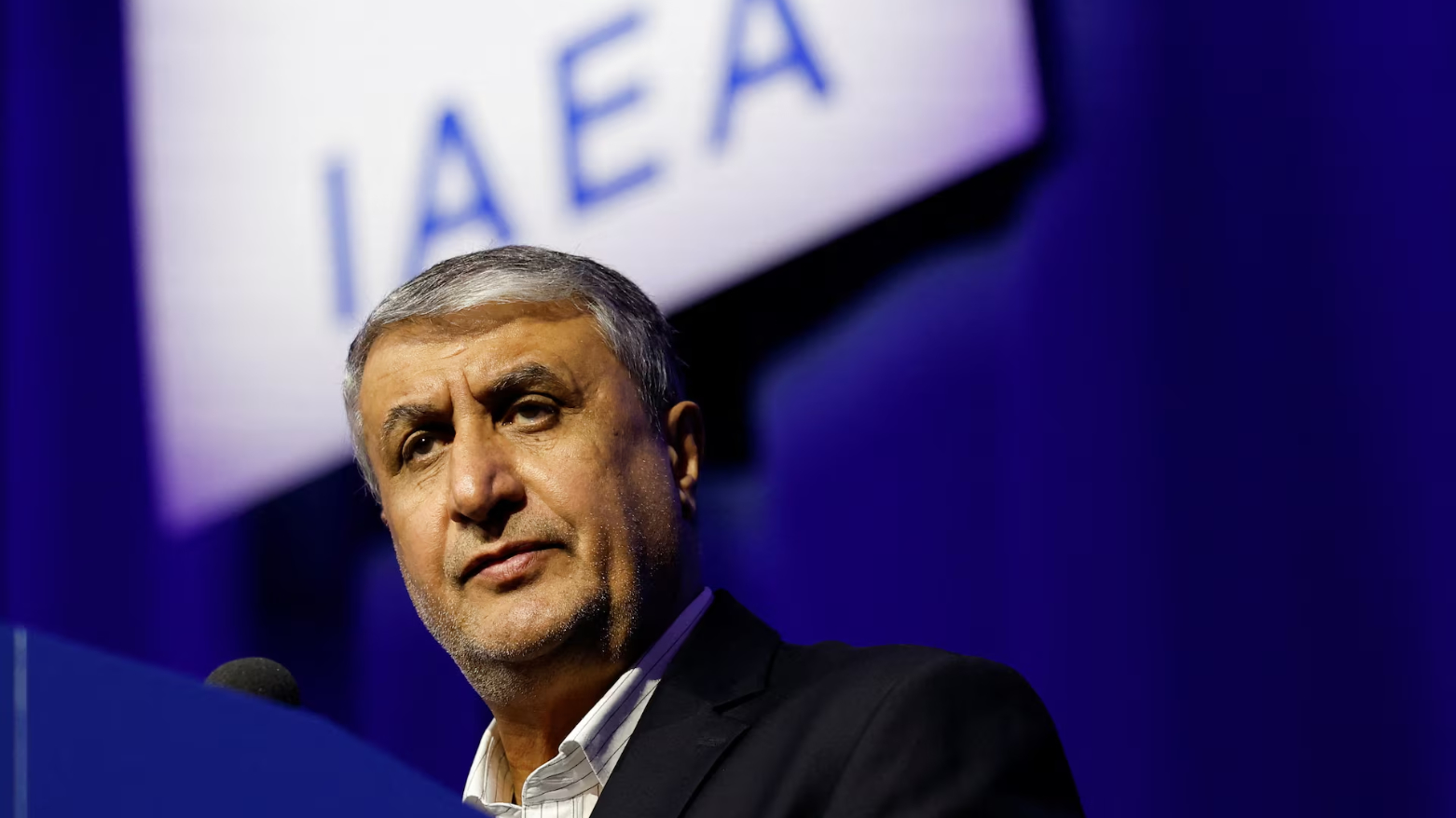
ERBIL (Kurdistan24) - Iran's nuclear chief is not expected to attend the International Atomic Energy Agency's annual General Conference in Vienna because of a United Nations travel ban, according to an official briefed on the matter, contradicting Iranian state media reports that Mohammad Eslami had already left Tehran for the gathering.
The conflicting accounts come as relations between Iran and the UN nuclear watchdog face one of their most difficult periods in years, with inspectors still unable to access nuclear sites damaged in earlier U.S. and Israeli strikes or verify the status of Iran's stockpile of uranium enriched close to weapons-grade levels.
Associated Press correspondent Stephanie Liechtenstein reported that Austria, which hosts the IAEA and other UN institutions in Vienna, sought an exemption from the travel restriction to allow Eslami to attend but that the request was not granted by the relevant UN sanctions committee.
The official who provided the information was not authorized to discuss the matter publicly and spoke anonymously, AP reported.
Iran's state-run IRNA, however, offered a sharply different account, reporting that Eslami, who is also an Iranian vice president and head of the Atomic Energy Organization of Iran, departed Tehran on Saturday with a delegation of senior nuclear officials.
IRNA said he planned to address the IAEA General Conference and hold meetings with ambassadors and representatives of other countries on nuclear cooperation.
It was not immediately clear from the supplied reporting whether Eslami had reached Vienna or whether the travel restrictions would prevent him from entering Austria.
Sanctions Return Complicates Iran's Nuclear Diplomacy
The dispute over Eslami's attendance follows the restoration of UN sanctions on Iran last year after France, Britain and Germany invoked the nuclear agreement's so-called snapback mechanism.
The European states argued that Iran had significantly departed from its commitments under the 2015 nuclear agreement, which had exchanged limits on Tehran's nuclear activities for sanctions relief.
According to AP, the restored measures include a travel ban, asset freezes, a conventional arms embargo, restrictions related to ballistic missiles and prohibitions on certain nuclear-related technology.
Austria can seek exemptions allowing sanctioned officials to participate in UN conferences hosted in Vienna, but the official cited by AP said the request concerning Eslami had not received approval.
If he ultimately cannot attend, it would mark the first time in years that Eslami has missed the gathering. He has regularly participated in and addressed the General Conference since taking charge of Iran's Atomic Energy Organization in 2021.
Senior representatives of IAEA member states are scheduled to meet from Monday through Friday to approve the agency's budget and debate policy issues including nuclear safeguards in the Middle East.
Inspectors Still Lack Access to Bombed Sites
The conference also takes place against an unresolved safeguards dispute.
Since U.S. and Israeli forces struck Iranian nuclear facilities during the 12-day war in June 2025, Tehran has not given IAEA inspectors access to sites affected by the attacks, AP reported.
Iran, as a party to the Nuclear Non-Proliferation Treaty, remains subject to safeguards obligations requiring cooperation with the agency.
The IAEA has consequently been unable to establish the current status of Iran's stockpile of highly enriched uranium.
According to agency figures cited by AP, Iran possessed 440.9 kilograms of uranium enriched to 60% purity, a level substantially above that used in most civilian nuclear programs and a relatively short technical step from the approximately 90% enrichment commonly associated with weapons-grade material.
That figure does not by itself establish that Iran has decided to manufacture a nuclear weapon.
Tehran continues to insist that its nuclear program is peaceful and that it has no intention of developing nuclear arms.
Iranian President Masoud Pezeshkian reiterated that position in an interview with India Today reported Sunday by IRNA.
Pezeshkian argued that Iran's membership in the Nuclear Non-Proliferation Treaty demonstrated its commitment to a peaceful program and criticized the United States and Israel for attacks on Iranian nuclear and civilian infrastructure.
Those are Iran's stated positions; the broader dispute over its nuclear activities remains at the center of international scrutiny by the IAEA and Western governments.
War Deepens the Nuclear Standoff
The diplomatic confrontation is unfolding alongside renewed fighting between Iran and the United States.
AP reported that the two countries have exchanged attacks intermittently since a fragile ceasefire collapsed in July, further complicating efforts to restore nuclear diplomacy and inspection arrangements.
Pezeshkian, in the IRNA interview, maintained that Tehran did not initiate the current war and accused Washington and Israel of attacking Iran while negotiations were underway. He also criticized U.S. sanctions and restrictions affecting Iranian trade.
The United States and Iran have sharply different accounts of responsibility for the conflict and the collapse of diplomatic efforts.
For the IAEA, the immediate question is narrower but increasingly urgent: whether inspectors can regain sufficient access to account for Iran's nuclear material and establish what happened at facilities damaged by military strikes.
Eslami's uncertain attendance adds another layer to that dispute.
IRNA portrays his planned Vienna visit as an opportunity for direct engagement with the IAEA and other governments. The official cited by AP, by contrast, says international sanctions may keep Iran's most senior nuclear official away from the conference altogether.
As delegates gather in Vienna, those contradictory accounts reflect a wider breakdown in the mechanisms that once allowed Iran and international nuclear authorities to maintain regular contact even during periods of political confrontation.