Al-Araji Says Broad Political Consensus Emerging on Iraq's Armed Groups
Baha al-Araji says Iraq may need more than a year to bring weapons under state control despite growing political consensus and a Sept. 30 milestone.
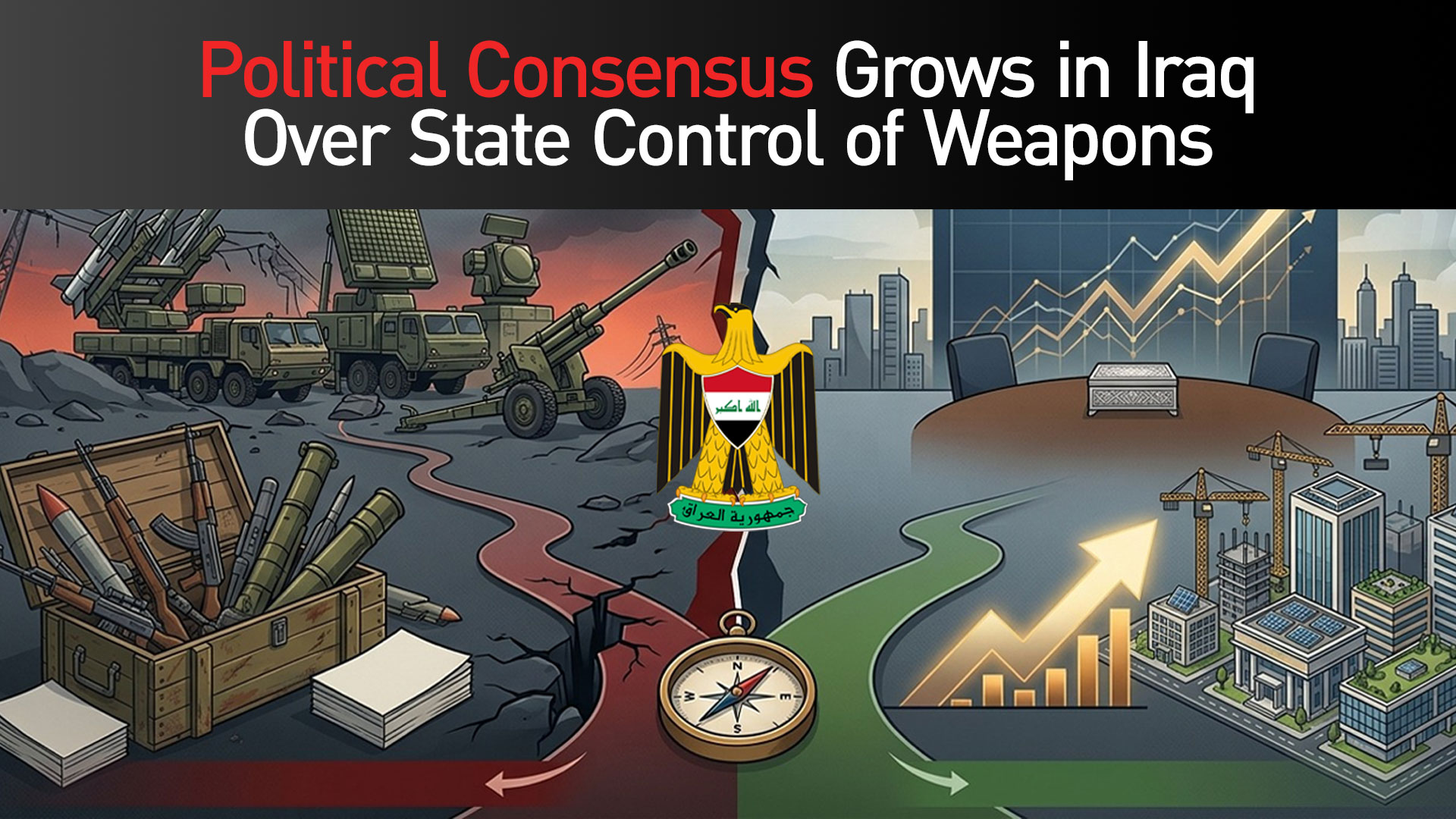
ERBIL (Kurdistan24) - Iraq may need more than a year to complete the process of bringing weapons under state authority despite what Baha al-Araji describes as an unprecedented level of political agreement on the issue, as Baghdad approaches a closely watched Sept. 30 milestone amid pressure from armed factions, economic concerns and regional tensions.
Al-Araji, a senior figure in the Shiite Reconstruction and Development bloc, told Kurdistan24 that influential political forces have reached significant understandings on how to address weapons held outside direct state control, but cautioned that implementation will take time.
"The process could take more than a year," he said, pointing to deep mistrust among the parties involved and the wider regional complications surrounding Iraq.
Al-Araji said a committee involving Mohammed Shia al-Sudani, Nouri al-Maliki and Hadi al-Amiri had developed understandings intended to prepare the ground for practical steps after the international coalition's withdrawal is completed. Separate reporting has also documented the committee's role in discussions with armed factions over bringing weapons under state authority.
His assessment suggests that Sept. 30 should not necessarily be understood as the point at which the entire weapons file will be resolved.
Political analyst and academic Ghalib al-Daami, also speaking to Kurdistan24, said completing the process by that date was unrealistic. He argued instead that Sept. 30 was more likely to mark the beginning of preliminary measures leading into a longer political and security process.
Recent reporting has likewise indicated continuing debate over whether Sept. 30 represents a final deadline or the beginning of a broader process.
Legislation and the Status of Armed Factions
Al-Araji called on Iraq's Council of Representatives to move quickly on comprehensive legislation establishing exclusive state authority over weapons and prohibiting armed activity outside official institutions.
He also argued that the issue should extend beyond simply collecting weapons.
According to al-Araji, armed factions should sever their organizational links with political parties, while their personnel should be placed fully under the command structure of the Popular Mobilization Forces, a formal part of Iraq's state security apparatus.
He maintained that the departure of foreign coalition forces would remove what armed groups have cited as a principal justification for retaining independent weapons.
Al-Araji also drew a distinction between international coalition forces covered by the withdrawal process and foreign personnel responsible for protecting diplomatic missions and other interests, saying the two categories should not be treated as the same issue.
His comments come as Iraqi political forces have been discussing different mechanisms for integrating armed groups and strengthening state authority over weapons.
A Longer and More Difficult Process
Al-Daami offered a more cautious view of what lies ahead.
He said the government has shown greater political determination on the weapons issue than previous administrations but faces what he described as enormous practical obstacles.
In his assessment, Iraq is confronting two broad possibilities: escalating confrontation with Washington, with potentially serious consequences for the country, or reaching a domestic political consensus capable of gradually resolving the issue.
His remarks underline the difficulty of translating agreements among political leaders into changes on the ground, particularly when armed organizations retain their own structures, political relationships and security calculations.
The question, therefore, is not simply whether political leaders endorse the principle that weapons should remain under state authority, but how that principle would be implemented and enforced.
Economic Risks Enter the Debate
The weapons issue has also become tied increasingly to concerns about Iraq's economy and its financial relations with the United States.
Financial and economic researcher Diaa al-Hassan told Kurdistan24 that prolonged uncertainty surrounding armed groups could damage Iraq's ability to attract investment.
Businesses require security and dependable legal protections, he said, while the presence of armed actors operating outside normal state authority and imposing levies would discourage investors.
Al-Hassan said he viewed possible US financial measures as an even greater economic concern than sanctions imposed directly on individual armed factions.
He warned of the potential for restrictions affecting Iraqi banks and companies that conduct transactions directly or indirectly with Iran, pointing specifically to the influence of the US Treasury and Federal Reserve over international dollar transactions.
His remarks describe potential risks rather than confirmed US measures.
The supplied reporting does not establish that Washington has decided to impose such restrictions as a consequence of the weapons issue.
From Political Agreement to Implementation
The debate now centers on whether Iraq's emerging political consensus can produce an enforceable framework.
For al-Araji, that means legislation, separating armed organizations from political parties and moving their personnel entirely into recognized state structures.
For al-Daami, the timetable itself is evidence of the challenge: Sept. 30 may begin the process, but it is unlikely to finish it.
And for al-Hassan, the consequences extend beyond security. Continued uncertainty, he argues, can affect investment, banking relationships and wider confidence in Iraq's economy.
What the three assessments share is the view that bringing weapons under state authority will require more than a declaration or a single deadline.
Experts and observers say enforcing the rule of law and ending the existence of a "state within a state" are essential to creating a secure investment environment and shielding Iraq from proxy conflicts.
Al-Araji's estimate of more than a year illustrates the scale of that task. Political agreements may have created room for negotiations, but the decisive stage will be whether those understandings can be translated into legislation, institutional command structures and practical changes among the armed groups themselves.