KRG, Iraq’s Martyrs Foundation Sign Deal to Equalize Payments for Martyrs’ Families
Memorandum also aims to streamline procedures, establish a joint electronic system, and strengthen efforts to document Anfal and Halabja crimes internationally
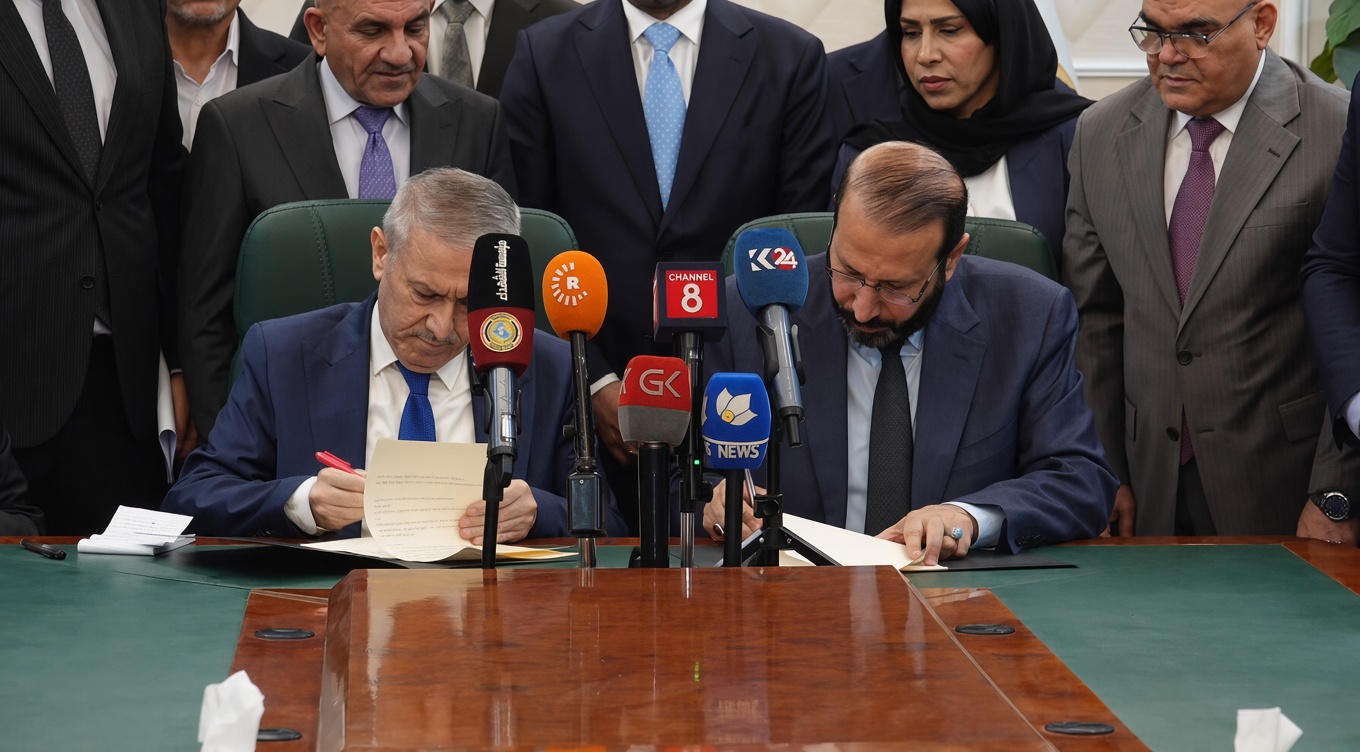
ERBIL (Kurdistan24) — Kurdistan Region Minister of Martyrs and Anfal Affairs Abdullah Haji Mahmoud and Abdul-Ilah Naeli, head of Iraq’s Martyrs Foundation, signed a memorandum of understanding on Sunday to equalize the salaries of families of martyrs in the Kurdistan Region with those paid to their counterparts elsewhere in Iraq.
The memorandum is intended to strengthen support for the rights and entitlements of martyrs’ families and represents an important step toward addressing their financial and administrative needs, according to the Kurdistan Region Ministry of Martyrs and Anfal Affairs.
Haji Mahmoud said the agreement signed with Iraq’s Martyrs Foundation would serve as an important starting point for supporting the rights and entitlements of martyrs’ families.
Naeli said the agreement aims to facilitate joint work and simplify procedures for processing the affairs of martyrs’ families.
The memorandum also includes plans to cooperate on identifying and documenting mass graves and establishing a joint electronic system to facilitate related procedures.
The two sides further agreed to continue efforts to raise international awareness of the crimes committed during the Anfal campaign and the chemical attack on Halabja.
The Anfal campaign, carried out by Saddam Hussein’s Baathist regime against the Kurdish population in the late 1980s, included mass killings, forced displacement, mass executions, and the destruction of thousands of villages.
The chemical attack on Halabja on March 16, 1988, killed thousands of civilians and remains one of the most prominent atrocities committed against the Kurdish population during that period.
The Kurdistan Region has continued efforts to document these crimes, identify victims and mass graves, and secure recognition and compensation for survivors and victims’ families.