Dutch Defense Minister: We Will Continue Fight Against ISIS
Dutch Defense Minister Dilan Yeşilgöz told Kurdistan24 that the U.S. and allied engagement remains necessary for Middle East stability as the coalition mission in Iraq transitions.
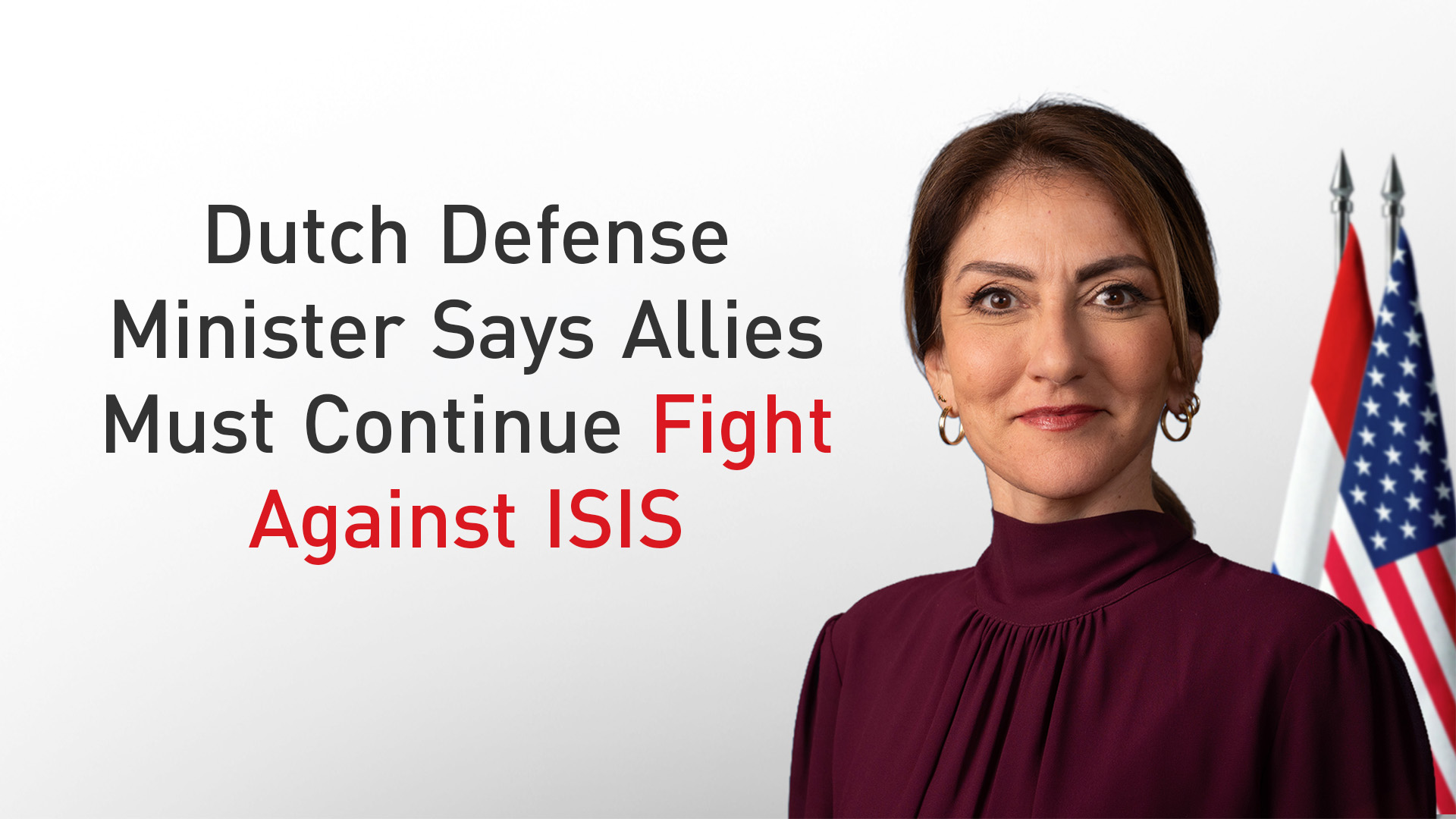
ERBIL (Kurdistan24) - Dutch Defense Minister and Deputy Prime Minister Dilan Yeşilgöz-Zegerius said allied engagement in the Middle East must continue as the international coalition's military mission in Iraq approaches its scheduled transition, stressing that the United States remains important to regional stability and that efforts against ISIS will continue.
Speaking to Kurdistan24's Barzan Hassan on Sept. 28, Yeşilgöz said developments in the Middle East have consequences well beyond the region and argued that European countries and the United States must continue working together to prevent renewed instability.
"The situation in the Middle East is affecting the world and Europe for a long time and that will remain affecting also for a long time," she said. "So it's very important that we focus on stabilizing, de-escalating the situation in the Middle East."
Her comments come two days before Sept. 30, the date set for the conclusion of the current U.S.-led coalition military framework in Iraq, a transition that has renewed debate over the country's future security arrangements and the risk posed by remaining ISIS cells.
Yeşilgöz said any reduction or change in the American role should be considered alongside measures by allies to preserve stability.
"Our American friends, we need them as well in the Middle East," she said. "And I think it's very important to see if there is a withdrawal or a change of input, what can we do together to make sure that there is still stability."
The Netherlands, she noted, already maintains several forms of engagement in the region, including support for the Lebanese Armed Forces.
"We will remain doing so," Yeşilgöz said.
She also pointed to Dutch involvement connected to the Strait of Hormuz, where regional tensions have affected maritime security, and said The Hague was prepared to assume responsibility where it could contribute.
"From the Netherlands' point of view, we will take our responsibility wherever we can, whether it's by supporting, for example, the Lebanese Armed Forces or by contributing in the Strait of Hormuz," she said.
The Dutch government has separately deployed military assets to the wider region during 2026 as part of defensive cooperation with European allies amid heightened Middle East tensions.
For Yeşilgöz, cooperation with Washington extends across both Europe and the Middle East.
"When I have a conversation with the Americans, I will emphasize that they are also needed in Europe, they are also needed in the Middle East," she told Kurdistan24.
She said maintaining that cooperation was necessary if allies hoped ultimately to establish greater stability.
Her remarks come as Iraq prepares for a major change in the security structure established after the rise of ISIS.
The international coalition began its military mission in 2014 after ISIS seized Mosul and large areas of Iraq and Syria and Baghdad requested international assistance. Its role later shifted substantially toward training, intelligence and advisory support.
Iraq and the United States agreed in September 2024 on a phased transition away from the coalition framework.
Under the arrangements reported by Kurdistan24, the coalition's mission in most of Iraq concluded in September 2025, while forces remained in the Kurdistan Region to support operations against ISIS in Syria through September 2026.
Baghdad has said Iraqi forces are capable of assuming greater responsibility for national security, while intelligence cooperation with Washington is expected to continue after the coalition transition.
The approaching deadline has nevertheless prompted concern among Kurdish leaders.
President Masoud Barzani warned in a televised interview that a U.S. withdrawal could recreate conditions similar to those that developed after American troops left Iraq in 2011.
"I am afraid of the same scenario," President Barzani said, recalling that Iraqi security officials at the time had acknowledged shortcomings in their ability to protect the country before ISIS emerged several years later.
President Barzani acknowledged that conditions today are different from those of 2011, but said his concern over a possible resurgence of the militant group remained.
His position broadly intersects with Yeşilgöz's argument that changes in the international military presence should not leave a security gap, although the Dutch minister framed the issue primarily around wider allied responsibility and regional stability.
The Sept. 30 transition is also closely connected to another unresolved Iraqi security issue: weapons held by armed factions outside direct state control.
Some factions had linked disarmament to the departure of foreign forces, but Kurdistan24 reported that Baghdad has since adopted a phased process extending the timetable for weapons handovers until June 30, 2027.
The plan begins with a period intended to halt militia attacks before moving toward the transfer of weapons, while discussions with armed groups remain ongoing.
President Barzani has supported bringing weapons under state authority but has urged that the issue be resolved peacefully, warning that armed confrontation would serve neither Iraq nor the Kurdistan Region.
He has argued that armed groups should operate only under orders from Iraq's highest constitutional military and political authorities.
The process does not apply equally to all armed forces. Iraqi National Security Adviser Qasim al-Araji has said the Peshmerga operate within Iraq's constitutional framework and therefore fall outside the disarmament decision.
For the Netherlands, meanwhile, the end of one coalition framework does not mean disengagement from the wider region.
Yeşilgöz said Middle East security remains an issue both within NATO discussions and in direct cooperation with the United States outside the alliance framework.
"The current situation in the Middle East is very, very concerning," she said.
Her comments place the Netherlands among allies arguing that, even as the structure of the international presence in Iraq changes, cooperation against security threats and efforts to prevent renewed instability will remain necessary.
With the Sept. 30 deadline approaching, the central question is therefore shifting from when the coalition mission ends to what security arrangements follow it — and how Iraq and its international partners prevent the transition from creating space for ISIS or other sources of instability to return.