Rubio: Trump Prevented Iran From Reaching Military 'Immunity'
U.S. Secretary of State Marco Rubio defended Washington's Iran strategy, arguing Tehran cannot be allowed nuclear weapons capability, while also addressing Cuba, Greenland and Venezuela.
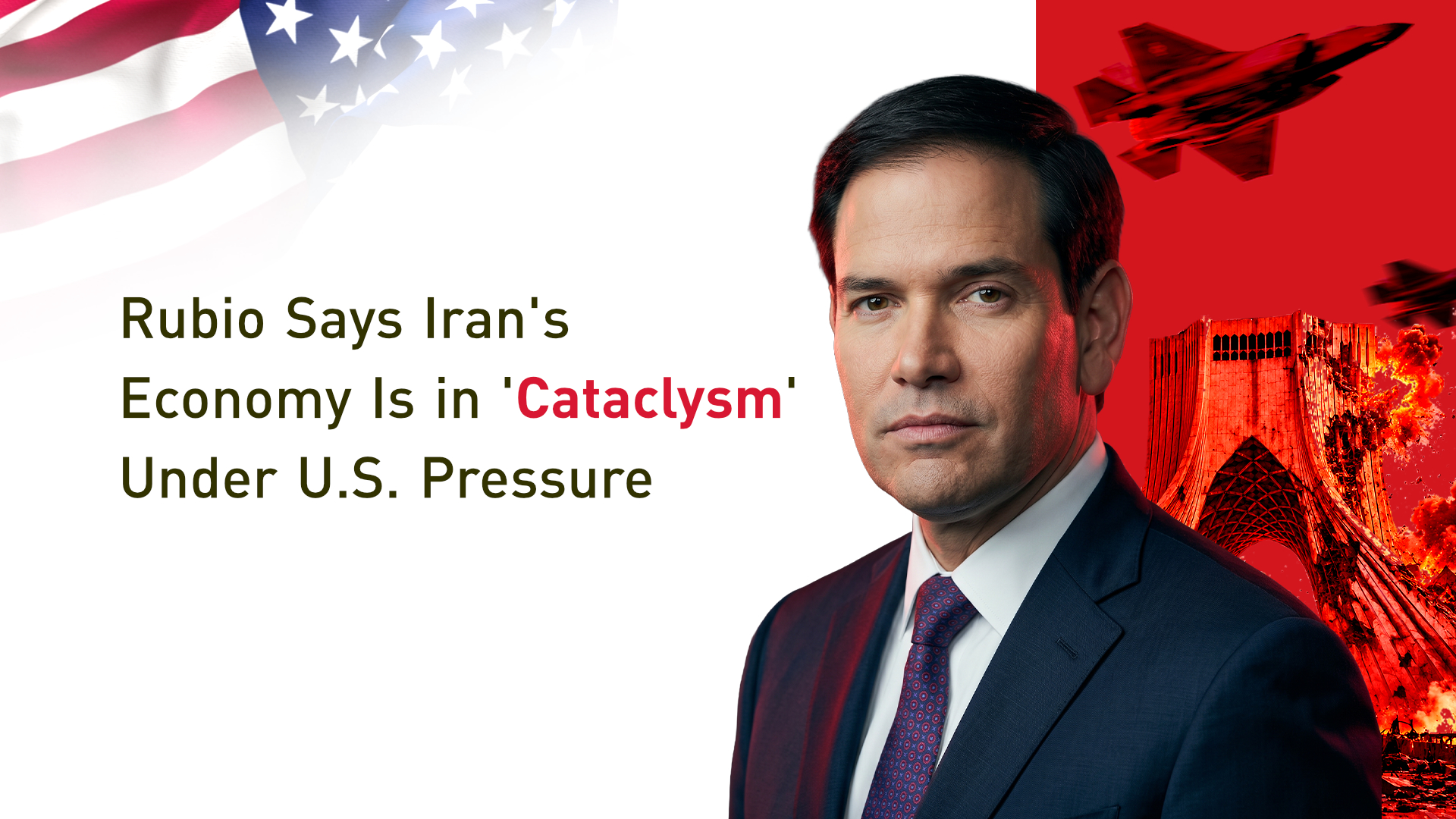
ERBIL (Kurdistan24) - U.S. Secretary of State Marco Rubio defended the Trump administration's military and economic campaign against Iran on Monday, arguing that Washington acted to prevent Tehran from reaching a point where its missile and drone arsenal could shield a nuclear weapons program from outside intervention.
Speaking with Sean Hannity on Fox News, Rubio said preventing Iran from obtaining nuclear weapons capability remained the central objective of U.S. policy.
"Iran can never have a nuclear weapon," Rubio said, presenting that position as the principle underlying the administration's actions since the conflict began.
Rubio argued that Tehran had sought to accumulate enough drones, missiles and other conventional weapons to make military action against its nuclear infrastructure increasingly difficult.
In his assessment, President Donald Trump acted before Iran could reach what Rubio characterized as a point of "immunity," where a large conventional arsenal would deter outside powers while Tehran moved toward a nuclear weapon.
Those assertions represented Rubio's account of Iran's intentions. No Iranian response to his claims was included in the Fox News interview.
Rubio also linked the nuclear issue to control of the Strait of Hormuz.
He said oil flows through the waterway had recovered to near pre-conflict levels, except for Iranian exports, and argued that an Iran armed with nuclear weapons could exercise far greater leverage over the strategic shipping route.
Tehran has repeatedly been at the center of disputes over Hormuz during the current conflict, while U.S. officials have combined military pressure with efforts to restrict Iranian oil revenues and international financial connections.
Rubio said Washington's economic strategy was intended to limit not only Iran's state revenue but also the resources available for military activities and Tehran-aligned groups elsewhere in the region.
He accused the Iranian government of directing revenue toward weapons and groups including Hezbollah, Hamas and Shiite armed factions in Iraq rather than improving public services at home.
For that reason, Rubio argued, restricting Iranian oil sales and access to international finance served a security objective in addition to imposing economic costs.
Asked whether Iran was approaching bankruptcy, Rubio described its economy as being in severe distress.
He contrasted the country's present condition with what he described as Iran's considerable human and economic potential, praising Iranians as educated, industrious people with an ancient history while placing responsibility for the economic situation on the Islamic Republic's leadership.
Rubio's remarks followed recent comments from Treasury Secretary Scott Bessent about the administration's campaign to restrict Iran's banking, aviation and commercial links.
Rubio said the pressure campaign was intended to deprive Tehran of resources it could use for weapons programs and regional operations.
He also addressed a security incident in Britain involving suspects connected to an alleged threat against a U.S. airbase.
Rubio said the episode was "very serious" and involved a foreign actor, but declined to identify that actor or provide details while investigations continued.
He thanked British authorities for their cooperation and said more information was expected to emerge.
Although Rubio referred separately to Iranian threats against American interests overseas, he did not say Iran was responsible for the U.K. incident.
The interview later shifted to Cuba, where Rubio offered an equally critical assessment of the communist government.
"The truth is Cuba's already fallen," he said, arguing that the country no longer has what he considers a functional economy.
Rubio described Cuba as a failed state whose political system remained capable of repression but had failed economically. He accused the Cuban military and Communist Party of controlling profitable economic activity for the benefit of a small group rather than the wider population.
He also cited large-scale emigration since 2021 as evidence of the country's economic and political difficulties.
Rubio said Washington hoped Cuba would move toward both political and economic liberalization, emphasizing that the Trump administration preferred a negotiated transition.
At the same time, he said the United States would not accept Cuba being used as a base for activity threatening American national security.
From Cuba, the conversation moved to China and Greenland.
Asked about Chinese President Xi Jinping's reaction to a recently announced agreement concerning Greenland, Rubio said the matter had not come up during meetings with the Chinese leader.
He nevertheless described the agreement as an important national-security achievement for Trump.
Rubio argued that Greenland's strategic importance had increased because of competition in the Arctic, emerging shipping routes, missile defense and space-related security.
China, he said, was increasingly active in the Arctic despite not being an Arctic state, creating concern in Washington about investment in infrastructure that could eventually have military applications.
Rubio said the agreement would preserve U.S. access for military infrastructure while preventing adversarial powers from establishing a strategic foothold.
He portrayed the arrangement not as an attempt to acquire territory but as a security agreement benefiting the United States, Europe and NATO.
Rubio also said potential investment in Greenland's rare-earth resources could be pursued in partnership with local and allied authorities, although he stressed that mineral access was not the principal motivation behind the agreement.
The Fox News discussion touched briefly on European migration policy as well.
Responding to Hannity's criticism of European governments, Rubio said countries could not sustain uncontrolled mass migration indefinitely.
He distinguished legal immigration from what he called an unmanaged influx, arguing that governments should determine how many people enter and through what process.
Rubio said European countries faced differing circumstances and cautioned against treating the continent as politically uniform.
The final foreign-policy issue was Venezuela.
Rubio said Washington was focused on two objectives there: economic recovery after years of corruption and political instability, and a transition toward elections the United States considers free and fair.
He said the administration was working with Venezuela's 2015 National Assembly to create conditions for elections and argued that political reform was essential to a lasting recovery.
Across the interview, however, Iran remained the dominant issue.
Rubio portrayed the conflict as fundamentally about preventing Tehran from gaining nuclear weapons capability while reducing the financial and military resources available to the Iranian government.
His argument combined continued economic pressure with the possibility of diplomacy, but with a fixed U.S. condition: any negotiated outcome, he said, would still have to ensure that Iran could not obtain a nuclear weapon.