IRGC spokesman: Hormuz is closed, any vessel attempting transit will be damaged
IRGC spokesman tells SNNTV that 125 ships and 20 million barrels a day defined an open strait, not what is happening now, calls US transit claims smuggling and theft, and warns of new weapons if the conflict escalates further, while writing a letter to the American people
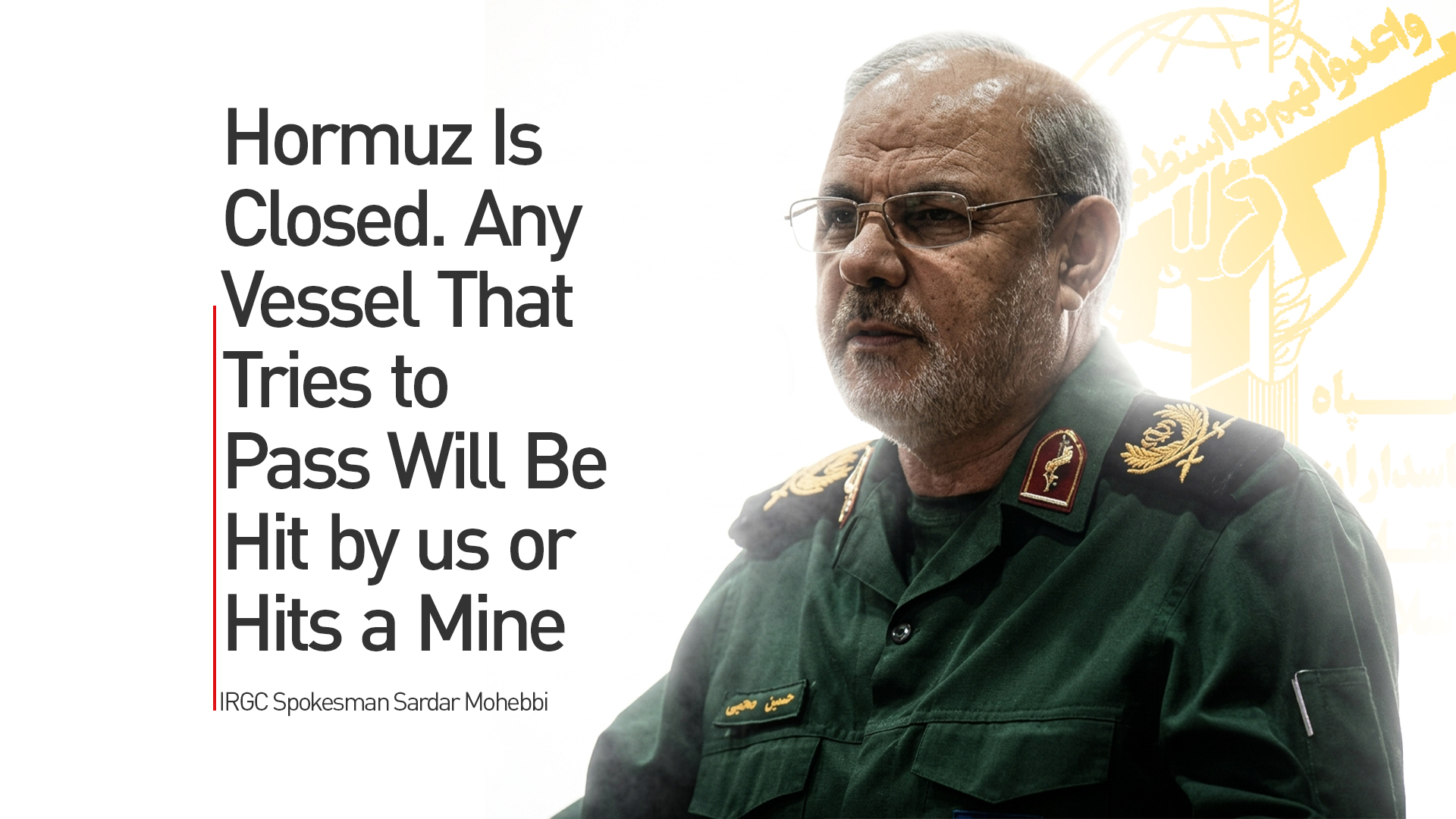
ERBIL (Kurdistan 24) - Islamic Revolutionary Guard Corps spokesman Sardar Mohebbi declared on Tuesday, September 29, 2026, that the Strait of Hormuz is closed and that any vessel attempting to transit it will be damaged, describing US claims of an open strait as an outright lie and dismissing American-escorted transits as smuggling and theft rather than open navigation, in the most direct Iranian military rejection yet of Washington's claim to have restored freedom of navigation through the waterway.
The Strait of Hormuz is closed and the American claim that it is open is a false claim
Mohebbi told SNNTV.
"The fact that Americans can, in the darkness of night and at great cost, with great difficulty and high risk, pass a small ship through the strait and export perhaps 100 or 200 barrels of oil, that does not mean it is open. That means smuggling and theft."
Mohebbi provided his own definition of an open strait to make the contrast explicit. "The meaning of the Strait of Hormuz being open was when at least 125 ships passed through and at least 20 million barrels of oil and petroleum products transited daily. Does such a thing exist now? No, it does not. Therefore the strait is closed."
The spokesman then issued the most direct operational warning yet about the consequences of attempting to transit without Iranian approval. "One of the pieces of evidence that the strait is closed is that any vessel that wants to pass is damaged. Either we strike it or it hits a mine itself. That is not the meaning of being open. Open means all ships go and no one interferes."
New Weapons If the Conflict Escalates
In separate remarks during the same interview, Mohebbi warned that if the nature of the conflict changes, Iran will introduce new weapons. "If the conflict takes a different form, we will bring new weapons to the field," he said. "The enemies certainly have other scenarios. We are not unaware of those scenarios and we have prepared ourselves."
A Letter to the American People
Mohebbi also announced that Iran has written a sincere and compassionate letter to the American people, describing the initiative as going beyond media propaganda and aimed at introducing Americans to Iran's logic. "This action is not a propaganda and short-term move," he said.
The IRGC spokesman also addressed the founding of the American government, saying it is built on the basis of lies. "They attacked Iraq with lies about unconventional weapons and killed one million people," Mohebbi said. "The effects of the American attack on Iraq's economy still weigh heavily. Americans searched all of Iraq and then said there were no unconventional weapons there."
The Numbers Gap
The gap between the IRGC spokesman's definition of an open strait and the American account is total and irreconcilable in their current public forms. US Energy Secretary Chris Wright said Sunday that approximately 13 million barrels of oil flow through Hormuz daily, with one day last week hitting 20 million barrels above pre-conflict levels. CENTCOM confirmed on September 12 that zero ships have passed without US authorization in 60 days. US Treasury Secretary Bessent confirmed 85 percent of Iranian tankers are being targeted and Iranian oil exports are at zero. The IRGC spokesman says 125 ships and 20 million barrels defined an open strait and that threshold is not being met, making the strait closed by his definition even while American-escorted non-Iranian oil moves through.
Both accounts are internally consistent. The dispute is over definition. Iran defines an open strait as one where all ships transit freely without interference. The US defines an open strait as one where ships transit under American military protection with Iranian oil specifically blocked. The two definitions describe the same physical reality from opposite political vantage points.