Iraq Imports Gasoline From Syria as Fuel Shortage Deepens
Iraq has begun importing gasoline from Syria and is working to bring in 200 tankers daily as domestic production falls several million liters short of demand.
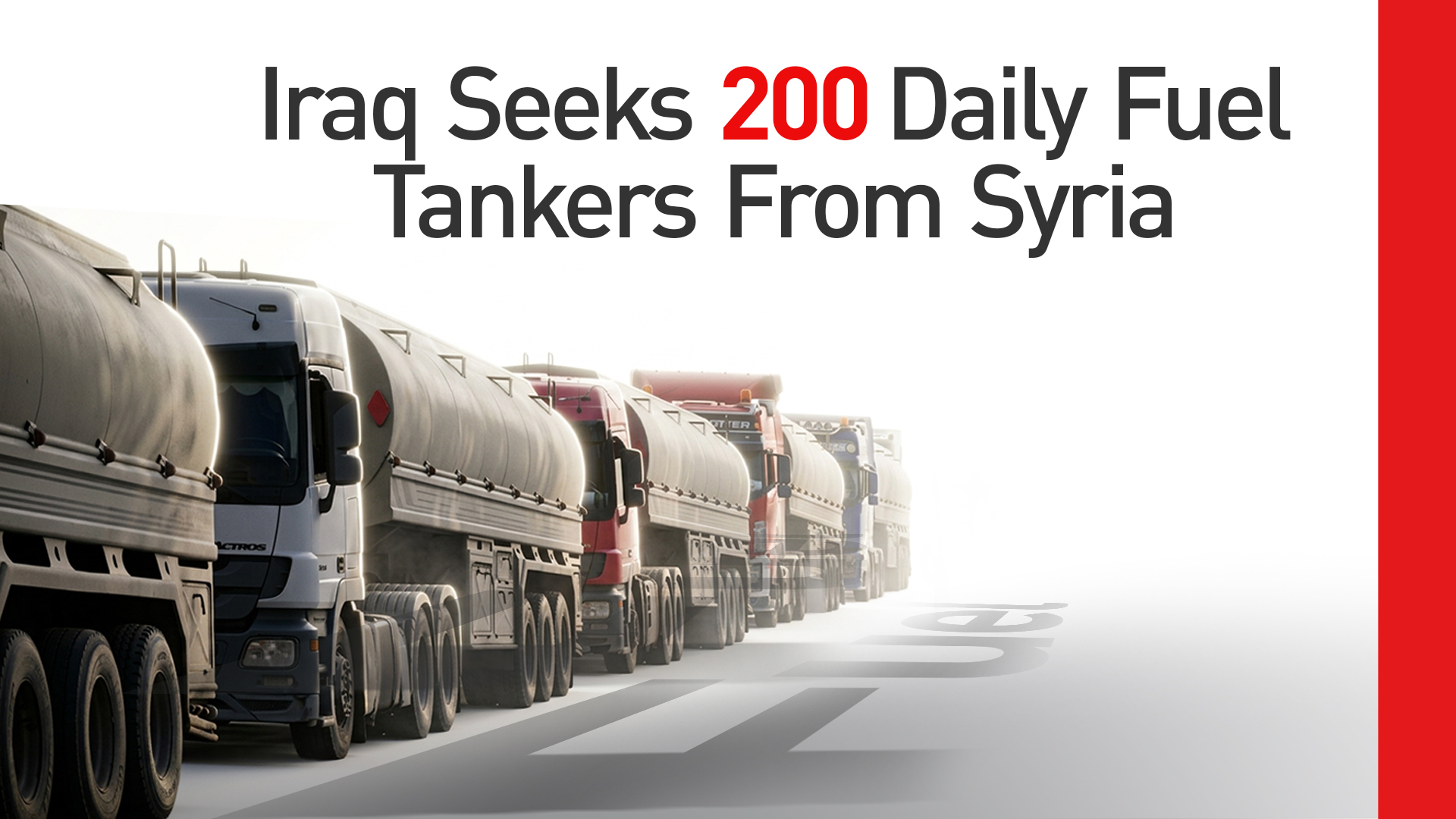
ERBIL (Kurdistan24) - Iraq has begun importing gasoline from Syria by tanker truck as authorities seek to ease a fuel shortage that has persisted for more than a month, with plans underway to increase shipments to as many as 200 tankers a day.
Salim Rukabi, spokesperson for Iraq's Ministry of Oil, told Kurdistan24 that gasoline is continuing to enter the country from Syria and is being used alongside supplies arriving through other entry points to cover domestic demand.
He said the additional imports are also intended to strengthen Iraq's strategic fuel reserves.
According to information obtained by Kurdistan24, the first convoy from Syria arrived on Thursday, Sept. 24, and consisted of 57 gasoline tankers.
Authorities are now working to raise the volume substantially, with a target of 200 tankers entering Iraq from Syria each day.
The imports are intended to help close a persistent gap between domestic gasoline production and consumption.
Available figures show Iraq requires between 32 million and 33 million liters of gasoline every day, while local production currently ranges from about 27 million to 28 million liters.
That leaves a daily shortfall of several million liters, forcing the government to rely on imports to meet demand.
The shortage is particularly notable because Iraq is one of the world's major producers and exporters of crude oil.
Despite that production capacity, the country has for years faced difficulty converting enough crude into finished petroleum products such as gasoline and gas oil for the domestic market.
The problem lies largely in refining capacity rather than crude oil availability.
Aging refineries, insufficient investment in the refining sector and growing demand have contributed to recurring pressure on domestic fuel supplies.
The rising number of vehicles in Iraq has also increased daily gasoline consumption, adding to the strain on existing refining facilities.
For the government, importing gasoline from Syria provides a short-term way to stabilize supply while domestic production remains below consumption.
Rukabi said the Syrian shipments are not the only source being used, with additional quantities entering Iraq through other routes to help satisfy local needs.
The immediate objective is to prevent the shortage from worsening while maintaining enough fuel to support both current consumption and strategic stocks.
The longer-term challenge remains Iraq's refining capacity.
As long as domestic output remains below the 32–33 million liters required each day, imports will continue to play an important role in balancing supply.
The planned increase to 200 Syrian tankers per day therefore represents an emergency response to the current shortage rather than a solution to the underlying structural problems in Iraq's fuel sector.
For now, the Oil Ministry is relying on additional imports to bridge the gap between what Iraqi refineries can produce and what consumers require each day.