Najaf Airport Set to Reopen to Iranian Airlines in Two Phases
Two Iraqi government sources say the U.S. has agreed to a 30-day trial allowing Iranian airlines to return to Najaf before deciding on permanent authorization.
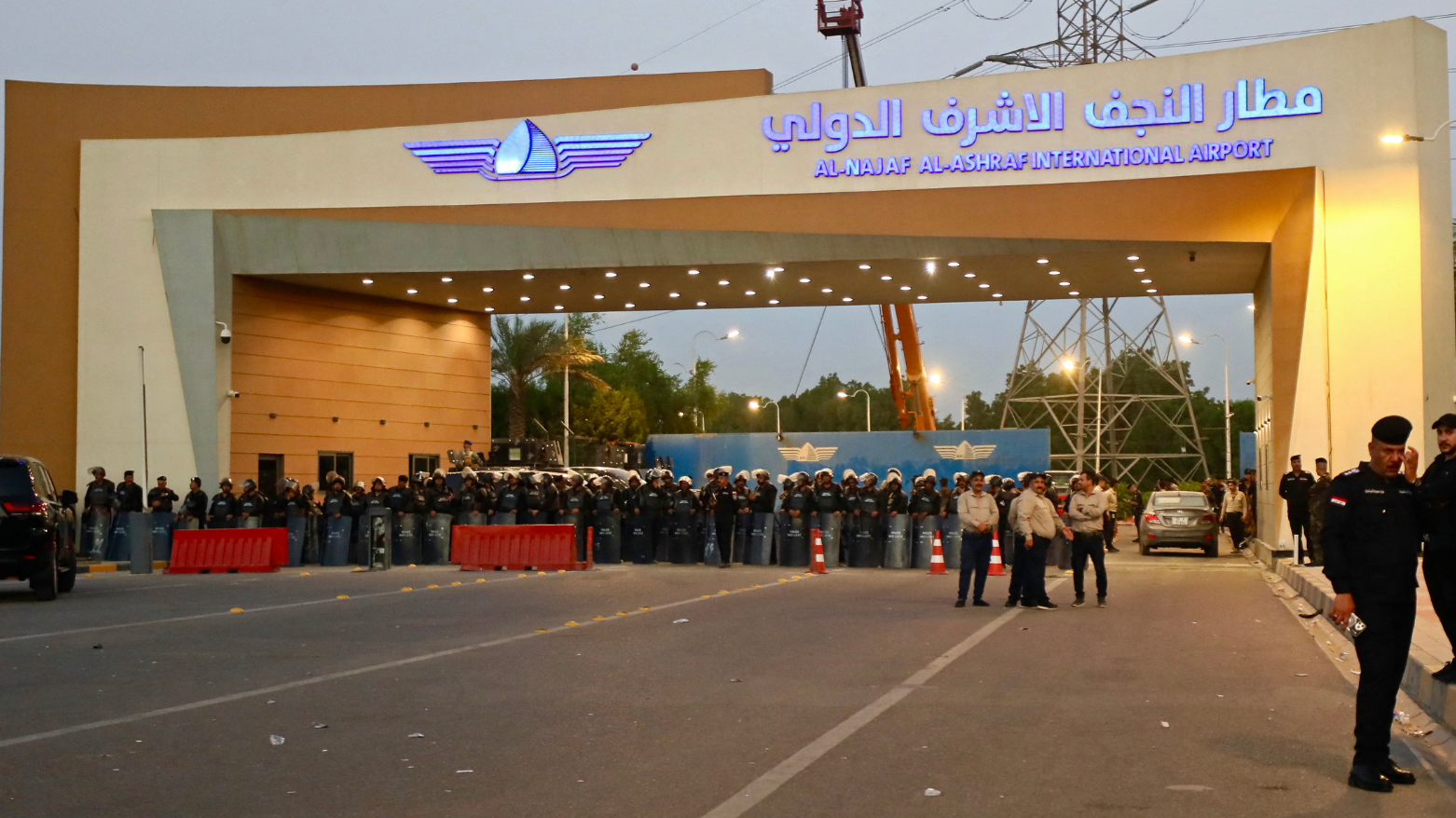
ERBIL (Kurdistan24) - The United States has agreed to a temporary arrangement allowing Iranian airlines to resume flights through Najaf International Airport, two informed Iraqi federal government sources told Kurdistan24, with an initial 30-day trial expected to begin before Washington decides whether to permit the service permanently.
The development follows direct Iraqi efforts to obtain exemptions from U.S. measures targeting Iran's aviation sector and comes after Prime Minister Ali al-Zaidi's office pressed Washington to restore air links for religious, medical and educational travel.
The sources told Kurdistan24 on Tuesday, Sept. 29, that Baghdad formally asked the U.S. Treasury Department to permit Najaf Airport to deal with Iranian airlines.
The Iraqi request initially focused on religious tourism because of Najaf's importance to Shiite pilgrims, before medical and educational travel were added to the case presented to Washington.
According to the sources, the request was submitted through the prime minister's office.
One source familiar with the discussions between Iraqi and U.S. officials said Washington initially informed Baghdad that the request would be considered.
The source said al-Zaidi subsequently pressed the U.S. side to approve the arrangement because the disruption of Iranian flights had placed significant political and economic pressure on his government.
According to that account, U.S. officials indicated that Najaf could reopen to Iranian airlines within 48 hours, putting the expected resumption within the next 24 hours.
No public announcement from the U.S. Treasury confirming the reported exemption was included in the information available to Kurdistan24.
The arrangement described by the sources would take place in two stages.
During the first phase, Najaf would receive a temporary permit valid for 30 days. The U.S. Treasury would then review how the arrangement operated before deciding whether to authorize Iranian flights on a permanent basis or again prevent Iranian carriers from operating through the airport.
The reported plan is distinct from a separate development on Monday, when Iraqi Airways resumed flights between Iraq and Iran through Najaf following an order from al-Zaidi.
Kurdistan24's Baghdad correspondent Dilan Barzan, citing information directly from Iraq's Ministry of Transport, reported that the initial services were being operated exclusively by Iraqi Airways rather than Iranian carriers.
That distinction is significant because the central problem has involved services provided to Iranian aircraft themselves.
Earlier Monday, Iraqi Ambassador Yasser Abdul Zahra Hajaj said Najaf was expected to reopen to Iranian traffic within 24 hours. At the same time, Iran's aviation authority said it had received no formal Iraqi documentation authorizing Iranian airlines to return.
The new information from the two federal government sources provides further detail on the mechanism Baghdad has been seeking: a temporary U.S. authorization allowing Iranian carriers to use Najaf Airport before a longer-term decision is made.
Iraq began seeking exemptions after air links were disrupted by intensified U.S. sanctions on Iran's aviation industry.
On Sept. 8, the U.S. Treasury Department's Office of Foreign Assets Control sanctioned 36 targets connected to Iran's aviation sector, including 27 Iranian airlines. Washington accused parts of the sector of transporting weapons, personnel and illicit cargo and warned of sanctions exposure for entities supporting designated carriers.
Associated Press reporter Farnoush Amiri also reported on the Sept. 8 measures as part of Washington's broader campaign against Iran's aviation network.
The restrictions created practical problems at Iraqi airports as private companies responsible for services such as ground handling became reluctant to work with Iranian aircraft because of possible U.S. sanctions exposure.
Najaf suspended inbound and outbound Iran flights on Sept. 25. The interruption was especially significant because of the city's role as a major religious destination for Iranian visitors.
Iraqi officials have argued that the disruption affects more than tourism, pointing to patients, students, pilgrims and citizens traveling between the two countries.
Baghdad has therefore pursued negotiations with Washington rather than openly challenging the U.S. measures.
According to the two sources, the proposed 30-day exemption is also intended to ease domestic pressure on al-Zaidi's government while allowing Baghdad to maintain its broader relationship with the United States.
The suspension has generated economic losses in Najaf and political pressure from factions seeking restoration of normal travel with Iran.
At the same time, the Iraqi government has sought to avoid measures that could expose the country's financial sector or businesses to U.S. sanctions and threaten access to the dollar-based financial system.
The temporary arrangement, if implemented as described, would attempt to balance those competing pressures.
For the first 30 days, Iranian airlines would be able to operate through Najaf under the reported exemption. The longer-term future of those services would then depend on the U.S. Treasury's assessment.
For now, Iraqi Airways flights provide one channel connecting the two countries, while Baghdad awaits implementation of the separate arrangement that would allow Iranian aircraft themselves to return to Najaf.