560-Kilometer Security Vacuum Between Peshmerga And Iraqi Army Becomes ISIS Sanctuary
Kurdistan 24 exclusively reveals a 560-kilometer ISIS sanctuary between Peshmerga and Iraqi Army lines, from Khanaqin to Sinjar
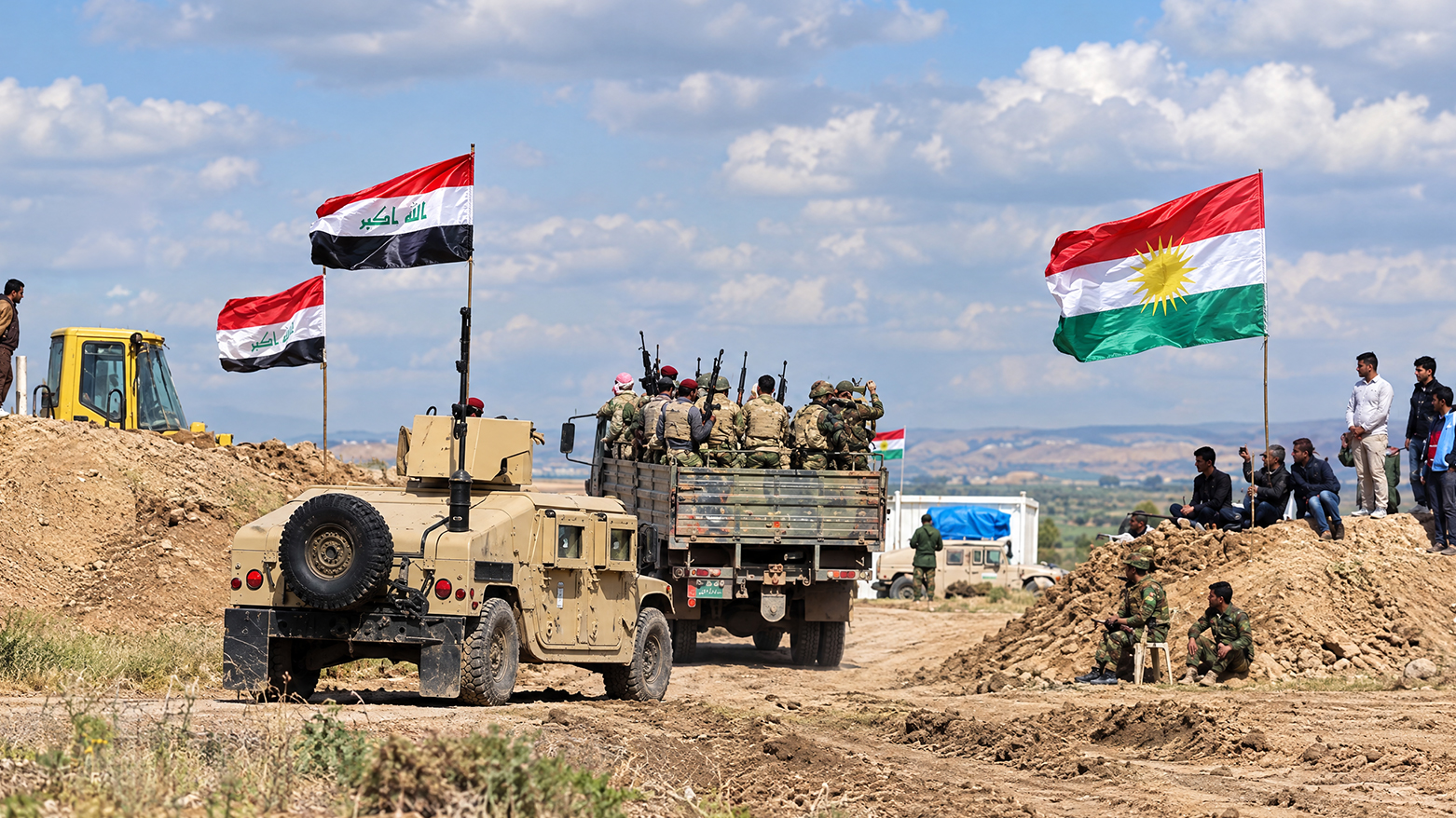
ERBIL (Kurdistan 24) - A 560-kilometer security vacuum between the front lines of the Kurdistan Peshmerga and the Iraqi Army in the disputed areas has become a sanctuary for dormant ISIS cells, allowing the group to use the uncontrolled territory as a base for movement and reorganization, Kurdistan 24's Kirkuk correspondent Soran Kamaran confirmed through multiple senior security sources on Wednesday the same day the international coalition formally concluded its mission in Iraq.
The security vacuum between the two forces' positions has been one of the most complex and unresolved security challenges since the events of 2017, when Iraqi federal forces retook the disputed areas from the Peshmerga following the independence referendum. The uncontrolled strip, free of any military presence, has allowed dormant ISIS cells to use it as a base for movement and reorganization.
According to information obtained from multiple senior security sources, the security vacuum between the two forces is estimated to stretch approximately 560 kilometers. The line begins in the southeast at the town of Khanaqin on the borders of Iran and Diyala province, passes through the Garmian, Khurmato, south and southwest Kirkuk, Makhmour, and Nineveh Plain areas, and ends at Sinjar and Rabia and Sahela on the Iraq-Syria border.
The Width Varies From 5 to 40 Kilometers
Kurdistan 24's correspondent Soran Kamaran spoke with a senior Peshmerga Ministry officer about the width of the vacuum. "The width decreases in some places and increases in others," the officer said. "For example, in flat and plain areas it is between five and ten kilometers, but in mountainous and difficult terrain it becomes deeper and reaches twenty to forty kilometers."
Regarding the forces positioned on each side of the vacuum, Peshmerga Ministry brigades and support forces are positioned on one side, while on the federal government side, Iraqi Army divisions, federal police, and Popular Mobilization Forces are present.
Joint Brigades Planned but Middle Zones Empty
To fill these gaps, a decision was made to deploy joint Peshmerga-Iraqi Army brigades, including Brigade 20, specifically in areas like Makhmour and Khanaqin. However, the middle sections of these areas remain without any permanent military presence from either side and have been left as an open wilderness.
According to Kurdistan 24's information, in several locations the Peshmerga and Iraqi Army positions are geographically very close to each other, with only one to three kilometers between them. These include Makhmour in the area around Qarachugh mountains and Pirdey, Khurmato and Kifri in the Dawouda area and along the main Sulaimani-Baghdad road, and in parts of the front lines in the Nineveh Plain and Shikhan where forces are also in close proximity.
ISIS Has Restarted Movement
Kurdistan 24's correspondent asked the senior Peshmerga officer directly what is being done to fill these gaps, given that ISIS has recently restarted its movement. "ISIS has started moving because there are no permanent forces in these gaps," the officer said. "The difficulty of the terrain, such as caves and valleys, has made these areas places where they can shelter. Therefore, if ISIS is to be finished off, permanent forces must be stationed in those areas."
The disclosure that ISIS is actively exploiting the 560-kilometer vacuum arrives on the same day that the international coalition formally concluded its mission in Iraq, handing primary responsibility for ISIS remnants to the Iraqi government, and on the same day that CENTCOM Commander Admiral Brad Cooper specifically named the Peshmerga as forces expected to lead the continuing effort to suppress ISIS remnants. The coalition's departure and the ISIS movement in the security vacuum are two halves of the same post-coalition security challenge.