What Iraq's 'Sovereignty Day' Means for Kurdistan After Coalition Withdrawal
Iraq's first Sovereignty Day marks the end of the Coalition's military mission, but for the Kurdistan Region the real test now lies in air defense, closing security gaps with the Iraqi Army, bringing weapons under state control, and preserving effective international security partnerships.
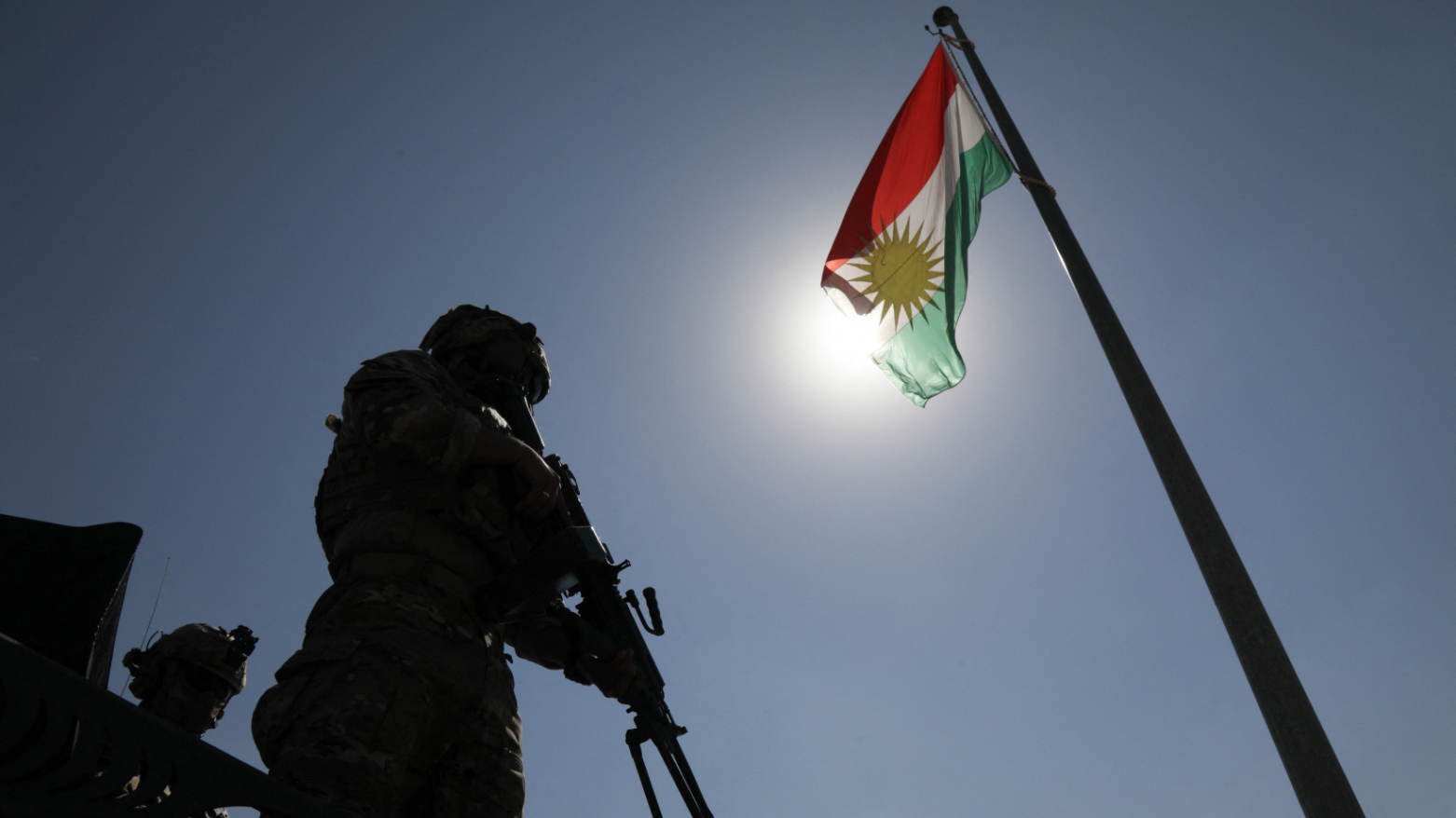
ERBIL (Kurdistan24) - Iraq's declaration of "Sovereignty Day" marks an unmistakable change: the international Coalition's military mission has ended, its personnel and equipment have left Erbil Air Base, and primary responsibility for the country's security now rests with Iraqi forces, including the Kurdistan Region's Peshmerga.
But for the Kurdistan Region, the significance of the moment extends beyond the departure of foreign soldiers.
The post-Coalition test is whether the sovereignty celebrated in Baghdad can be converted into effective security on the ground: an air-defense system capable of protecting Iraqi and Kurdistan Region airspace, sustained coordination between the Peshmerga and Iraqi Army, closure of security gaps exploited by ISIS, and state authority over armed groups operating outside regular institutions.
That distinction was at the center of top leadership in Kurdistan Region, among them President Masoud Barzani, the Kurdistan Region President Nechirvan Barzani's address at Baghdad's Sovereignty Day ceremony as well as Kurdistan Region Prime Minister Masrour Barzani's remarks about the end of international coalition's operation in Iraq.
On the Coalition's final day, President Masoud Barzani reassured the people of Kurdistan of strong coordination with Baghdad, honored fallen Peshmerga and coalition forces, and warned against viewing the withdrawal as Kurdish vulnerability
Kurdistan Region President Nechirvan Barzani argued that sovereignty cannot be defined solely by the departure of foreign forces, but must also mean that the state possesses the final decision over security, war and peace, that the Constitution and federal system are upheld, and that weapons are subject to legitimate state authority.
Kurdistan Region's Prime Minister Masrour Barzani framed the end of the Coalition mission not as the termination of Kurdistan's security partnerships, but as a transition in their form.
Speaking on the Coalition's final day, he thanked the United States, European countries and other partners for helping defeat ISIS, strengthen the Peshmerga and protect both the Kurdistan Region and Iraq. He stressed that the withdrawal would not end relations with those states, saying cooperation would continue economically, politically, culturally and in the security and military fields.
Prime Minister Barzani also acknowledged that the post-Coalition phase still carries security risks. "There is undoubtedly still a terrorist threat," he said, rejecting the idea that Iraq and the Kurdistan Region no longer face challenges. At the same time, he argued that Iraqi forces are now more capable and that the Peshmerga are "strong and prepared" to confront threats against the Region.
His remarks also tied security to federal cooperation. Prime Minister Barzani said the Kurdistan Region's Government would continue supporting Baghdad, while expecting the federal government to uphold the Constitution, ensure justice and treat all parts of Iraq equally. For Kurdistan, his message was clear: withdrawal changes the security framework, but not the need for partnership, preparedness and constitutional cooperation.
For the Kurdistan Region, those principles turn Sovereignty Day from a ceremonial conclusion into the beginning of a more demanding security phase.

From Coalition Protection to Iraqi Responsibility
The military transition itself is complete.
US Central Command announced on Sept. 30 that American personnel and equipment had departed Erbil Air Base, formally ending Operation Inherent Resolve in Iraq. CENTCOM Commander Adm. Brad Cooper specifically included the Peshmerga and other Kurdistan Region security forces among those he said now possess the capacity, leadership and operational independence to manage threats.
The Pentagon similarly said the Iraqi Security Forces, including the Peshmerga, are expected to lead the continuing effort to secure Iraq and keep ISIS remnants suppressed. Washington said targeted training and intelligence cooperation would continue despite the end of the Coalition mission.
That recognition is important for the Kurdistan Region because the Coalition presence in Erbil had been closely intertwined with the development of Peshmerga capabilities since the war against ISIS began in 2014.
The United Kingdom said Iraqi forces and the Peshmerga had developed sufficient capacity to assume primary responsibility for security after more than a decade of training and military cooperation. British forces alone trained more than 21,000 Peshmerga personnel, while London said its future relationship would move toward bilateral defense and counterterrorism cooperation.
Yet assuming responsibility and possessing every capability previously supplied by the Coalition are not the same thing.
Sirwan Barzani, commander of the Peshmerga Forces' Sixth Front, said the Kurdistan Region still lacks an integrated air-defense system and that its domestic capabilities do not match the intelligence, logistical and technical resources previously supplied by Coalition partners. He also warned that ISIS remnants remain active and pointed to continued joint Peshmerga-Iraqi operations in Kirkuk and Nineveh.

This makes air defense one of the first practical tests of the new sovereignty framework.
Iraq's Prime Minister Ali Faleh al-Zaidi has placed the establishment of an integrated national air-defense system among six elements of the government's post-Coalition sovereignty agenda. Maj. Gen. Tahseen Khafaji, deputy head of Iraq's Security Media Cell, likewise said Baghdad is seeking advanced systems through contracts with countries including the United States, Britain, France and South Korea.
The significance for the Kurdistan Region is immediate. Sirwan Barzani said the Region has faced more than 1,000 missile and drone attacks during the recent period of regional conflict and instability.
Sovereign control of territory, therefore, will increasingly be measured not only by who is absent from Iraqi bases, but also by whether Iraqi institutions can prevent missiles and drones from violating the country's airspace and protect Erbil and other parts of the Kurdistan Region.
The 560-Kilometer Test
The second test lies on the ground.
Kurdistan24 reported, citing multiple senior security sources, that an approximately 560-kilometer stretch between Peshmerga and Iraqi federal force positions runs from Khanaqin through parts of Garmian, Kirkuk, Makhmour and the Nineveh Plain toward Sinjar and the Syrian border.
The gaps vary considerably in depth, and areas without permanent forces have provided room for ISIS cells to move and shelter, according to the security officials cited in the report. Plans for joint Peshmerga-Iraqi brigades have addressed parts of the problem, but some stretches remain without permanent deployments.
The distinction matters: the Coalition withdrawal did not create these gaps. Their roots predate Sept. 30 and extend back to the security changes in the disputed territories after 2017. But the end of the Coalition mission removes an external layer of intelligence, surveillance, logistical and operational support at the same time that Iraqi and Peshmerga forces are being asked to assume complete responsibility.

Baghdad maintains that coordination is already strengthening.
Khafaji told Kurdistan24 that cooperation between the Iraqi Army and Peshmerga is at a high level, that field coordination and intelligence sharing are expanding, and that the two sides are working to close remaining gaps. He also said the Peshmerga Chief of Staff would participate in a meeting of the Ministerial Council for National Security.
President Masoud Barzani similarly emphasized on the Coalition's final day that the Peshmerga would continue coordinating closely with federal forces against ISIS or any other threat, while stressing that the end of the international military presence should not be interpreted as leaving the Kurdistan Region without the means to defend itself.
The post-Coalition security question is therefore not whether Baghdad or Erbil alone can replace the international mission. It is whether their forces can operate together sufficiently to deny ISIS the seams between their respective positions.
The European Union made the same connection in its response to the withdrawal, telling Kurdistan24 that ISIS remains a threat and that continued Baghdad-Erbil cooperation is an important element of Iraq's stability.
Sovereignty and the Monopoly on Arms
A third test is more political and institutional: who ultimately controls armed force inside Iraq.
Al-Zaidi has linked Sovereignty Day directly to a government roadmap for bringing weapons under state control. His government says the process should be completed no later than June 30, 2027, while he has repeatedly stated that no weapons should exist outside the framework of law and no force outside state institutions.
The material obtained by Kurdistan24, however, indicates that this process remains unfinished.
Saraya al-Salam, Asaib Ahl al-Haq and Kataib Imam Ali have surrendered their weapons, according to the information provided to Kurdistan24, while negotiations continue with other armed factions. Some groups have announced commitments to cease military operations or comply with government arrangements, but others have sought institutional guarantees concerning their future.
Kurdistan24 was also told that Kataib Hezbollah Iraq, Kataib Sayyid al-Shuhada, the Nujaba Movement and Saraya Awliya al-Dam proposed the establishment of a new security ministry under which they could be brought together, a request the federal government rejected.

That unfinished process gives Kurdistan Region President Nechirvan Barzani's definition of sovereignty particular relevance to the Kurdistan Region.
His argument places the withdrawal of foreign forces and the control of weapons within the same framework: sovereignty requires not merely removing an international military presence but establishing a single constitutional authority over decisions of war and peace.
Al-Zaidi's own six-point sovereignty framework reflects a similar connection. Alongside Coalition withdrawal and arms control, he identified Peshmerga unification and the development of national air defense as components of Iraq's new security phase.
The inclusion of the Peshmerga within that framework illustrates how closely the Kurdistan Region is tied to the success of the post-Coalition order.
Withdrawal Without Isolation
The fourth element of the transition is that military withdrawal does not appear to mean the end of international security relations with the Kurdistan Region.
The United States told Kurdistan24 that it remains committed to a strong security and economic partnership with both Baghdad and the Kurdistan Regional Government, while describing the capabilities of Iraqi and Peshmerga forces as having developed sufficiently for the Coalition withdrawal.
President Donald Trump separately told Kurdistan24 that the United States would not abandon its allies as US forces left Iraq.
Germany has likewise told Kurdistan24 that its troop withdrawal does not end cooperation with Iraq or the Kurdistan Region. Berlin said engagement would continue in an adapted form involving security-sector support, civilian stabilization and development cooperation.

Iraq's own National Security Adviser has described the same transition as a move from a multinational military mission toward deeper bilateral relations involving intelligence sharing, expertise and capability building.
For the Kurdistan Region, this emerging model may be one of the defining features of the post-Sept. 30 environment: fewer foreign forces physically stationed in Erbil, but continuing security relationships with the states that trained, equipped and fought alongside the Peshmerga.
What Sovereignty Day Now Has to Deliver
Sovereignty Day has settled one question: the Coalition's military mission in Iraq is over.
It has not, by itself, settled the questions that follow from that withdrawal.
For the Kurdistan Region and the Peshmerga, the next phase will be measured by whether Iraq can build an effective air-defense architecture, close the gaps between Peshmerga and federal positions, maintain operational coordination against ISIS, complete the effort to place weapons under state authority, and translate international military partnerships into sustainable bilateral cooperation.
Baghdad has publicly identified many of these same priorities. Al-Zaidi has described the Coalition withdrawal as a transfer of responsibility rather than the end of the fight against terrorism, while his government has placed air defense, arms control and Peshmerga unification within its sovereignty program.

For the Kurdistan Region, that makes the period after Sovereignty Day as consequential as the withdrawal itself.
The departure from Erbil Air Base closes the Coalition chapter that began during the ISIS crisis. What follows will test whether the security institutions that remain, particularly the Peshmerga and Iraqi federal forces, can turn the declaration of sovereignty into coordinated authority over Iraq's territory, airspace and armed force.
