Iraq's Shiite Framework Calls for Nationwide De-Escalation
Iraq's Coordination Framework reaffirmed June 30, 2027 as the deadline for resolving the weapons issue while setting priorities for the post-Coalition security phase.
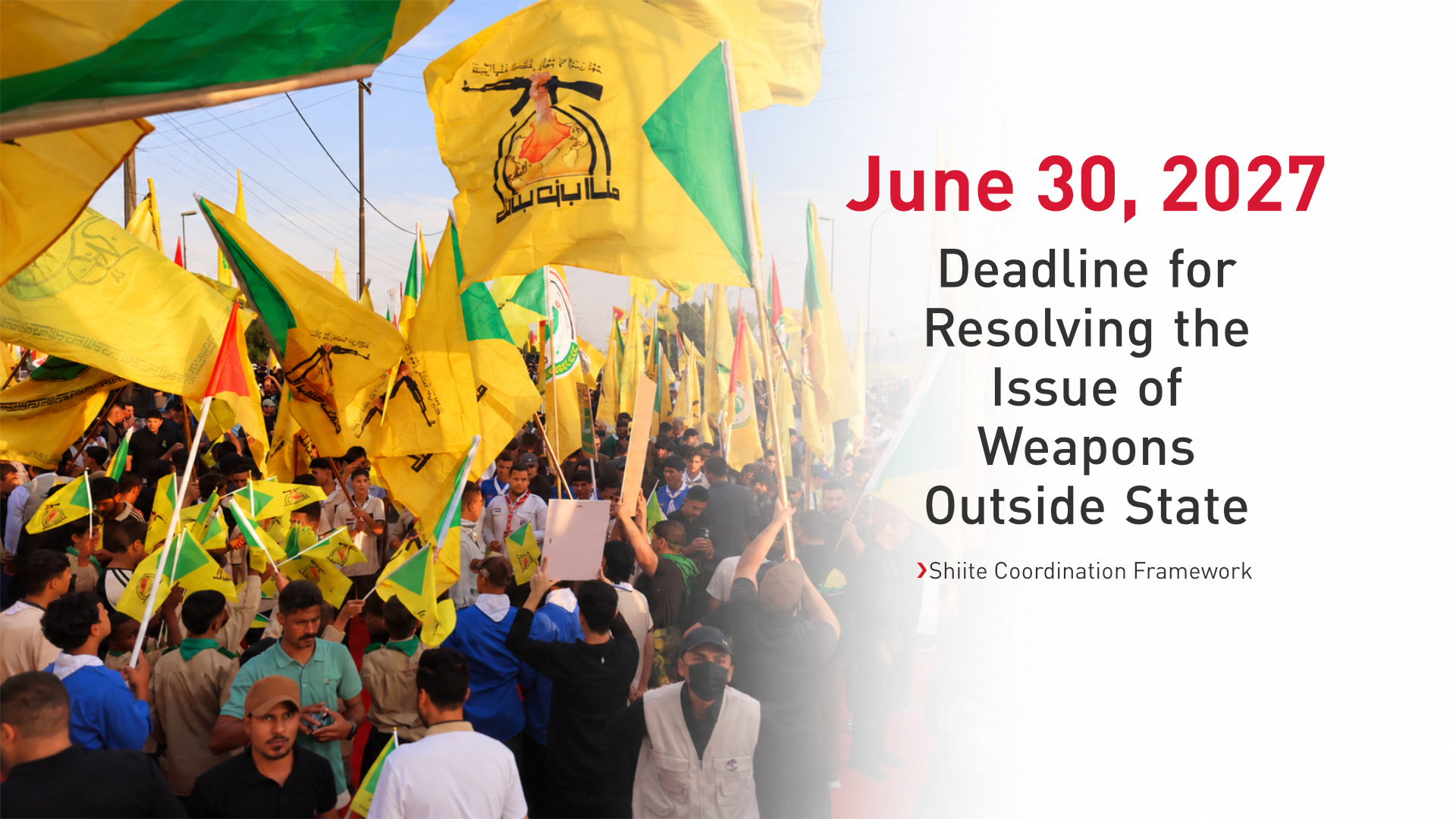
ERBIL (Kurdistan24) - Iraq's Coordination Framework has reaffirmed a June 30, 2027 deadline for resolving the issue of weapons outside state control, while calling for nationwide de-escalation and stronger state institutions as the country enters its first security phase following the end of the international Coalition's military mission.
The Shiite political alliance held an extraordinary meeting at the Government Palace on Friday, Oct. 2, at the invitation of Prime Minister Ali Faleh al-Zaidi.
The meeting focused on current political and security developments and what the Framework described as the responsibilities of the post-"Sovereignty Day" period, which it characterized as an important stage in consolidating Iraq's independence and stability.
The Framework congratulated the Iraqi people and the country's security forces for their role in defending Iraq's territory and sovereignty.
It also expressed appreciation for the supreme religious authority, describing it as a source of protection and stability for the country.
A central part of the meeting concerned armed factions and the continuing government effort to place weapons under state authority.
The Coordination Framework praised groups that had committed themselves to an agreement document reached through negotiations among political and security actors, saying those positions reflected consideration for the public interest.
It also called on all parties to maintain comprehensive de-escalation across Iraq while strengthening state institutions and the rule of law.
The Framework thanked the four-member committee handling the weapons issue and said its work should continue at the same pace until June 30, 2027, which it described as the agreed final deadline for implementing the constitutional provision concerning weapons.
The statement places arms control at the center of Iraq's post-Coalition security agenda.
Prime Minister al-Zaidi has similarly said that the end of the international military mission should be followed by a phase in which no armed force operates outside state institutions.
The Framework also addressed the conclusion of the international Coalition's mission.
It welcomed the Coalition's withdrawal within the agreed timeframe and acknowledged what it described as its significant contribution to the fight against terrorism.
The Coalition's military mission formally concluded on Sept. 30, with personnel and equipment leaving Erbil Air Base and Iraqi forces, including the Peshmerga, assuming primary responsibility for security.
For Baghdad, the withdrawal has been presented as a sovereignty milestone. But the security responsibilities that follow remain substantial.
ISIS cells continue to operate in parts of the country, while Iraqi and Peshmerga forces are working to close gaps between their respective positions, particularly across disputed territories.
The Kurdistan Region has also raised concerns about air defense and the need to preserve intelligence, training and other forms of cooperation with international partners despite the withdrawal of Coalition forces.
Kurdistan Region leaders have argued that sovereignty must extend beyond the absence of foreign troops to include constitutional authority over weapons, airspace and decisions of war and peace.
That broader definition closely intersects with the issues discussed by the Coordination Framework on Friday.
Its statement linked the post-Coalition phase with de-escalation, state institutions, weapons control and the government's ability to maintain security.
At the conclusion of the meeting, participants reaffirmed their confidence that the Iraqi government and state institutions can protect all components of the country and create a secure environment for investment.
The meeting therefore placed the political focus firmly on what follows the Coalition withdrawal: maintaining security, limiting armed activity to state authority and completing the weapons process by the middle of next year.