Five New Water Projects Set to Strengthen Drinking Water Supply Across Kurdistan Region
Prime Minister Masrour Barzani approves five strategic water projects aimed at addressing drinking water and securing long-term supplies across several districts and cities.
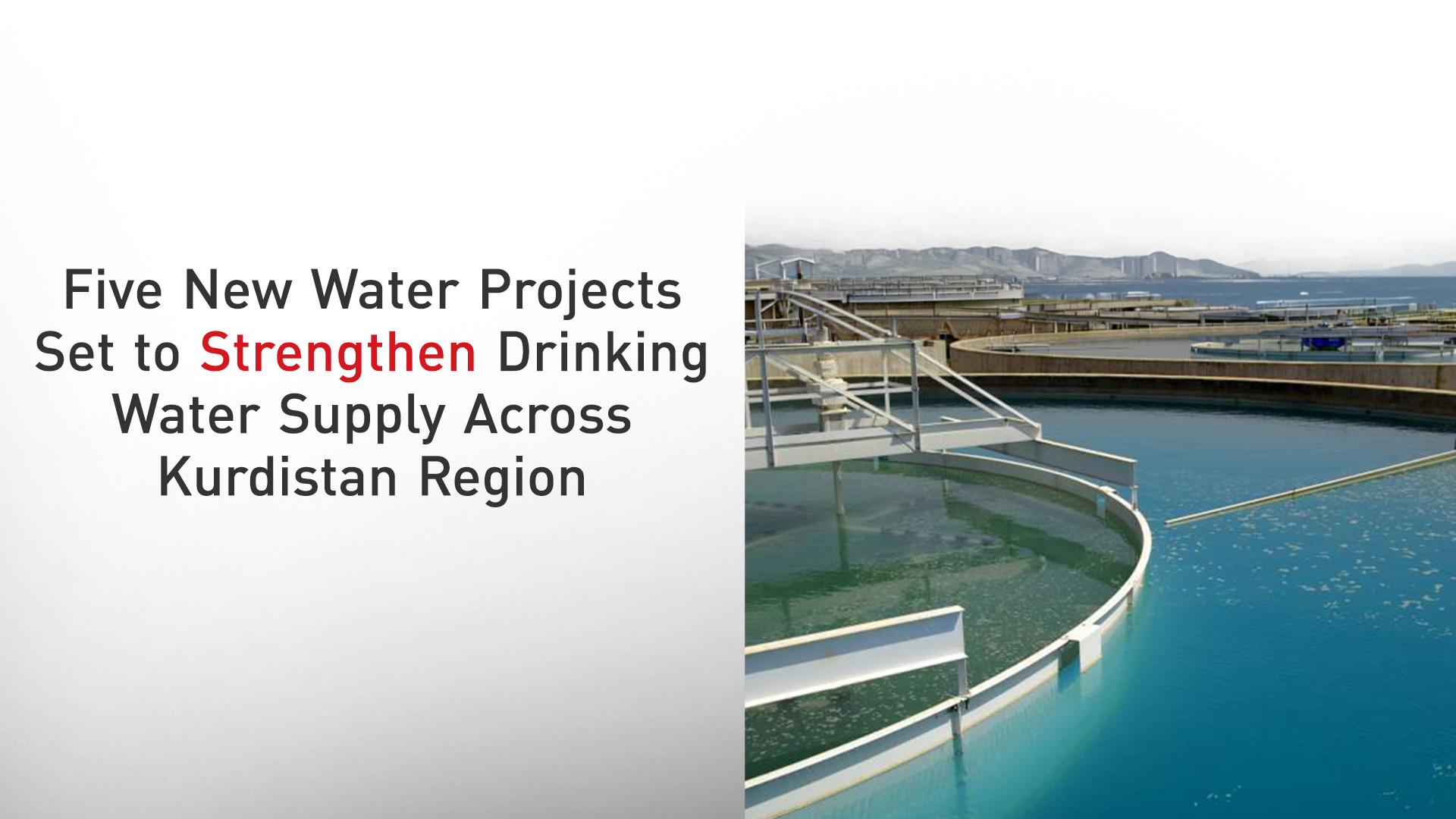
ERBIL (Kurdistan24) - The Kurdistan Regional Government has approved five strategic water projects aimed at addressing drinking water shortages and securing reliable supplies for residents across several districts and cities, while major water infrastructure projects are also advancing in Sulaimani and other parts of the region.
Kurdistan Region Prime Minister Masrour Barzani approved the launch of the five projects, which will provide clean water to Soran, Khabat, Kalar and Koya, while also expanding water networks serving Qandil, Pirmam and Shaqlawa.
Ari Ahmed, director general of water and sewerage in the Kurdistan Region, told Kurdistan24 on Saturday, that the new government initiative is intended to strengthen water security in the targeted areas once the necessary financial allocations are completed.
The projects are designed to deliver clean drinking water to Soran, Khabat, Kalar and Koya, while expanding the existing water networks in Qandil, Pirmam and Shaqlawa.
Ahmed confirmed that the engineering plans and studies for the projects have been completed in full, reaching 100 percent completion and paving the way for direct implementation.
The projects come as the Kurdistan Region continues to address the pressures placed on water resources by drought and growing demand for essential services.
Third Duokan-Sulaimani water line reaches 5 percent completion
Work is also continuing on the third Duokan-Sulaimani water line, with Ahmed saying the project has entered the implementation phase after its overall design was completed and approved.
According to Ahmed, detailed designs for different sections of the project are now being prepared. Excavation work has already begun in some locations, while concrete work has started in others.
Preparations for the project have also been completed, including the establishment of the work camp and the identification of routes for electricity transmission lines and the main water pipelines.
The project includes two main pipelines, each measuring 1,400 millimeters in diameter, according to Ahmed.
A work camp has been fully established, while a large number of workers and pieces of equipment are currently operating at the project site.
Ahmed said that, overall, approximately 5 percent of the third Duokan-Sulaimani water line project has been completed.
Work is also continuing on the Goptapa-Chamchamal water project, which has reached 45 percent completion, Ahmed said.
He said work on the project is ongoing and that, provided no financial obstacles emerge, the project is expected to be completed within the next seven to eight months.
The progress on both projects comes alongside the government's newly approved water initiatives, expanding the scope of ongoing efforts to strengthen drinking water infrastructure across the Kurdistan Region.
Ahmed also noted that the ninth cabinet had previously allocated and implemented strategic water projects with a total cost of 1 trillion, 195 billion and 800 million dinars.
Those projects were designed to produce more than 852,000 cubic meters of potable water per day and address the effects of drought across the Kurdistan Region.
The latest allocations add to the government's broader infrastructure planning, including the consideration of water resources in the long-term development of major urban areas.
Erbil's new master plan through 2050, formally approved in September, includes water and drainage among the sectors reviewed as part of the capital's future development framework.
The plan's expansion strategy toward the Greater Zab was based on an Organization Potential Analysis that considered 19 factors, including proximity to rivers and water sources, natural water-flow patterns and underground water availability.
The broader planning framework reflects the importance of water resources in supporting sustainable urban growth and infrastructure development across the Kurdistan Region.
With the engineering studies for the five newly approved projects now completed, implementation is expected to proceed following the completion of the required financial allocations.