Zebari Warns Hormuz Closure Could Paralyze Iraq's Finances
The former Iraqi foreign and finance minister says the coalition's exit from Iraq does not end US influence, warns of financial paralysis if Hormuz closes, and highlights Iraq-Syria ties.
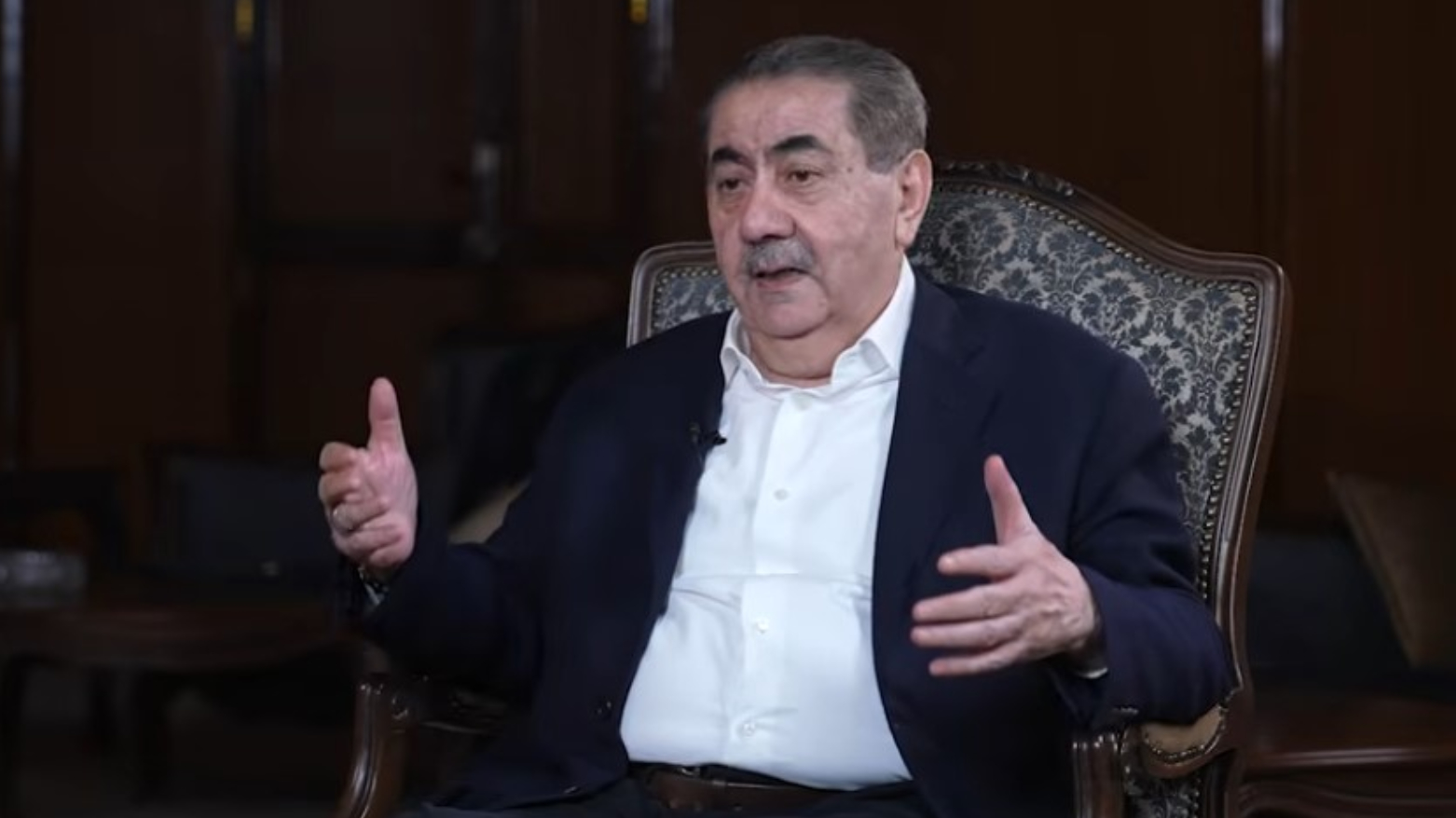
ERBIL (Kurdistan24) - Hoshyar Zebari, a former Iraqi foreign and finance minister and senior leader of the Kurdistan Democratic Party (KDP), said that ending the international coalition's mission in Iraq does not by any means end US influence or the strategic partnership with Washington. In an interview with Al-Hurra, he warned that Iraq cannot live in isolation from the global financial system, which he said Washington controls.
Zebari dismissed claims promoted by some parties about the "expulsion of American forces," as well as attempts to portray the end of the mission as a "festival of sovereignty." He stressed that coalition forces did not come as an occupying force. They came at the official request of the Iraqi government in 2014 to repel the threat of ISIS.
He explained that the agreement to end the coalition's mission, in September 2025 and 2026, was reached through mutual understanding and consent.
Zebari added: “The withdrawal of military forces does not mean the departure of American political, diplomatic, economic, and security influence. Iraq is bound and governed by the Strategic Framework Agreement, and there is no country in the world that can live outside the global financial system that America controls. If dollar shipments stop, the Iraqi market will collapse within hours.”
On the question of limiting weapons to the state, Zebari distinguished between light arms found in most Iraqi homes and heavy and medium weapons, such as drones and ballistic missiles. He stressed that the latter pose the real threat to the sovereignty and economy of the state.
He noted that targeting neighboring countries, or strategic interests and oil companies in the Kurdistan Region, from Iraqi territory amounts to using Iraq as a “platform for settling others' scores.” He cited earlier government investigations that found drones launched from Maysan province had targeted Saudi oil facilities. Such actions, he said, directly harm the interests and stability of Iraqis.
In a notable statement, Zebari confirmed reports of the presence of members of Ansar Allah, known as the Houthis, in Iraq. He said recent US airstrikes in late July hit a site that housed Iranian advisers and Houthi leaders specialized in drones and missiles.
Zebari said the funerals of those killed were shown openly on Iraqi and Iranian television, within what is known as the “Resistance Coordination” and the “Unity of Fields.”
Zebari disclosed that he made an unannounced visit to Damascus in June and met Syrian officials. He said the visit helped open channels of communication and break the ice between Baghdad and Damascus, ahead of Foreign Minister Fuad Hussein's visit and the meetings in New York.
He said Syria expressed a genuine desire to build positive, normal relations and economic integration with Iraq.
Zebari pointed to Damascus' geo-economic importance as a strategic outlet for exporting Iraqi oil through the port of Baniyas. Such a route, he said, would reduce Iraq's absolute dependence on the Strait of Hormuz. Its closure in any regional confrontation could bring a “terrifying financial paralysis for Iraq,” which relies on oil revenues for 95 percent of its income.
He also called for diversifying Iraq's oil export lines through Jordan, via the Haditha-Aqaba pipeline, and through Türkiye, via the port of Ceyhan.
Asked about fears that ISIS could grow again after the coalition's withdrawal, Zebari said Kurdish concern, and the statements of President Masoud Barzani on the issue, stem from “bitter historical experiences” of genocide and displacement. He cited the Anfal and chemical campaigns of 1988, the million-strong exodus of 1991, and the catastrophe suffered by the Ezidis in Sinjar in 2014, when the world looked on for weeks.
He said the Kurdistan Region is currently protected by the Peshmerga and enjoys “excellent” security, military, and intelligence coordination with the Federal Government of Iraq. He added that changes in Syria and the stability of its governing institutions reduce the risk of terrorist infiltration today compared with 2014.
On the possibility of normalization between Baghdad and Tel Aviv, Zebari said the matter is a “sovereign decision for the Iraqi state and its legislative and executive institutions.” He stressed that he does not promote normalization, but noted that the entire region is passing through a historic transformation, a process not yet complete.
Zebari said Iraq's relations with its neighbors, particularly Iran and Türkiye, must be built on a “state-to-state” basis, on shared interests and mutual respect, in the same way he wants Iraq's relationship with Washington to be.