Fire Erupts Near Aramco Facility in Riyadh as Saudi-Houthi Fighting Escalates
Smoke and flames were reported near Saudi Arabia’s state-owned oil giant as fighting intensifies in Yemen and Houthis target Saudi territory
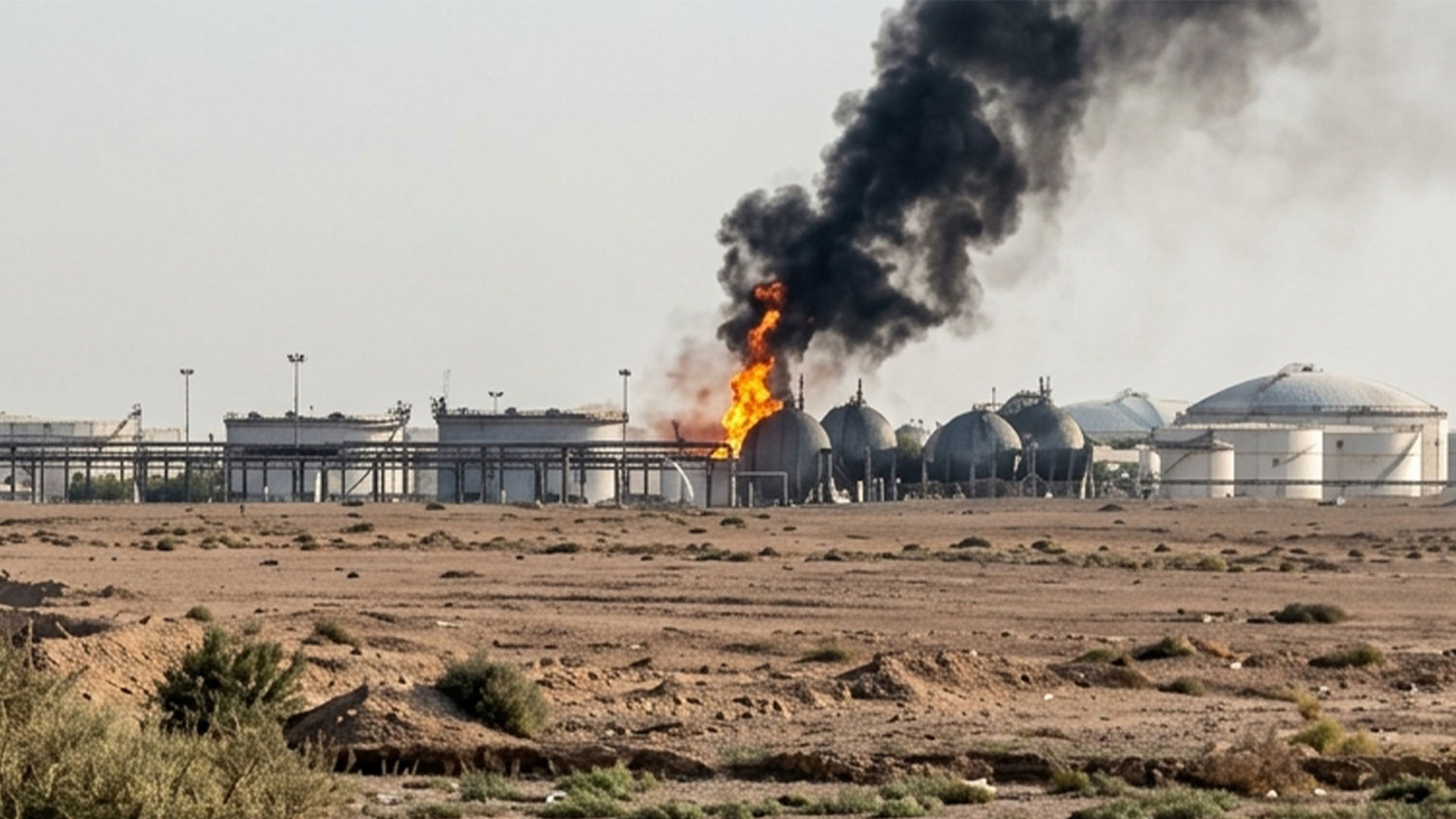
ERBIL (Kurdistan24) — Flames and heavy smoke were seen rising near a facility belonging to Saudi oil giant Aramco in Riyadh on Saturday, as Saudi Arabia and the Iran-backed Houthi group faced a renewed escalation of hostilities, according to witnesses and Reuters.
A Reuters witness reported seeing a large plume of smoke and fire near an Aramco facility in the Saudi capital. Saudi authorities had not immediately confirmed the incident, while Aramco had not issued a comment. There was also no immediate claim of responsibility for the fire.
The incident occurred as tensions between Saudi Arabia and the Houthis have sharply escalated in recent weeks.
The Houthis have claimed attacks against Saudi cities and energy infrastructure, including Aramco facilities in the Red Sea port of Yanbu.
Saudi authorities have reported intercepting missiles launched toward areas including Taif and Yanbu, without confirming damage to Aramco facilities in those incidents.
The latest developments coincide with an intensifying military campaign inside Yemen. Loud explosions were heard across the capital Sanaa on Saturday, while Houthi-affiliated Al-Masirah television reported what it described as Saudi airstrikes against the city.
AFP correspondents reported hearing at least five blasts, while another correspondent said two warplanes were seen firing missiles over Sanaa.
The Houthi-run broadcaster did not provide details on the targets or casualties. It also reported earlier that missile strikes had targeted telecommunications infrastructure in Saada, a northwestern province and Houthi stronghold.
The renewed fighting marks a major reversal after several years of relative calm following a fragile truce. The conflict escalated again in July, pitting the Iran-backed Houthis, who control most of northwestern Yemen including Sanaa, against Yemen’s internationally recognized government, which is backed by Saudi Arabia.
Battle for Taiz intensifies
Much of the recent fighting has centered on Taiz in southwestern Yemen, where clashes between Houthi forces and Saudi-backed government troops have intensified.
Sources on both sides reported that 80 combatants were killed in fighting around Taiz on Friday. The Houthis said 55 of their fighters were killed, while government sources cited by AFP said 26 troops had died.
The fighting has spread across several fronts, including highland positions overlooking areas along the coast that the Houthis have recently seized. Despite their territorial gains, the Houthis have not captured Taiz city, Yemen’s third-largest city after Sanaa and Aden.
The Houthis have also reported dozens of Saudi airstrikes against areas under their control, while Saudi authorities said a Houthi projectile damaged a school in Najran, near the Yemeni border.
The renewed conflict has also raised concerns over the strategic Bab al-Mandeb Strait, a major maritime chokepoint linking the Red Sea with the Gulf of Aden.
Saudi Arabia is reportedly preparing a major counteroffensive, in coordination with Yemeni government forces, to regain territory along the Red Sea coast and restore control over the strategic waterway.
Reuters reported that the United States has so far declined to participate directly in the offensive, while providing intelligence and defensive assistance.
Washington weighs its response
The escalating Saudi-Houthi conflict has also drawn renewed attention from Washington. Axios reported on Saturday that senior members of US President Donald Trump’s administration held an unannounced meeting at Camp David on Friday to discuss the war in Iran and the escalating conflict between Saudi Arabia and the Houthis in Yemen.
According to three US officials cited by Axios, Vice President JD Vance chaired the meeting, which was attended by senior national security officials. The meeting was not publicly announced by the administration.
The United States has so far stopped short of directly joining the Saudi-backed offensive against the Houthis, according to Reuters, while continuing to provide support aimed at protecting Saudi Arabia and maintaining regional security.
For Saudi Arabia, the renewed attacks pose a particular concern because the country’s energy infrastructure remains central to its economy and global oil markets.
Any sustained disruption to major oil facilities or maritime routes could add another layer of risk to an already volatile regional energy environment.